Winnie Hatch

Hatch, Winnie

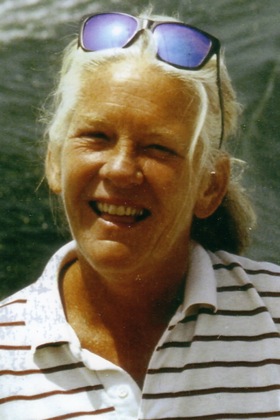
Hatch and her partner, Sharon Hummers, dominated the women’s 50+ during the 1990s and, between 1992 and 2002, won seven championships, in 1992-1996, 1999 and 2001. They were also finalists in three other years (1997, 2000, 2002). When Hatch reached the 60+ level, the wins continued, with victories in 2002 and 2004, and second place finishes in 2003, 2005, and 2006. In the Mixed 50+, she won in 1993, 1996, and 1999, and in the Mixed 60+, she won in 2002 and 2004 and was a finalist in 2003, 2005, and 2006. A well-respected advocate for women’s paddle, Winnie was a member of the Women’s Players Committee, the governing body for women’s paddle, for more than 15 years, and she was a strong advocate for equal funding and visibility for women’s events, including the nationals and senior women’s events. She was on the 1999 Nationals committee and ran the Women’s President’s Cup.

Hatch not only dominated the Women’s 50+ National Championships in the early 1990s, she revived it when interest was waning. She moved the event to Long Island, convinced all their friends to play, and rebuilt it into a significant event. Even after others took over the helm, Winnie continued to feel responsible for the event and, in 2003, when the committee was having trouble recruiting someone to run the event, she again assumed responsibility, finding a sponsor and a place to hold the tournament. The Women’s 50+ is a successful and vibrant event thanks to her efforts.

A role model and mentor for a generation of women, including future champions Bobo Delaney, Tonia Mangan, Patty Hogan and Cindy Prendergast, Winnie was fiercely competitive, but always enjoyed playing and being around the game more than winning. She was a gracious champion and a wonderful ambassador for the sport who believed in fair play, and was not afraid to speak her mind about issues that concerned her. In particular, she was very frustrated with the lack of enforcement of the foot fault rule and, over the years, she pushed the APTA Board for better enforcement, wrote letters to Platform Tennis News and Platform Tennis Magazine, and worked to get roving line judges at national events.

For more than 30 years, Winnie also helped introduce many people to paddle, starting from her early days of playing at the Apple Club in New York City. She actively recruited women for paddle matches and interclub leagues, and was the “go-to” person for anyone interested in the game in Suffolk County and the Hamptons on Long Island, NY. Tournament directors knew that she was the one to call if they needed teams for an event. If she was available she would play, and if not, she would help recruit teams. She also ran clinics for adults and children. She truly exemplified the notion of giving back to the game.

Born in Bryn Mawr, Pennsylvania, Hatch grew up in the River Oaks section of Houston, TX, and spent every summer of her life in Bridgehampton, where her father was born and raised and remained a part-time resident until his death. She was a graduate of Northampton School for Girls in Massachusetts, and Marjorie Webster Junior College in Washington, D.C. She earned a certificate in physical education from the University of Oslo, Norway.

Source: Stephen W. Baird and Deirdre Redden, Induction remarks, and The Southampton Press, 11/18/2009
Sharon Hummers

Hummers, Sharon K.

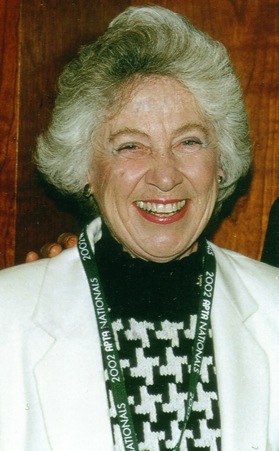
On the national scene, for almost two decades, Sharon K. Hummers accumulated 19 titles in Senior tournaments with a variety of partners, starting with the 50+ title in 1991. She then proceeded to win a string of six in a row (1991-1996), followed by victories in 1999 and 2001, a decade after her first win. Along the way she was a finalist four times (1989, 1997, 2000, and 2002). In the 60+ age group, she has been a champion three times (1999, 2002, and 2004) and was a finalist in 2000, 2001, 2003, 2005 and 2006. In the 70+ age group, she won four consecutive titles from 2005-2008. Hummers also added two Senior Mixed 60+ titles in 1998 and 1999. Many of her tournament victories came with her friend, Winnie Hatch, whose untimely death terminated a long-time partnership. Sharon was an officer of the Long Island Platform Tennis Association, tournament director of the Women’s National Championships in 1992 and 2002, and an active participant in the Long Island Women’s Platform Tennis League.

A lifelong tennis player, Hummers’ introduction to platform tennis came through a tennis friend, Carol Konnor, who wished to get her husband into some form of athletic activity. This was in the late 1970s when platform tennis was booming and Carol had heard about the game. Her back yard was not large enough for a tennis court, but she thought that a “paddle court” would fit and that the sport would be simple enough for her husband to learn. The court was built but, since they did not know any paddle players, Sharon and Carol played with Sharon’s husband, Herb, and his tennis partner. Before long Carol and Sharon were hooked on the game. Many Sundays there would be a group who would throw their sneakers on the court, randomly getting a partner, and play for hours.

Another event sparked further interest. A friend heard about the finals of the Tribuno Tour being contested at Forest Hills, and he urged Sharon to make the trip and watch how the game was supposed to be played. That experience sold her. This was more than a backyard exercise. it was really a challenging sport. Hummers began entering tournaments with Carol Konnor, initially B events, and then A events. In a few years, she became so proficient at the sport that she qualified for the Region I Women’s Presidents cup team. She and Carol reached a National Ranking of 8th. Sharon continued to play locally on Long Island and was dominant in many women’s and mixed events.

Over the years, Hummers taught the game to hundreds of women from the North and South Shore of Long Island. Her husband tells of playing paddle at various clubs and hearing women on adjacent courts say, “Well Sharon says….”. When four courts were donated to the Village of Garden City, NY, many residents sought out her expertise and teaching ability to learn how to play. She gave many hours of her time in instruction and promotion of the game, and had excellent teaching skills, particularly for novices desiring to learn the basics of the game.

Sharon says that one of the great things about the game is that it is ageless and she is looking forward to when the Women’ s 80+ is inaugurated.

Source: Robert A Brown and Charles E. Vasoll

Odenbach, Fritz

Rochester, NY, would not be the Paddle Mecca it is today without Fritz Odenbach. As a family owner of Shadow Lake, he helped build two public courts in 1979, and has hosted the Shadow Lake Tournament 29 consecutive years. The Halloween parties at the “White House” were legendary and helped define why platform tennis is such a sociable and fun game, both on and off, the court. During his open era playing career, Odenbach achieved a National Ranking as high as 5th, winning. the Men’s 45+ Nationals in 2006 and the 55+ in 2010. He was also a finalist in the 45+ in 2000, the 50+ in 2011, and, with his wife, Sandra, in the Husband-Wife Nationals in 2007 and 2009. Fritz also won numerous regional (mostly National Ranking) tournaments, in Rochester, Cleveland, Pittsburgh, and Toronto. Odenbach served on the APTA Board on two occasions, from 1984 to 1987 as President of the original Region VI, and again from 2000 to 2006. He headed the Men’s ranking committee for more than 20 years, an arduous task during the busy playing season that requires careful attention to detail.

Odenbach always put the game first. In the early 1980s, he worked with the Region IV President to realign the western regions, even though it meant his region (Rochester and Toronto) was merged into Region IV, and a new region, which included Chicago, was created. Fritz also chaired the hugely successful and fun National’s four times, in 1988, 1996, 2000 and 2008.

Everybody in the game knows Fritz. He is a tough but fair competitor on the court, and a true gentleman off the court. When involved in a paddle event, he is always thinking about the other players, reaching out and engaging with them, ensuring that everyone is enjoying themselves and having a good time. He is the consummate ambassador of the game and friend to all.

A close friend in Rochester notes that, “There were guys before the Odenbachs who started paddle tennis in Rochester, but without them it would not have taken off like it has.” From the two courts he helped to build, the city now has five. In a recent article in the Rochester Democrat & Chronicle Fritz was described as “a player and pioneer” and the author adds that, “Odenbach’s name in platform tennis circles is as solid as the concrete, stone, and asphalt that his family’s business, The Dolomite Group, has provided for roads and buildings.”

Scott Mansager

Mansager, Scott M.

Known for his amazing forehand return of serve and his patience, Scott Mansager was one half of one of the most prolific teams ever to play Platform Tennis. Scott and his partner, Flip Goodspeed, dominated the men’s circuit from 1996 to 2010 winning eight Men’s National championships, including five in a row from 1996 to 2000, a record that may never be broken. The feat earned them recognition in Sports Illustrated’s “Faces in the Crowd.” The duo were back in the winner’s circle in 2002, 2004, and 2008, and were finalists in 2001, 2007, and 2010. On moving into the Senior ranks, Scott and Flip won the 45+ in 2008 and 2009. Winning a Senior and Men’s Nationals had been accomplished only once before, by Richard Hebard in 1961. Mansager also teamed with Hall of Famer Sue Aery to win the 1999 Mixed National championship, becoming only the third player in the history of the game to win Mixed and Men’s Nationals in the same year. Scott also served on the APTA Board of Directors from 1998 to 2002

Scott and Flip were tremendous athletes and tough competitors who dedicated themselves to achieving their maximum potential through teamwork, preparation, and a devotion to physical fitness, particularly around national championship tournament time. The success they had is all the more remarkable given that they lived and practiced in different cities, meeting just a few times to play before traveling to the mere 3-4 tournaments they played per year. Even more importantly, as a champion, he was an outstanding sportsman, ambassador and role model.

After a career in the technology world, Scott became a highly respected paddle pro in Chicago.

Source: Stephen W. Baird, induction remarks and Sport’s Illustrated, May 10, 1999 and January’17, 2009

Dave Kjeldsen, founder of A2Z (later renamed Viking Athletics), with his familiar horned hat and cigar

Kjeldsen, David C.

In the mid 1980s, by his own description, he was one of the world’s most dedicated couch potatoes. Then, one Friday evening his sedentary existence miraculously became a thing of the past when he was invited to play mixed doubles on a small, elevated court surrounded by chicken wire. With the paddle he was given in one hand, a can of beer in the other, and a cigar between his lips, Kjeldsen became the poster child for sports enthusiasm. He got hooked on the game and started playing more and more.

The only problem was it was not a cheap hobby, since a sleeve of balls cost $10.

Kjeldsen called Hedstrom in Ohio and negotiated a deal where he could buy the Vittert balls he was using by the case load at a discounted price, and distribute them to friends and clubs that needed them for tournaments. Hedstrom was delighted with the increase in business and offered further discounts. Finally, Kjeldsen began thinking: “Why not set up a distributorship for a broad range of platform products?” That lead to the formation of A2Z Products, through which he would sell the products of leading platform paddle manufacturer, Marcraft Recreation Corporation, at dealer pricing. Overnight he was in business. He sold the first paddle at his club in 1989, and then expanded his sales to players across Long Island, eventually developing retail accounts nationally. By the time he purchased Marcraft’s domestic platform tennis production facility in April of 1995, he was its largest customer.

David’s impact on the sport was immediate as his technological advances and innovations made the game easier to play. But, it was his leadership and optimism that separated David from everyone else. His passion and love for the sport was contagious and his pursuit of excellence made those around him believe that he was capable of anything! His second place finish at the Ross Tournament back in his playing days proved the point.

For over 20 years, the unofficial start to every tournament was when there was an official “David Sighting” of Kjeldsen wearing his trademark Viking horned hat. He embodied the spirit of the game, welcoming all players—whether new to the tournament scene or the top seeds—with a warm smile, or a new paddle to try, or, sometimes, if you were lucky, a joke you could not repeat. He was truly one of the game’s greatest ambassadors. Dave was also a major force behind the growth in the game by donating jackets, tee shirts, hats, bags, mouse pads, and other merchandise for both adult and junior events

Kjeldesen went above and beyond being “just a vendor” because he felt it was the right thing to do for the game. He understood that “the toughest thing about success is that you have got to keep on being a success.” Anyone who ever called Viking after hours knew that the voice on the other end was none other than “that guy with the horns.” Patty Hogan recalled that her phone calls with David always ended the same way. She thanked him for his help and he responded by saying, “it’s my honor and privilege.”

David’s persistence, passion, expertise and vision played a major role in where the game is today.

Source: Patty Hogan, Induction remarks and Platform Tennis News, Summer 1996

Flip Goodspeed

Goodspeed, Flip

Philip W. “Flip” Goodspeed was one half of one of the most prolific teams ever to play the game. With partner Scott Mansager, he dominated the men’s circuit from 1996 to 2010. During that time, they won eight Men’s National championships, including five in a row from 1996 to 2000, a record that may never be broken They were recognized in Sports Illustrated’s May 10, 1999 edition of “Faces in the Crowd,” after winning their fourth straight. Goodspeed and Mansager again won the Nationals in 2002, 2004, and 2009, and were finalists in 2001, 2007, and 2010. Moving into the Senior ranks, Flip initially teamed with Andy Todd to win the 2007 Men’s 45+ Nationals, becoming the first man since the early 1960’s to play in the finals of both the Men’s Nationals and a Senior Nationals in the same year. He then teamed up with Scott to win the 45+ again in 2008, and both the Nationals and the 45+ Nationals in 2009. Winning a Senior and Men’s Nationals had been accomplished only once before, by Richard Hebard in 1961, but he did it with different partners.

Before teaming up to combine their talents and strengths, Flip and Scott had faced each other in the finals of several Midwestern tournaments. Both were tremendous athletes and tough competitors who dedicated themselves to achieving their maximum potential through teamwork, preparation, and a devotion to physical fitness, particularly around national championship tournament time. The success the two had is even more remarkable, given that they lived and practiced in different cities, meeting just a few times to play before traveling to the mere 3-4 tournaments they played per year.

Goodspeed was the first top player to use a two-handed backhand power shot that became one of the most feared weapons in the game. He also perfected the chip and charge, using his lightning quick reflexes.. Even more importantly, he was an outstanding sportsman, ambassador, and role model and was credited for promoting the game and bringing it to new levels in both Grand Rapids (MI) and Cincinnati.

A Michigan native, Goodspeed attended East Grand Rapids High School, where he received numerous individual and team state titles in both golf and tennis. He went on to play tennis for Denison University, where he led his team to a top ten national ranking all four years. His tennis coach at Denison, John Tegtmeyer, introduced Flip to platform tennis and inspired in him a love for the game.

In 1988, his long distance relationship with his future wife frequently brought Goodspeed to Cincinnati, where he first began entering platform tennis tournaments. He continued to play in the Mid-Westerns Tournament for 25 consecutive years, winning 16 of those titles and being honored as a “Legend of the Mid-Westerns” in 2005. Flip considered Cincinnati his second home so it was appropriate that it was there in 2009 that he won both the National championship and was inducted into the Platform Tennis Hall of Fame.

Professionally, Goodspeed had a long career in the steel industry, starting in 1986. He formed his owned sales representative agency, Goodspeed Metals Group, in 1998.
An avid golfer with a scratch handicap, Flip has won the club championship at Kent Country Club in Grand Rapids five times, and holds the course record of 65, six under par. He has successfully completed numerous marathons, including Boston and Chicago, and is an avid skier, cyclist, sailor, bowler, and tennis player.

Source: Stephen W. Baird, Induction remarks

Russell, Doug

Highlights of Russell’s career include winning the 1976 Tribuno World Championships at Forest Hills, with partner Gordon Gray; the Mixed Nationals with Hilary Hilton in 1977, and 1979-1982; and the Men’s National, with Clark Graebner, in 1979, and with Bob Kleinert in 1984. He was also a finalist in the Men’s Nationals in 1977 and 1982-1983, and 1985, and in the Mixed in 1978. In addition to his impressive achievements on the court, Doug was instrumental in persuading the APTA to re-activate the Men’s Singles Championship, which had not been played since 1937. Fittingly, Doug proceeded to win this event five times between 1980 and 1987.

On graduating to the “senior” circuit, Russell continued his dominance in National events, Teaming with Hank Irvine, he won the 55+ Nationals in 2001 and 2003, the 60+ Nationals in 2004-2006, and the 65+ in 2009.

After graduating from the University of Georgia in 1966 as a top player and captain of the tennis team, Russell soon settled in New York City. During his peak playing years, he was flamboyant and an innovator on the court, whether it was his bell-bottom pants, his between the leg shots, his reverse spin overheads, or his meditating during the crossover. Doug was, and still is, one of the most graceful and stylish players in platform tennis. He was a master of the drop shot and one of the finest volleyers and lobbers in the game.

During the mid-seventies, Russell also took on a new role—entrepreneur and one of the game’s first paddle professionals. He ran the Manhattan Platform Tennis Club, of which he was a part owner, and The Apple Platform Tennis Club. Doug had his own autograph paddle with Marcraft, the first by any athlete in our sport. He also authored a book on platform tennis, as well as numerous articles, gave many exhibitions all over the country, and was instrumental in starting the Professional Platform Tennis Teaching Association.

Mangan, John F.

John Mangan was one of the top players of the game in the 1960s, 70s and early 1980s. A member of Manursing Island Club in Rye, NY, he first played paddle at the Fox Meadow Tennis Club when he was still playing indoor tennis tournaments. With partner Bob Kingsbury, he won the Men’s Nationals in 1972 and 1973, and was a finalist in 1970-1971, and 1975. With Kingsbury, John also had the distinction of winning the first prize money tournament ever, held in 1973 at the Sea Pines Resort in Hilton Head, SC; and, in 1974, winning, in Amelia Island, FL, the first nationally-televised tournament, carried by CBS’ Sports Spectacular. The duo won every tournament on the circuit, at least once—three times in the case of the Cleveland Invitational—except at Short Hills. Mangan later wiped out that exception by winning at Short Hills with Tommy Holmes. John reached the Men’s Nationals semi-finals eight times, five times with Kingsbury, and once each with Ted Winpenny, Gordon Gray and John Adams. In the semi-final with Winpenny, they were leading two sets to one when Winpenny was informed his father has just died and they had to default. John also won the Mixed Nationals in 1970 with Susie Harris, and was a finalist with Gloria Dillenbeck in 1974 and 1975. In 1980, and somewhat past his prime, at the age of 44, John won the Indoor Men’s Nationals with John Adams against a strong field, defeating the three top nationally ranked teams. He also served as an APTA Board member from 1974-1976.

Mangan was a fine all-around athlete who was twice selected to All-Philadelphia City High School in Basketball, and once in Football, and was elected to the Haverford School Hall of Fame in 2010. He also was ranked number two in Junior (under 18) tennis by the Middle States Tennis Association. He had an outstanding college tennis career at the University of Pennsylvania, where he was captain and played number one doubles and singles for three years, as well as two years of varsity basketball as a starting forward. In tennis competition, he played at Forest Hills in the U.S. Open Tennis Championships seven times, was ranked by the USTA in the top 53 in Men’s Singles twice (1964-1965), and won the Bermuda Championships, singles and doubles, in 1963 and 1970. He also won the U.S. National Father and Son Clay Court Championship in 1979, was a finalist three consecutive times in the Father and Son Grass Court Championship from 1978 to 1980, and was ranked number one in 1979 and in the top ten for eight years with three different sons. Later in his tennis career, he won the California State Senior Singles in the 45+ division twice, in 1981 and 1982. and once in the 50+ division in 1986.

It was fellow Hall of Famer Zan Carver, a former tennis partner, who introduced Mangan to paddle. After a year of “social” paddle, Zan teamed John with Kingsbury because he felt strongly that their games would compliment each other, as did Zan and Dick Hebard when they won the Men’s Nationals. One memorable match during his time with Carver had them playing in the Rye Invitational. In their fourth match of the day, Carver fell and twisted his ankle badly. They won that match but lost the next one to Dick Squires and Tommy Holmes in a long three-setter. After the loss Zan went to get his ankle injury diagnosed. It was broken.

John’s trademark shot, a heavy, top-spin forehand, was arguably one of the best offensive weapons in the history of the game. As his partner commented, “Herbie (Fitz Gibbon) probably had the best return of the era, in a class with Gordie Gray, but John Mangan had the heaviest return ever. Just ask those who faced it. For that reason John’s forehand was the biggest offensive weapon in the game in the 1970s. Period.” His confidence in all situations, in any event, in any arena, whether ahead or behind, was the same—total belief that he could hit that forehand past, between or right through any team out there.

While extremely competitive, beneath the surface John was an outstanding sportsman and a true gentleman on the court. He was a strong ambassador for the game, playing countless exhibitions all over North America.

After John graduated from the University of Pennsylvania in 1960, he worked in the officer-training program at Irving Trust Company on Wall Street, while going to night school at NYU’s Graduate Stern School of Business. After graduating, he clerked on the floor of the New York Stock Exchange, becoming an owner of a NYSE membership in 1964, and a partner at Pershing & Company from 1968-1977. He was the Managing General Partner of the venture capital firm Rose Investment Company from 1978-1986, and President and CEO of Prudential Bache Capital Partners from 1986-1992.

Herb Fitz Gibbon

Fitz Gibbon II, Herbert

When Fitz Gibbon and his partner, John Beck, stormed onto the paddle stage it was thought that they had revolutionized the game, as both players relentlessly pounded the serve return to end the point quickly and successfully. In the 1975-76 season, Herb partnered with Hank Irvine for the Men’s Tribuno Tour, winning the inaugural event in Cleveland and reaching the finals in two others. The team also won the Men’s Nationals in 1977 and 1978—going undefeated from half way through the 1977 season through the end of the 1988 season—and the Pro-Keds tournament, held outside Burlington House in New York City. In doing so, Fitz Gibbon and Irvine walked away with paddle’s largest monetary prize ever. Herb also won the Mixed Nationals with B.J.DeBree in 1975 and 1976, and reached the finals in 1977.

Born in Garden City, New York, Fitz Gibbon played his first tennis tournament at the Cherry Valley Club at the age of seven. He played three years of varsity tennis for Garden City High School and won four New York State High School singles titles, a feat that has never been duplicated. Herb then went on to play on the Princeton University varsity tennis team for three years, over which time the team was undefeated in Ivy League play. In his senior year, he captained the team that broke the University of Miami’s 137 match winning streak, the longest in the history of collegiate tennis.

After graduating in 1964, Fitz Gibbon joined the amateur tennis circuit and was ranked 14th in the country, with wins over such outstanding players as Arthur Ashe and Tony Roche. He was a member of the U.S. Davis Cup team in 1965, and, after playing the Australian circuit in the fall of that year, did a tour for the State Department through Southeast Asia in February of 1966 that included a trip to Burma. He was drafted in March, was stationed at West Point, and served as coach of the Plebe tennis and squash teams. He finished his stint in the Army in February of 1968 and was asked by the State Department to return to Burma to coach their national tennis team in preparation for the Southeast Asia Peninsula Games. Later that year, he was a gold (mixed doubles) and bronze (singles) medalist at the Olympic Games in Mexico City.

At this point, Herb was considered one of the best U.S. clay court players, with a victory over Manuel Santana in Spain to his credit. After the sport turned professional in 1968, he became the first amateur to beat a professional at Wimbledon when he upset the 16th seed Nikki Pilic of Yugoslavia in four sets.

In tennis, his serve and forehand were enormous weapons on any surface, and Herb was renowned for his powerful forehand return of serve and attacking style. These play elements came with him to platform tennis. Players talked about the fear that he created on the return, and many a net player tried unsuccessfully to get out of the path of his deadly weapon. Opponents tried all kinds of formations to counter his return, including underhand serves, having the net man stand out of court by the gate, the Australian formation, net man on his hands and knees below the net, and putting both players in the back court. All these techniques failed. Fitz Gibbon did not play pretty paddle by any means, but it got the job done. Herb used his height to great advantage on his serve and overhead and. possessed good hands on the volleys. All in all, he was the dominant ad court player of his time.

Though an aggressive player, Herb was a model of good sportsmanship, and a gentleman, both on and off the court. His 1968 international tennis circuit partner, Allen Fox, a former Pepperdine coach, observes, “He is the classiest guy I know. He’s honest, thoughtful and understanding. The whole time I traveled with him I never got anything negative. When you live with somebody for a year you know the person very well. You’re often driving all night and things come out. Not with Herb.”

Fitzgibbon co-authored the book The Complete Racquet Sports Player, published in 1980 by Simon & Schuster. He was inducted into the USTA Eastern Tennis Hall of Fame in 1999.

His off-court accomplishments are equally impressive. In 1969, he started working as an institutional stockbroker at F. Eberstadt and he finished his Wall Street career as a managing director and portfolio manager at Oppenheimer Capital. Reflecting on his career and tennis, Herb said: “Bill Talbert was the model. He did it better than anyone. He went to college and used tennis as an entrée into business. I wasn’t considered a brilliant financial analyst at first, but it has been my success at Oppenheimer Capital that was my most satisfying achievement. I was supposed to do well in sports.”

The birth of Herb’s son in 1990 led to his active involvement Interplast (now ReSurge International), a charitable organization of plastic surgeons operating on deformed children in third world countries.

Source Hank Irvine, Induction remarks; USTA Eastern Tennis Hall of Fame; Herb Fitz Gibbon, personal communication

Dodd, Gloria Dillenbeck

Dodd reached the finals of five National Championships between 1969 and 1974, winning three titles in a row from 1971-1973. Her partner each time was B.J .Debree. Gloria also teamed up with John Mangan to reach the finals of the Mixed Nationals twice, in 1974 and 1975. As the APTA’s first Executive Director from 1975 to 1981, Gloria defined the new position by her performance, and set high standards for her successors. Her efforts in promoting platform tennis have been rivaled by few.

Dodd started swinging a tennis racquet early and, as a teenager, she was ranked nationally in the 15-and-unders, and in the top 15 among all women players. She also tried badminton and brought home a national mixed championship. At an early age, she also had to choose between her love of the court and her love of the stage. Dance and theater were also passions, and she began to dance at five. She auditioned for George Balanchine and was accepted to the New York City Center Dance Company. However, the demands of the program conflicted with her other passion, tennis. Luckily for the game and the APTA, she opted to put aside dancing and concentrate on tennis.

As a Swarthmore undergraduate, she was Middle States Intercollegiate tennis champion in three of her four years. She still managed to pursue her interest in the arts at college, but this time it was in television. She hosted her own daily TV show, The Magic Lady, on ABC affiliate WFIL. Later on, she had lead parts in Junior League Children’s Theater and Montclair Dramatic Club shows.

Dodd became one of the game’s dominant players, thanks to her wide range of shot making abilities. Her colorful and vibrant personality, and her ability to battle it out were key factors to her on court successes, and also made her a great ambassador for the game. She worked non-stop in her quest to expose newcomers to the game and get important, high profile and generous people to be a part of it, even recruiting then New Jersey Governor Brendan Byrne to participate in an event! The R. J. Reilly Company sponsored her to play in exhibitions and provide instruction at new courts on club rooftops overlooking the Pacific. When a club in Guilford (UK) asked her to bring a group to play a mini-tournament on their new courts to show their members how the game ought to be played, she gladly went abroad, and ended up also making a three-part instructional video for the BBC while she was there. Gloria also helped get the game started in Holland when she hosted Nico de Wal, the President of the Bellfires Corporation, at an APTA exhibition event on a Reilly court at Forest Hills in 1976. After the match, de Wal agreed to build two courts and, when they were constructed in Hapert (near Eindhoven), he invited Dodd to bring a mixed group of sixteen top players to Eindhoven as guests of Bellfires to teach the game to some of the high-ranking Dutch tennis players.

As Executive Director, Gloria served the APTA at a time when major changes were occurring in the sport. Some of these changes were controversial at the time, but most of them turned out to be milestones in the growth of the sport. One change involved the decision to divide the country into paddle regions, and then add representatives from these new regions to the board. Another was her insistence in showcasing the game, taking it to Hilton Head and Amelia Islands, as well as to a Manhattan street corner and to a high school gymnasium in New Canaan, CT. This exposure led to the “professional era” in paddle, where tournament sponsorship led to prize money which, in turn, drew a whole new group to the game: highly skilled tennis and squash players who were able to pick up the nuances of platform tennis quickly—and who oftentimes, picked up the prize money as well!

In the aftermath of these changes many were concerned about the amateurs being left behind in this new era. These concerns were lessened thanks to the joint efforts of the APTA and Gloria in creating the President’s Cup, a year-ending competition that has been extremely popular ever since.

Dodd had a passion for Bingo and, for quite some time, one APTA president was perplexed at her request that she “had to go and run Bingo in the park.” Was she doubling as operator of a bingo parlor? No, Bingo was the family dog.

Source: Platform Tennis News, Patty Hogan, and personal communication from Gloria Dodd