Peckinpaugh Jr., Walter

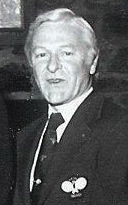
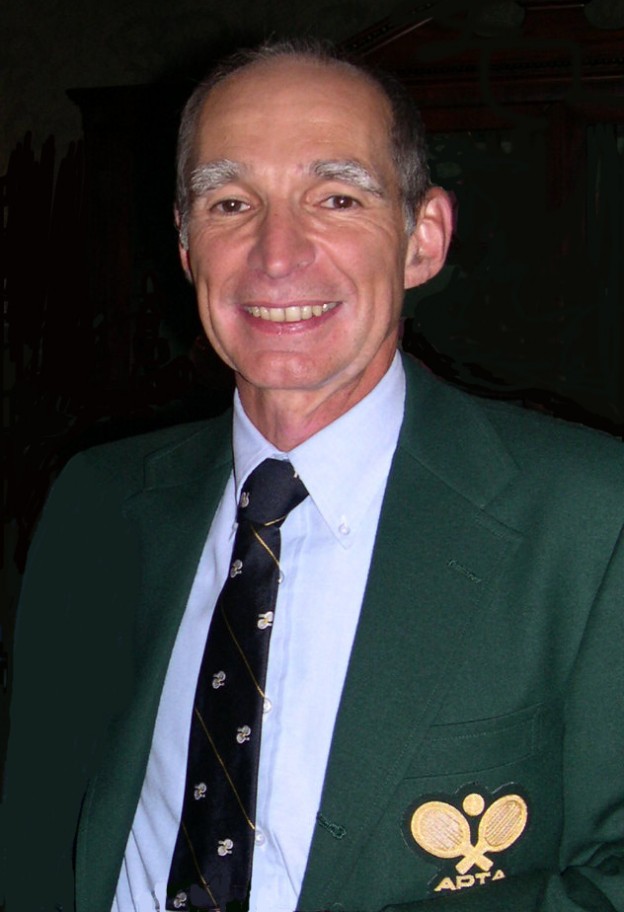
Walter Peckinpaugh made a significant impact on the growth of platform tennis across the country, particularly in the Mid-Western Region. As a player, he possessed speed and spin that made him a difficult individual to play against. His study of the competition and their strategies set him apart from others. In short, he maximized his talent, won numerous championships, and got better with age. However, his true legacy was in his organizational leadership, vision, promotional abilities, technical competence, and expertise in chairing major tournaments. Without his contributions, there would be a vastly different landscape today on the national platform tennis scene.

Peckinpaugh served on the APTA Board of Directors for 12 years in the 1980’s and 1990’s, and chaired the Nationals in Cleveland twice, in 1987 and 1993. He ran four National Seniors events, ten regional events, and countless local championships. Walt also set up the national APTA database to track memberships and fees.

When he became President of Region IV—which then stretched from Pittsburgh to the Colorado border on the west, and from the Canadian border on the north and south to Tennessee—Cleveland was the only national ranking tournament for men west of the Hudson River. Walt worked with the Board to reorganize the regions and start more national ranking events outside of the East coast. When asked where he would suggest holding them, he replied, “little towns like Chicago, Detroit and Cincinnati.”

An entrepreneur, a fundraiser, a manager, a computer wizard, and a natural salesman and promoter, Peckinpaugh is a rare breed. A systems thinker, he brought innovative approaches to problem-solving, a Barnum and Bailey with computer firepower! And, Walt had the wisdom to partner with his bride, who was truly his secret weapon for success. His unique combination of skills, energy and passion almost guaranteed success at anything he tackled.

One of his funding accomplishments for the APTA was convincing Arnold Dietri, the owner of Hedstrom, then the principle ball manufacturer, to raise the wholesale price of the ball by .10 and sending the money to the APTA. When asked by Arnie whether he would lose revenue, Walt replied that he would cover the “lost sales”. While Hedstom only agreed to do this for one year, the APTA received over $30,000, which Walt insisted be put into a reserve account to cover Life Memberships.

After his induction in 2004, Walt continued to serve his sport by being an active member of the Hall of Fame selection committee.

Source: Rich Maier, Induction remarks and personal communication from Peckinpaugh, March 2014

Gerry Manhold

Manhold, Gerald W.

Manhold served for five years as the representative for Senior-level play on the APTA Board, and was instrumental in expanding Senior Circuit events, and in establishing two new age categories—the 60+ and the 65+. He would later win four titles in these two categories—the 60s in 1979-1981, and the 65’s in 1990. Manhold was a finalist in the National 55’s twice, and won the Mid-Atlantic senior event four times. He also served as a chair umpire for both the USTA and the APTA.

Manhold was an accomplished athlete, and lettered in tennis for the four years he attended Syracuse University. In his senior year, he was the number one ranked player, and served as team captain in his senior year. He also played varsity soccer as a goalkeeper and was selected for the All-East soccer team in 1939.

Like many “fathers-of-the-game” in key platform tennis areas, Manhold took his love for tennis to platform tennis, and got the game started in the Florham Park area some 30 years ago. He also taught the game and brought many New Jersey players to a level where they could compete successfully in National events. Gerry persuaded top players to put on clinics and exhibitions for the public in northern New Jersey and invited local officials in order to cultivate their support.

During his term on the APTA Board he added an important dimension to Senior play with a trophy, bearing his name, being awarded annually at a competition among Senior men from each of the six APTA regions.

Source: G. Estabrook Kindred, Induction remarks

Squires, Richard C.

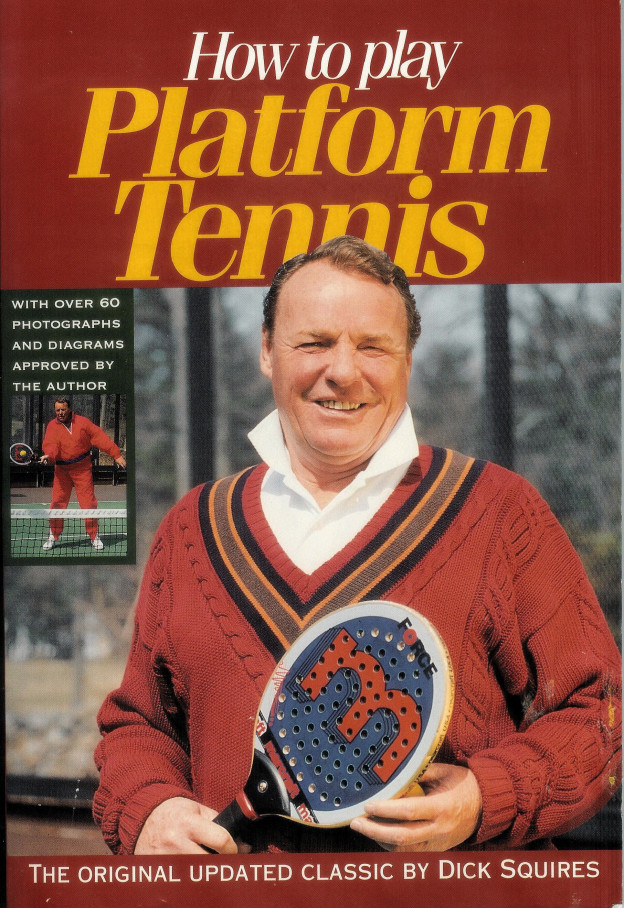
Though Richard C. Squires was a fine player, winning the Men’s title in 1966 and later adding two Men’s 45+ titles, he made his mark on the game as an outstanding promoter who helped take it on a growth spurt never seen before or since. When Life Magazine put paddle on the cover of a 1967 magazine, you could sense that something was about to happen in terms of the game becoming the “in thing.” What the sport needed, however, was a flamboyant advocate and showman who could lead the growth and become a catalyst for opening new frontiers. Squires did exactly that and broke a few eggs along the way. “Mr. Paddle” wrote about the game, published books on the game, produced instruction films about the game, built courts, endorsed attire, conducted clinics and found sponsors for an exciting new tournament that CBS Sports televised for its Sports Spectacular show. He also opened the first commercial platform tennis facility on a roof-top in New York City.

Born in New York on September 27th, 1931, Squires spent four years of his childhood in Scarsdale before his family settled in suburban Bronxville, NY. In his book, One Moment at a Time: A Love Story, which was dedicated to his wife Joan, Squires recalls his youth, writing that “while attending high school I was a four-letter athlete and a one-letter student (straight Ds).” However, after a less than spectacular academic career in high school, Dick made the Dean’s List at Williams College, while also winning the tennis singles title four times and the squash title twice. He was a New England intercollegiate singles and doubles tennis champion, as well as a two-time finalist in the National Intercollegiate Tournament in squash. In 1949, Squires, and Gil Bogley won the U.S. Junior Doubles championship and he ended the year ranked sixth in the nation in the 18s singles. The following year, he was named to the U.S. National Junior Davis Cup squad. His tennis coach, Clarence C. Chaffee, said Squires was “the finest all-around racquets athlete” he ever coached. His legacy lives on at Williams College with The Squires Cup, which is “awarded annually to a talented varsity Williams College racquet-wielder who exemplifies leadership by selflessly sharing his or her on-court skills with teammates.”

Despite a bad back that plagued him throughout his lifetime, Squires claimed a national championship in squash in 1953, before winning the Men’s Nationals in paddle in 1966 with Ted Winpenny, Jr., and two more platform tennis titles in the Men’s 45+ (1976, 1983). His game was a tricky combination of dinks, with attacking charges, lightening quick reflexes around the net, and surprise lobs. But, he made his mark on the game more as a swashbuckling promoter, a mission for which he put his career and livelihood on the line. Dick wore pink sweaters, a “paddle glove,” and hit shots from behind his back in the fifth set of the finals. He had big dreams and relentlessly kept trying to take the game forward. Though paddle never quite made the big-time and took on a different energy level, and Dick eventually moved on to other roles in life, no man or woman ever pushed the game so intensely and in so many exciting directions. He became the paddle entrepreneur, as writer and book publisher, instructional film producer, and court builder. Squires endorsed a line of paddles, shoes and clothes bearing his name, and did paddle exhibitions all over the country, conducting 43 of them over one 18-month period. His nickname soon became “Mr. Paddle” wherever he was introduced. His colorful personality and success in pushing the sport earned him a three-page feature story in the December 20th, 1976, edition of People Magazine, that featured the rock group Led Zeppelin on the cover.

The mid-70s were a high point for both Squires and the sport. In 1973, after identifying Seagram’s as the tournament sponsors for the first invitational event, held in Hilton Head, SC, he held a cocktail party the night before, and did the draw live, straight from the hat. Each of the sixteen players received the first-ever paddle jackets, and, true to form, they were bright yellow. The next year, the event was held at Amelia Island and the new jacket had a big patch on the front displaying its newfound sponsor—Mercedes Benz. CBS Sports televised both events for its Sports Spectacular show. Such excitement was created that, shortly afterwards, the then #1 tennis player in the world, Stan Smith, entered the Short Hills tournament and the stands were jammed packed.

Dick was a longtime resident of Rowayton, CT. He died of emphysema at 72.


Source: Steve Baird, Induction remarks & Obituary

Bill Pearce, VP of Coca-Cola Bottling Company of New York, presents past president Bob Kingsbury and the APTA with the Robert Sticker platform tennis painting

Kingsbury, Robert R.

Robert Kingsbury was a key figure in platform tennis in the 1970s and 80s, as both a player and an APTA officer. Along with his “true partner and soul-mate, John Mangan,” he won the Men’s Nationals in 1972 and 1973, and was a finalist three times, in 1970, 1971 and 1975. As a player, Bob was arguably the top forehand court player of his era. As APTA president from 1978 to 1980, he helped in the game’s transition from a game to a sport to a business by getting Coca-Cola and Seagram’s to invest at the national ranking level. But, while prize money was important for growth, the health of the game required keeping the average player involved and interested—a difficult balancing act, which Bob handled well. He also enlisted Hertz to underwrite events for club-level players, culminating in the two-day President’s Cup that remains one of the high points of each paddle season. Bob’s leadership also took platform tennis to 6th Avenue in New York City, where Dick Reilly assembled an aluminum court in front of the Burlington Building for the Pro Keds Championships, and also to the revered Forest Hills tennis stadium where the Tribuno World Platform Tennis Championships were held.

Kingsbury’s father, Oliver Kingsbury, was a long-time member of the Fox Meadow Tennis Club where he encouraged Bob to watch, emulate and eventually play with his childhood heroes, including Zan Carver, Dick Hebard, Bill Pardoe and George Harrison. Carver eventually made a paddle player and partner out of Bob and then introduced him to his longtime partner Mangan. It’s no wonder he turned into such a fine player and supporter of the game. His quickness was spectacular and his ability to chase down opponent’s apparent winning shots and then regain lost court position were unequaled. On shots off the wire he literally jumped for propulsion. He excelled in a game where a powerful service return is mandatory—and in the days when rackets were made of wood, not the offensive weapons of today’s technology

Mangan recalled one of Bob’s spectacular gets during a match in Detroit. While chasing down a lob that had gone over his head, Kingsbury made the return but slipped and his legs went through the snowboards, so he was half out of the court. Mangan kept the ball in play for a few more exchanges with high lobs while Bobby struggled to extricate his legs. Finally, he got free, jumped up, and the point continued for several more exchanges until they won the point.

Through the years, Bob was a true promoter of our game and never said “no” when asked to do more. He and John played in countless exhibitions, from sunny Florida all the way north to Detroit and Toronto. He also was able to develop sponsors for the game during a time when many top players were both tennis and platform tennis professionals. His cultivation of Coca-Cola as a sponsor lead to the commissioning of the now familiar platform tennis painting by marine artist Robert Sticker. This accurate depiction of the game being played at its “home,” Fox Meadow Tennis Club, has become iconic, and reproductions still serve as prizes for tournaments, and gifts for platform tennis lovers. When Seagram’s provided funding for the Vat 69 Gold Cup Tourney in 1973, an invitational event in Hilton Head Island that was the first championship platform tennis event held in the south, it was fitting that Bob and John won. The the following year, the duo also won the tournament in Amelia Island, the first one televised nationally.

Kingsbury was born and raised in Scarsdale, NY, and graduated from Scarsdale High School in 1954. In high school, he was quarterback for the football team, played basketball and tennis, and, with his future wife, Clare Russell, was voted “Best Couple.” Bob then went on to Williams College where he played basketball, tennis and squash, as well as Dixieland Jazz with Phinney’s Favorite Five. He graduated in 1958 with a BA in Chemistry, married Clare, and joined the N.W. Ayer advertising agency in Philadelphia, later moving with the company to New York in 1959, and on to Detroit in 1980. Along the way he and his wife raised three children, Linda, Mark and David, while living in Philadelphia, PA; Edison NJ; Scarsdale NY; and Franklin, MI.

Bob retired from Ayer in 1991 and moved to Williamstown, MA, while spending summers in Kiawah, SC, and then Vero Beach, FL, as well as Point O’ Woods, NY. Retirement was filled with family, golf, and traditional jazz, leading and playing clarinet with the Williams Reunion Jazz Band, an active, touring, semi-professional jazz band made up of talented septa- and octogenarians.

Source: G. Estabrook Kindred, Induction remarks & private correspondence with Robert Kingsbury

Paul G. Sullivan

Sullivan, Paul G.

In the 1950’s and 1960’s Paul Sullivan was, without a doubt, a doer, an “in the trenches” guy who made an impressive contribution to our game over many years, although not necessarily on the court. Although he was a fine rackets man, it was his work for the APTA—as an administrator and promoter—that was extraordinary. Sullivan was President of the Association in 1964 and 1965, and was on the Board for many years prior to that, serving as secretary (1961-1963), treasurer, vice-president, and chairman of the nominating committee. During his tenure, the association improved its communication with the membership, and set the sport on a more professional footing by demanding quality umpiring and giving APTA more control over tournament draws.

Sullivan was born in Brooklyn, NY, and lived most of his life in Scarsdale, NY. He was a graduate of Princeton University and served in the Navy as a radioman in Annapolis.[During WWII?] His work career spanned over fifty years with Hayden Stone and then Smith Barney.

In his prime, Sullivan exhibited great court sense and graceful strokes and made it to the quarterfinals of the National Championships on one occasion. That achievement becomes more impressive at a time when, if you could get through the first round, you had done something. But, his true achievements came in the boardroom, not the playing court. When he became President, the APTA was coasting along, as it had been for years, happy, confident and a bit insular He approached the job with a “wish list,” and set about creating a more professional approach for the sport. Wanting some sort of steady communication from the Association to its growing member base, Sullivan was instrumental in the birth of the APTA Newsletter. When he wanted something in apparel with the APTA logo, we got an APTA tie. When he wanted professional umpiring for National Championships, the APTA Umpires Committee was formed. (Paul was also a USTA umpire and served in this capacity at the U.S. Open and Wimbledon). Perhaps more importantly, he wanted more oversight of APTA tournaments and so the Tournament chairman’s job function was expanded to allow the association to oversee tournament draws.

There were two other items on Sullivan’s “wish list.” He wanted to build exposure for the game and knew that one way to achieve this would be to change the venue of the Nationals away from Fox Meadow Tennis Club where, except for a few tournaments in the mid 1930s when they first began, they were always held. He accomplished that when the Nationals were held at the Wee Burn Club in New Canaan, CT, and this started the geographical movement of tournaments practiced today. Lastly, he wanted to identify and honor people who had done most for paddle, and so Paul helped create the APTA Honor Award in 1965.

During the many, many years that the Nationals were held at Fox Meadow, he was the perennial tournament chairman, a job laden with tremendous detail, logistics and planning. He was drawn to it and did it to perfection. Sullivan is pictured in Oliver Durrell’s The Official Guide to Platform Tennis, published in 1967, with marking pen in hand, hard by the 128-team draw sheets in one of those many tournaments. He is also rendered, with artist’s license, in Robert Sticker’s well-known platform tennis painting, far court, ad side, on his way to making one of his signature backhand shots.

Sullivan retired to Vero Beach, FL where he died in 2009.

Source: G. Estabrook Kindred, Induction remarks

Robin Rich Fulton

Fulton, Robin Rich

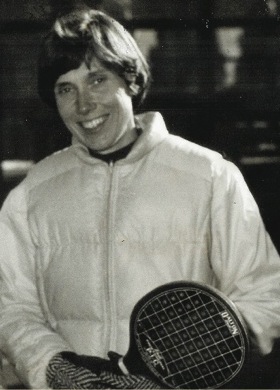
A strong all-around athlete, Robin Rich Fulton earned her place in the Hall of Fame through a string of outstanding on-court performances in the 1980s and 1990s. After three runner-up performances in the Women’s Nationals in 1980, 1981, and 1982, Fulton went on to win the event seven times—with four different partners—between 1983 and 1997, and was a finalist in 1992 and 1995. In the mixed doubles, she was National Champion four times between 1983 and 1992, and a finalist seven times from 1981-1996. On joining the ‘Senior’ ranks, she won the women’s 40+ Nationals in 1997 and 2002, and was a finalist in that event for the last four years. All totaled, she holds a total of 12 national championships. Robin was also the driving force behind the establishment of the highly successful “Viking Cup,” a regionally conducted adult-child competition aimed at promoting both the game and sportsmanship to the next generation of younger players.

Fulton grew up with platform, since her parents had a court installed on their property. But, she had other sporting interests as well. In tennis, she was nationally ranked in singles in the 12-and-under class and, as a student at Low-Heywood School in Stamford, CT, was New England’s top-ranked 18-and-under in doubles. She was also a standout field hockey, soccer and basketball player.

Robin continued playing tennis at Elmira College, where she was ranked number one, before transferring to Springfield College (MA), where she won the Massachusetts State doubles crown. Along the way she realized she was “good, but not good enough to make a living as a tennis pro” and she started getting more involved in paddle, with encouragement from her husband and tournament partner, Gail Callaway.

When Fulton burst onto the platform tennis scene in the early 1980’s, it was clear that she would be a major force in shaping the future of the women’s game. Her classic ground strokes, quick hands, and spin serve were unsurpassed. She was a power player, aggressive and known for going for any shot, including her partner’s. As part of a crowd watching her play, one often heard someone say “Wow, she plays like a man!” But, in reality, many men watching her wished they could play like she did. However, making a living in the game was difficult and, despite being ranked number one in 1980, she made just $4,000. “Right now, I can afford to buy a hamburger per week on what I earn,” she was quoted as saying.

A long-time partner said: “Her sportsmanship is impeccable. She has never made a bad call. She never blames a loss on a partner, and she treats all opponents with respect. She is a wonderful ambassador for the game of platform tennis.”

Aside from her outstanding playing record, Robin was an untiring supporter and promoter of the game. She was very unassuming, always approachable, and willing to share her knowledge, and spent endless hours conducting clinics at various locations throughout the country. Participants described these clinics as not only informative, but fun.

Source: The Hour, November 5, 1980 and Robert A. Brown,Induction remarks

B.j. DeBree

DeBree, B. J.

As both a competitor and an instructor, B.J. DeBree has played a major role in platform tennis, both nationally and in her home state of New Jersey, for more than 40 years. She won the National Mixed Doubles Championship in 1974-1976, and was a finalist two other times in the decade, in 1971 and 1977. DeBree also won the National Women’s Doubles from 1971-1973, and was a finalist in that event in 1974 and 1976. She continued her winning ways on the Senior level, capturing the Women’s 40+ and 60+ in 1990 and 2010, respectively, and making the finals in the 50+ in 1992, the same year she won the Mixed 50+. She also won many state, regional and club events, including a total of 26 championships at her club Seabright Lawn Tennis and Cricket Club in New Jersey. Aside from this outstanding playing record, she was an active promoter of platform tennis as a teacher in the Monmouth County area of New Jersey.

DeBree had a reputation as a keen competitor, while always conducting herself in a sportsmanlike manner. A strong supporter and admirer said, “She always had a distinct appreciation and respect for her partners, opponents, officials, and tournament organizers, as well as the rules of the game. Her ability to successfully build a bridge between sportsmanship and competitiveness in sports, and in everyday life has been an inspiration to me and, undoubtedly, to others.” And, a long-time partner and co-national champion said, “I could never have won a national championship without her consistently reliable skills, which were resistant to outside competitive pressures. The tighter the situation, the better she played. Her calm demeanor was always the same, whether we led by 5-0 or were in a tight 5-all battle. An elegant player, a consummate and sportsmanlike competitor, she was, and is, a true credit to the game of platform tennis.”

Aside from this outstanding playing record, she and her close friend, Nancy Dickson, taught clinics to legions of youngsters, and some adults as well, in the Monmouth County area of New Jersey. Some of her young students went on to become state and national junior champions. In addition to these many on-court activities, she served with distinction as a director on the board of the American Platform Tennis Association during the 1970’s.

Source: Robert A. Brown, Induction remarks