



Palmer, Jared
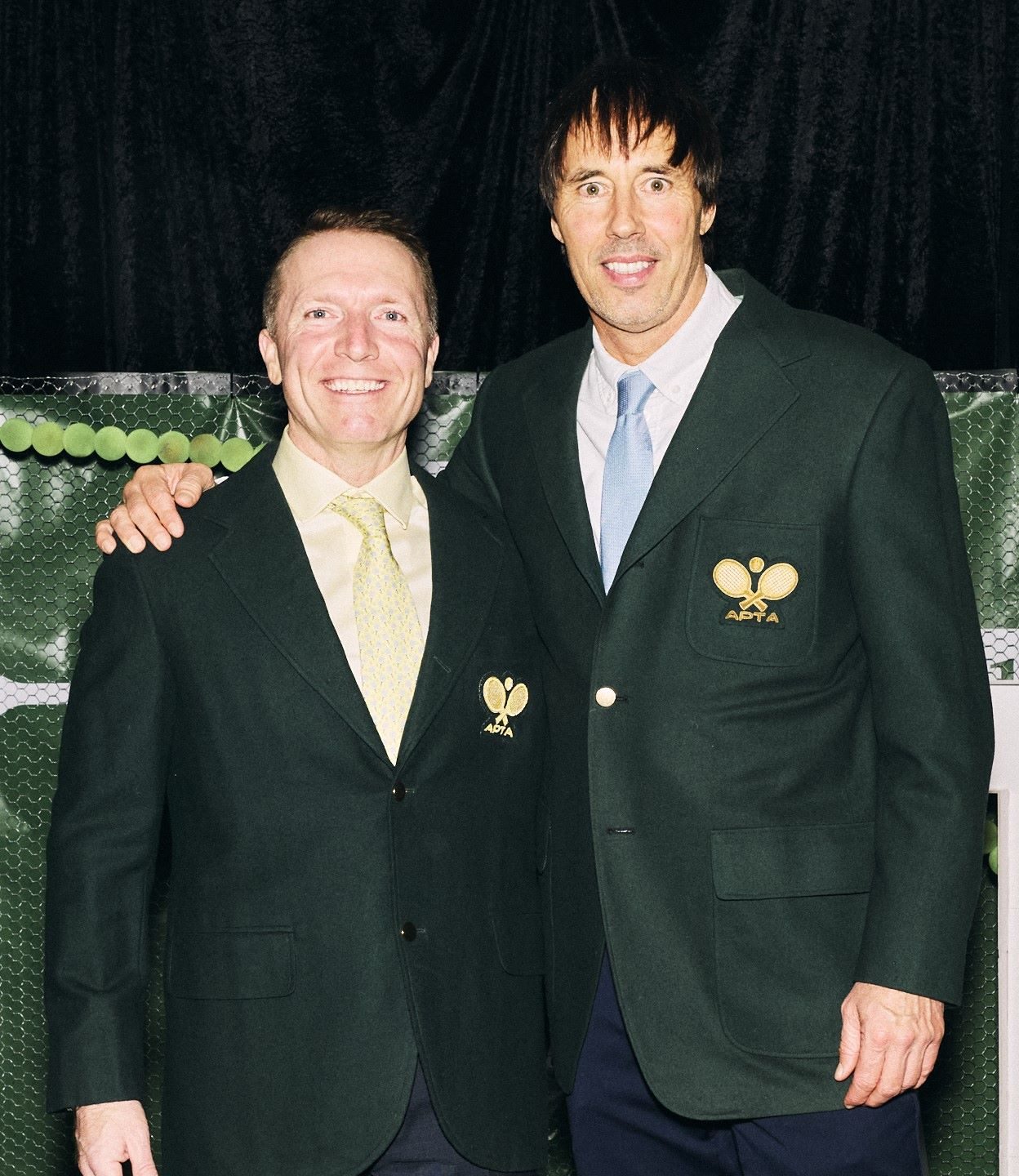
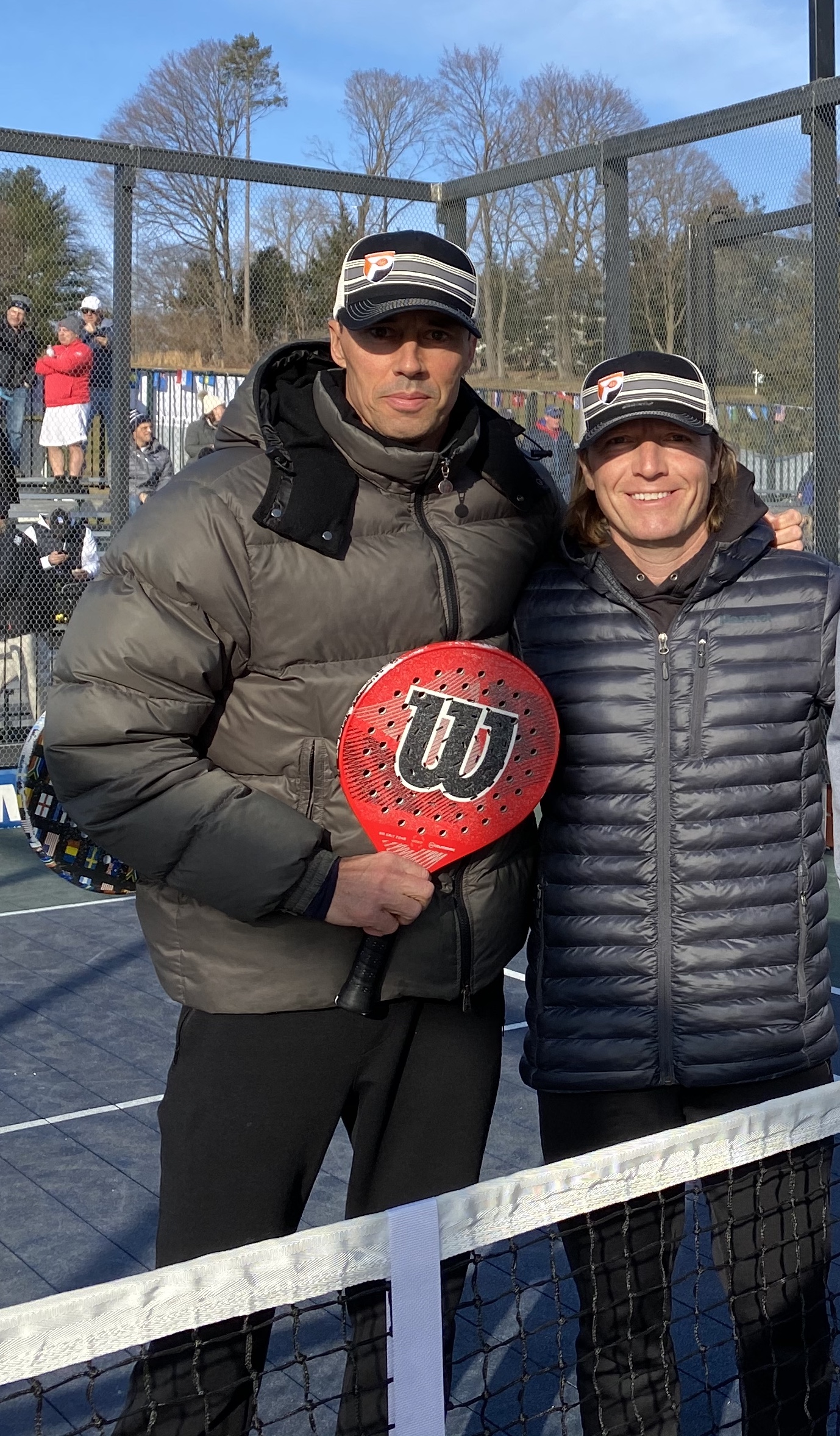
On behalf of the APTA Hall of Fame Nominating Committee, the APTA is pleased to announce the induction of Drew Broderick and Jared Palmer to the APTA Hall of Fame, Class of 2026.
Team Totals
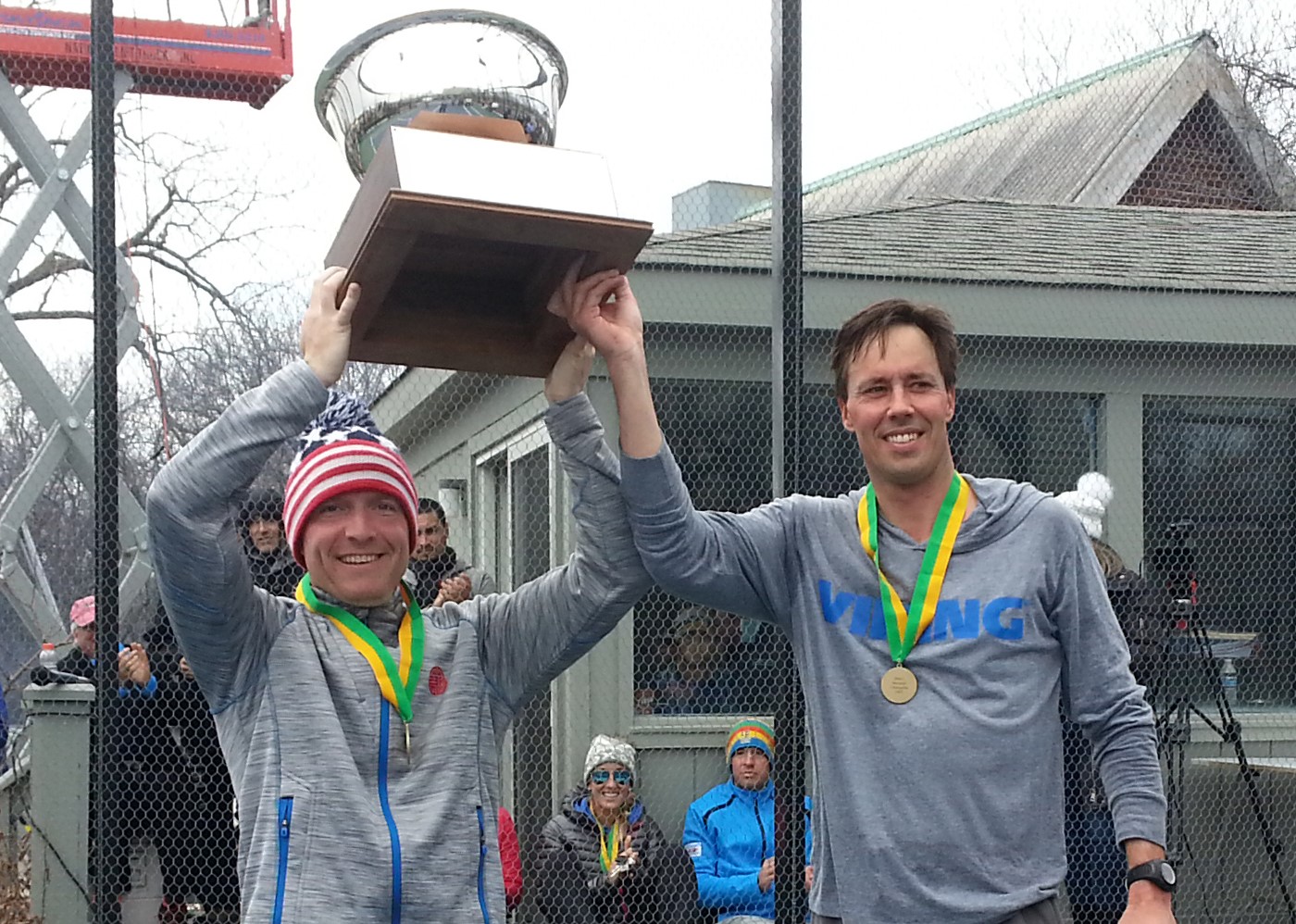
As a team, Drew and Jared won the APTA Men's National Championship in 2015, 2016, and 2017. This threepeat—three consecutive year wins—places Drew Broderick/Jared Palmer among only two other men's teams in the past 50 years to do so, joining legends Steve Baird/Rich Maier and Flip Goodspeed/Scott Mansager. In addition, Drew and Jared were Men's National finalists in 2018 and 2020.Mark Parson’s Introduction Speech for Jared Palmer
First, I’ve been to a lot of these inductions, and the number of Hall of Famers here tonight is a true representation of who we are inducting, Drew and Jared, probably two of the most worthy people of being in the Hall of Fame that our sport has ever seen.
I do want to take a quick second, while I’m here to induct Jared, I have to comment on Drew’s career. Royal pain in my butt when we played. I probably would have a few more national titles if he hadn’t played. Our relationship on court was always intense, but off court was always amazing and has continued. We talk a lot, we share a lot of stories, and I was honored to have him come to my induction last year. Drew—amazing accomplishment.
Now, the reason the Hall of Fame Committee invited me tonight. Jared. It’s kind of a surreal moment for me. I grew up in Florida at an academy, and we all knew who Jared Palmer was. Jared was the star tennis player for the U.S. Jared was the guy that played at Stanford. It is crazy for me to know that I’m up here today to induct someone that I looked up to as a tennis player. And it’s crazy when I first met you, we’ll hear about that in a few minutes, but it is a very surreal moment for me. I’m honored to be here to induct you.
Jared played college tennis at Stanford, the place that every aspiring collegiate tennis player, when I was growing up, wanted to be at. Not only did he play there, but he won the 1991 NCAA Singles Championship. He went on to become the number one doubles player in the world on the ATP, won 28 total doubles championships, including the 1995 Australian Open and the 2001 Wimbledon Championship.
He also, thanks to Wikipedia, reached the career high of #35 in the world in singles. Apparently, this wasn’t enough for Jared. Why be otherworldly in one sport when you could do it in two sports? Jared decided that he wanted to play platform tennis. He drove to Rowayton, and I remember getting a text from Chris Fitzgerald. He said, “Jared Palmer is looking to play some paddle. Can you help him out? I’m looking to teach him a little bit, show him the game.”
I said, “Absolutely. It’s Jared Palmer. It’s insane.” I met Karl Levanat and Chris at CCD to play with him. We played three sets, I believe I played with Karl the whole time, and on the way home, I called Karl. “What do you think? He steps on his volleys, he takes big swings. I’m not sure Jared’s going to figure this out.”
Fast forward, one week. We play again. Three sets, score may not have gone my way that time. I called Karl on my way home, and said, “Yea, he’s figured it out.”
I’ve never seen anyone in the game of platform figure it out as quickly as that man. One thing about Jared was he was always interested in learning the game. He was always willing to ask questions, always willing to take feedback, always willing to ask, “What is next?”
It went very quickly. He went from barely understanding screens the first time I played him, to driving that infamous forehand off the screen at me and probably hitting me multiple times the second time we played.
I was lucky enough to play league matches with Jared at Manursing. We did have plans to play together. Never got that call. A boy can dream. Jared did mention tonight that if a team pulls out of Nationals, we could pair up.
Jared’s on-court resume speaks for itself. One of the best players ever to touch a paddle. A three-time National Champion. Not just three of them. This is one of the most fascinating stats. Three-in-a-row. So how many teams have won three in a row? Well, now there’s three. Drew and Jared, Goodspeed and Mansager, and Baird and Maier. When you are in the company of those players, you’re doing all right. And again, amazing three-in-a row, what can you say? Nothing more.
It is his off-court presence that makes him a true champion. Jared walks in the room and greets you as if you are the most important person in the world. This happened Tuesday last week, he walked into Sports Haus and immediately, with a hand out, “How are you? How’s the family?” He always asking what’s going on in your world. It’s rare in today’s society to have someone as accomplished as he is to go the extra mile and to be a good friend to you.
Many factors go into who is selected for the Hall of Fame. Jared checks every box and then some. I’m proud to have faced him as a competitor, proud to call him a friend, and proud to be able to be a small part of his induction today. Ladies and gentlemen, induction into the Platform Tennis Hall of Fame is the highest award that can be earned in platform tennis. Tonight, I’m honored to welcome Jared Palmer into the APTA Hall of Fame Class of 2026.
Jared Palmer’s Acceptance Speech
Thank you, Mark. I’ve got to admit, I got here today for this and saw the courts and the tents and the players’ bags in the gym and I said, “Where’s the draw? I want to play. Put me in!” I wish I was out there, to be honest.
It’s such an honor to be here with all of you tonight and see so many familiar faces. I want to thank the APTA for selecting me. I know how many great players are in this small group, male and female. And I feel very lucky to have done enough in the game to join.
I want to thank some of the great players I met when I first started. They were always gracious and welcoming and gave me a real sense of not only how tough the game was, but also how fun it was. Mike Stulac, Johan du Randt, Mark Parsons, Juan Arraya, Jerry Albrikes, Scott Mansager, Flip Goodspeed, Mike Cochrane, Steve DeRose, and John Lubow, and many others. I absolutely loved watching those guys play. They really showed me what high-level shot making looked like and got me hooked on the game. Most importantly, they made me want to be a part of the game and pushed me to get better.
I moved to Connecticut in 2010 from California. And the only paddle tennis I knew about was at Venice Beach. I had no idea what this platform tennis game was. I started hearing from the locals in Rowayton, from my guys who are here tonight, about platform tennis. I started out first on the local courts, going out in the evening as a social thing, playing and then grabbing beers afterward in the hut. Next, I started playing some low-level league matches. The guys started telling me some of the paddle lore, about how guys like Brian Uihlein could cut an overhead so hard you can see the felt peeling off the ball. About how Johan could crush forehands and come in and take over the entire court himself. How Mark Parsons’ backhand was the best shot in the game. How Drew hardly ever missed a ball. How Juan could hit a cut drop shot from anywhere off either side. And on and on.
I was so intrigued and I was excited to try and get better and see if I could handle these guys. When I started playing, the first thing I realized was that one of the best parts of the sport was the community. Both the men and the women set such a high standard. They competed hard but fair. There was a lot of respect on and off the court. In all the big matches I played, I can hardly think of one time when I saw bad behavior. And at the highest level of a competitive sport, that is really saying something. More often than not, we would play close balls that we could have been called out and that integrity is part of what makes this game special. I always appreciated being a part of that.
I got hooked on the game and I started getting serious. I remember being in the quarterfinals of Nationals in 2015. My first one with Drew. I realized that I really wanted to win the national title. I was a little surprised that I wanted it that much. I found myself thinking, “What if I don’t or can’t? What if I get injured? What if the breaks don’t go my way? And I would stress about it. Which was actually a good thing because I started playing for fun. All of a sudden, I was really into it and I really wanted to win. It was one of the things I learned from tennis—to try and take a long view on results. Do not be overly focused on the short term. I remember there in Chicago, looking for peace of mind, trying to figure out what a reasonable goal for my paddle career would be. So, before I went on the court, I decided that if I could possibly win two national titles out of six years playing, that would be incredible. So that was my goal. I ended up with three out of eight. I feel like that’s an amazing accomplishment that I’m really proud of.
Drew, I want to give a big shout out to you. I learned so much about playing paddle with you. Our battles on the court are some of my most cherished memories from the game. One of the things I missed most about tennis was the tough competition and the thrill of winning a hard-fought match. Fortunately, we had a few of those. The first time I saw Drew play, I thought, “Wow, this guy is so solid, so patient, he never misses. He would be a great complement for me and to my razzle-dazzle.” Which looking back is kind of funny. The hallmark of our style of play was basically refusing to miss. Not razzle-dazzle. Drew had a clear vision of what our style of play should be and how we would beat the best players in the biggest matches. All good teams need that. We would not be here tonight if not for that.
I started playing with Drew and I thought I was being extremely patient when I would lob like 5,6, or 7 times in a row. Then I finally, finally would jump on the ball and Drew would kind of give me the stink eye. He’d say, “No, man, you’ve got to wait, you’ve got to wait for one more ball.” I said, “Drew, I don’t know if that’s possible.” But he was always like, “You’ve got to wait for one more ball. Set it up. You’ll know when you get it.” I think I short-circuited a million times trying to figure it out, trying to figure out when the right ball was. Finally, I started to get it.
I think one of the reasons we were such a good team is that we complemented each other so well and we had a game plan that we didn’t waver from. Our philosophy was bend, don’t break. I think more than anything, from the biggest moments in the biggest matches, we believed in each other. I think in partnership that is the most important element and we definitely had that. I always felt that when I was out there with Drew, we were going to make it pretty hard for guys to beat us and that was so much fun. Thank you, Drew, for all the great battles.
I want to give a shout out to some of my original Rowayton paddle crew that is here tonight. That’s where it all started for me, on the local courts. Ryan Nally, Stefan Schmitz, and Kurt Geisler. You guys were a big part of paddle for me, and representing Rowayton, so thanks for coming and being there at the start and supporting me.
Lastly, I want to say thank you to the entire Hall of Fame Dinner committee. This is incredible. I know how much work goes into something like this. Everyone involved in making this evening happen, this is amazing. Thank you again, everyone, for this great honor.
 © 2026 Platform Tennis Museum and Hall of Fame Foundation, All Rights Reserved.