



Broderick, Drew
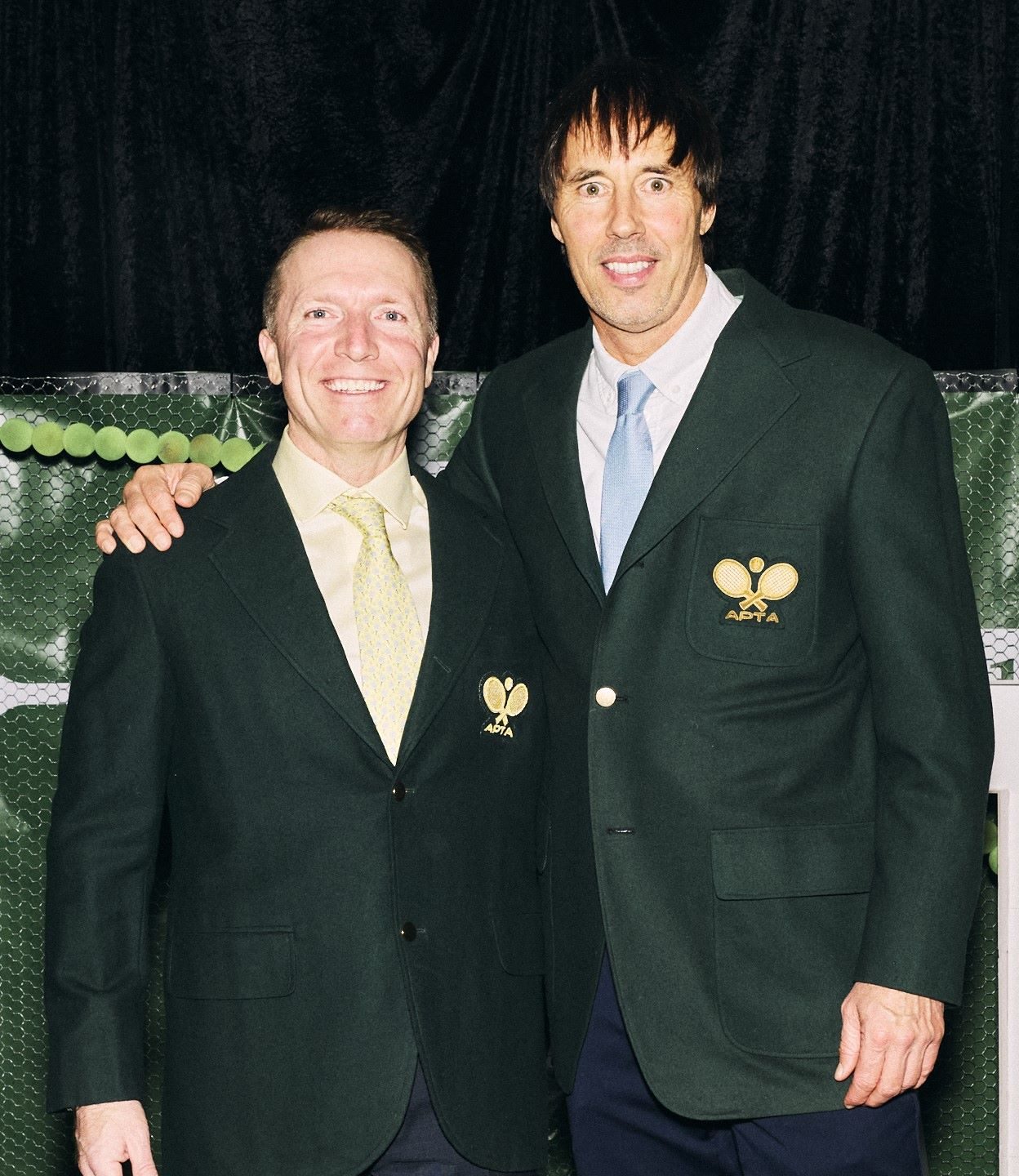
On behalf of the APTA Hall of Fame Nominating Committee, the APTA is pleased to announce the induction of Drew Broderick and Jared Palmer to the APTA Hall of Fame, Class of 2026.
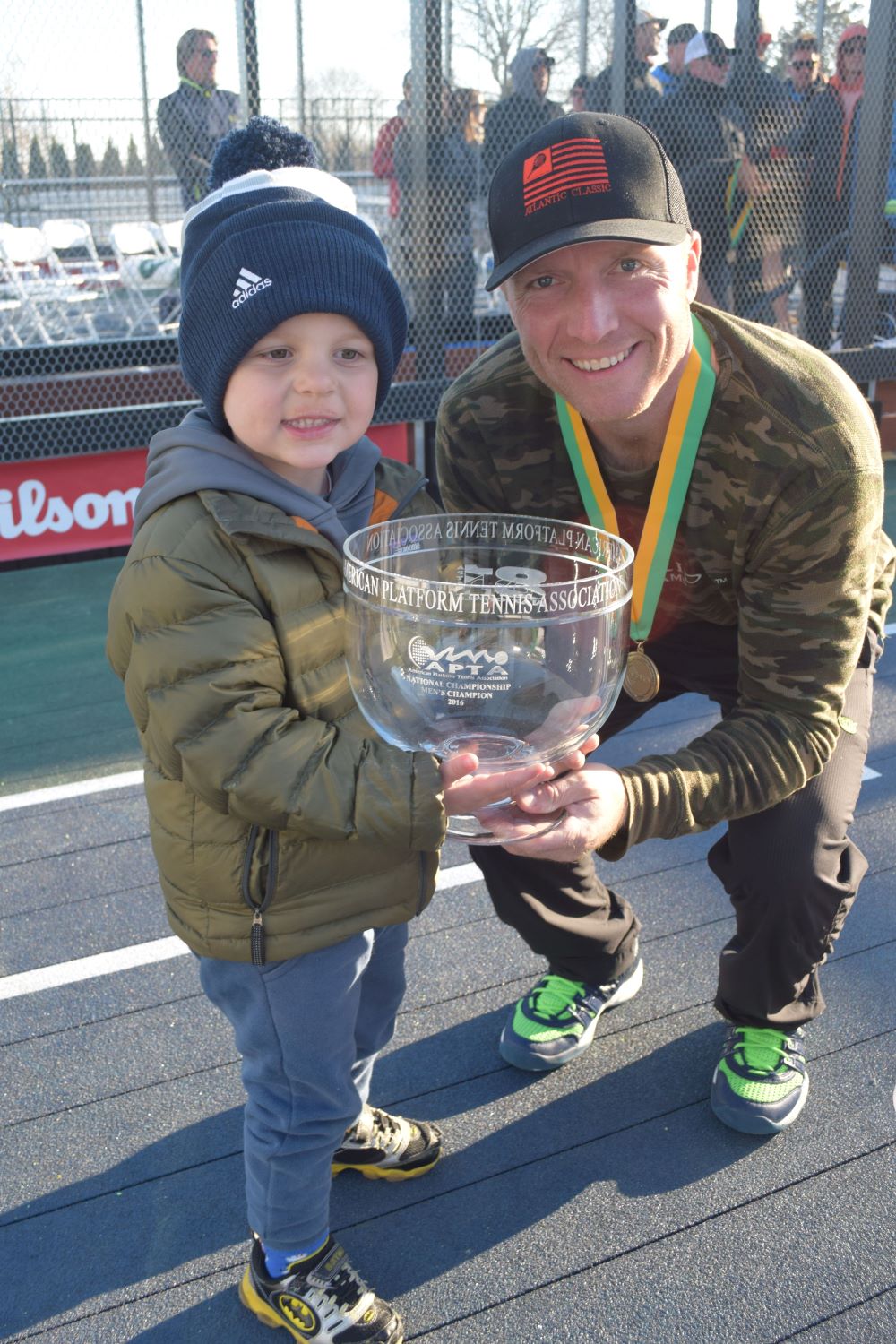
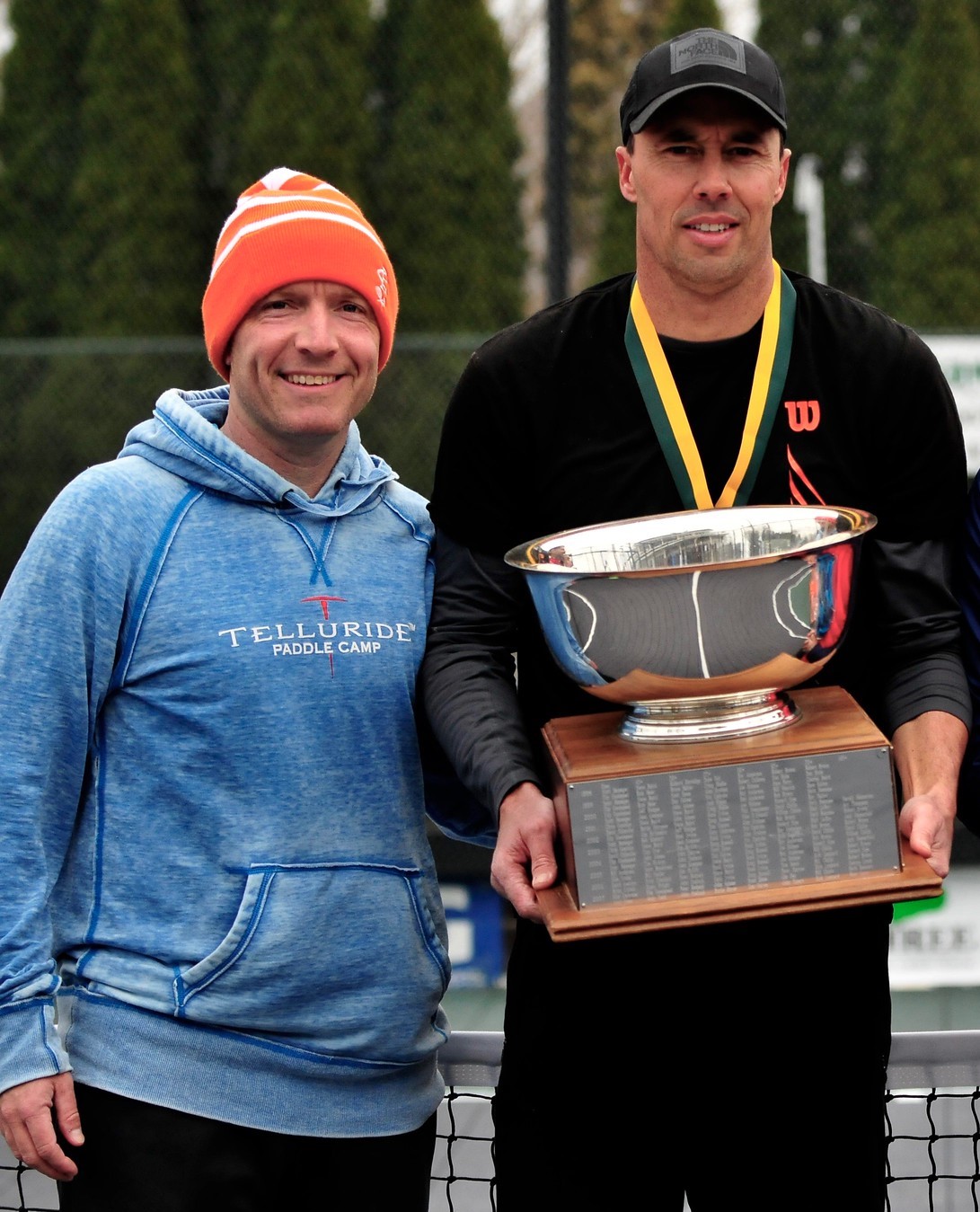
Team Totals As a team, Drew and Jared won the APTA Men's National Championship in 2015, 2016, and 2017. This threepeat—three consecutive year wins—places Drew Broderick/Jared Palmer among only two other men's teams in the past 50 years to do so, joining legends Steve Baird/Rich Maier and Flip Goodspeed/Scott Mansager. In addition, Drew and Jared were Men's National finalists in 2018 and 2020. Added Accolades Drew also won the Men's Nationals in 2012 with Hall-of-Famer Chris Gambino and was a finalist with Gambino in 2014. He won the 2017 Mixed Nationals with Gabi Niculescu and was a finalist in 2019 with Lauren Gebbia.Patty Hogan Introduction Speech
Welcome everyone. I’m honored to be joining all of you as we celebrate Drew Broderick and Jared Palmer on their induction into the APTA Hall of Fame.
I’m going to start this off with a question. How exactly does a kid who grew up in the gritty, industrial city of Bayonne, New Jersey, playing baseball, basketball, soccer, tennis, anything with a ball, weave his way through all of that and create a career in the racquets industry and ultimately earn his place in the APTA Hall of Fame?
Drew’s successes were certainly promoted through the devotion, love, guidance, and work ethic of his extended family. Drew’s dad, Eddie, his mom, Barbara, his grandparents Vincent and Teresa, his uncles Billy and Bruce, and of course, his much older brother Dave, and his sister, Dana. They all have been major forces for Drew because being a Broderick means you do anything and everything for your family. Now, Drew carries on the Broderick family tradition with his devotion and love for his family, Merrill, Vincent, and James.
Drew’s work ethic was formed and cemented as he grew up. He watched his parents work incredibly long hours running their family-owned Bayonne restaurant, The Venice. Late nights were inevitable and this necessitated many sibling sleepovers at grandma’s house for Dave, Drew, and Dana. According to Dana, Grandma Teresa had her hands full with Drew’s silliness.
Dave has confirmed that his own behavior was always ideal as compared to the antics of an impish Drew. As a kid, Drew loved being involved in as many activities as humanly possible in a day and that has never changed. From a young age, Drew also demonstrated an uncanny ability to multitask. His entrepreneurial side emerged early on, starting with his first job delivering newspapers when he was in middle school. He did this with dedication for a while, but once he figured out that if he got his younger cousins to do the paper route for him, it would free up his time for other more desirable activities. And so it was that Drew negotiated with his cousins to deliver his papers. Their payment for their services—a stick of gum. Amazingly, both sides thought they got the better part of the deal. His gum-for-paper-delivery outsourcing scheme was the beginning of a developing pattern for Drew. He enjoyed figuring out how to do something well and then he loved to mentor others to do it just as well so he could free up time for himself to learn something different. The newspaper delivery job morphed into a coat-checker job and a bus boy and eventually he was a server at the Venice.
From a young age, Drew set his eyes on the prize and did whatever he needed to do to be a success. When Drew was just six, his uncle Billy was instrumental in sharing his passion for tennis with the Broderick kids. Drew was hooked and by sixth grade, he focused only on tennis, having given up on his dream of becoming a professional basketball player. Dave thinks that Uncle Billy’s trips with the three siblings to get ice cream after practices may have been the real catalyst for Drew’s early love of tennis and practice. He was improving in tennis by the minute while also earning a black belt in karate at age 15.
In order to truly understand Drew, you need to understand how he approached learning the game of paddle. I often think of Drew the athlete as a living version of Rodin’s sculpture, “The Thinker.” As Drew developed his game, Drew out-thought his opponents. His preparation was meticulous. He respected the sport and every opponent he ever played, no matter the stakes. He approached each and every match the same way, never taking any match for granted. Numerous partners of Drew and many of his opponents have emphasized that Drew’s commitment to a disciplined approach carried over into every point he ever played, regardless of whether it was a practice match or a national final.
Drew started playing on the APTA Tour after his chapter of playing four years of UConn varsity tennis was over, two of them at the first singles position. Drew loved his time as a Husky, but with his solid Jersey roots and family here, he wanted to get back. When a job for an assistant pro position opened up at the Short Hills Club, he applied. The person looking for an assistant was none other than big brother Dave. The rest is paddle history.
The combination of working at the Short Hills Club with its regal paddle history and having his big brother, I mean older brother, watching over him was the perfect situation, fully immersing Drew in every aspect of the amazing New Jersey platform tennis scene.
Drew’s successes started big time when he teamed up with the one and only Guy Moore. They played together for the next four years, reaching the quarterfinals at Nationals. In typical paddle fashion, they became great friends along the way, starting paddle camps here and all around the country.
Around that time, Drew got his first Director of Racquets job at the Essex Fells Country Club, another club with an amazing mentorship. He then teamed up with Chris Gambino for three seasons. This partnership was highlighted by Drew and Chris winning a Nationals title together in 2012 and going undefeated for the year. Chris and Drew were also Nationals finalists in 2014.
Quite improbably, around the same time and before he became committed to a healthy diet, Drew opened a late-night pizza joint. Family ties came into play once again when he leaned on his sister Dana and brother-in-law to help run the pizzeria, while Drew attended to his burgeoning racquets involvement.
In 2015, Drew teamed up with the one and only Jared Palmer and this was the start of an incredible six-year partnership. During this time, Drew and Jared, as you heard from Mark, reached the Nationals finals five times, and they won three Nationals titles in a row, which is still the stuff of legend. This is a duo that will go down in paddle history as one of our game’s all-time greatest teams. Okay, I’m about halfway through, because you know Drew played long points forever. There are a lot of lobs.
Around 2010, the game of platform tennis started changing dramatically. An influx of superbly talented college tennis players, professional tennis players, hailing from all over the globe took the skill and quality of play to an entirely new level. Suddenly, there were dozens of talented new tennis players bringing their dynamic shot-making abilities combined with awe-inspiring athleticism to our sport. This new style of paddle elevated competition to what we see and experience in today’s game. More athletic, more dynamic, more transitions, more creative, more of everything.
Outrageous shot-making skills that could end points all of a sudden came into the game, even against the game’s best players. Drew’s successes on the court for over two decades are matched by very few, in my opinion, and they’re all Hall of Famers. Drew is a respected player because he put in the time to be the best. His induction tonight is the result of the combination of his athleticism, his discipline, his commitment to fitness, healthier eating than when he owned a pizza place, a bit of tequila every once in a while, and his belief that you need to start every match with a game plan, and you need the discipline to follow the game plan. Drew had confidence that his unique approach would work because he dedicated himself to tens of thousands of hours on court learning and practicing shots until he was confident that he would never miss a particular shot in a match no matter how much pressure he was under.
For those of you who are baseball historians, Drew’s style of play reminded me of former Major League pitcher Greg Maddux. One of the game’s best pitchers of all time. Maddux played over 23 seasons, at the highest level in the sport without an overwhelming fastball. Instead, his prolific career was defined by excellence, longevity, including Cy Young awards, and 18 Gold Gloves. It’s often noted that Maddux accomplished all of this because of his strongest weapon, his mind. He mastered a thorough understanding of the game that he was playing, did his homework, and understood his opponent’s tendencies as they faced him. Just like Drew.
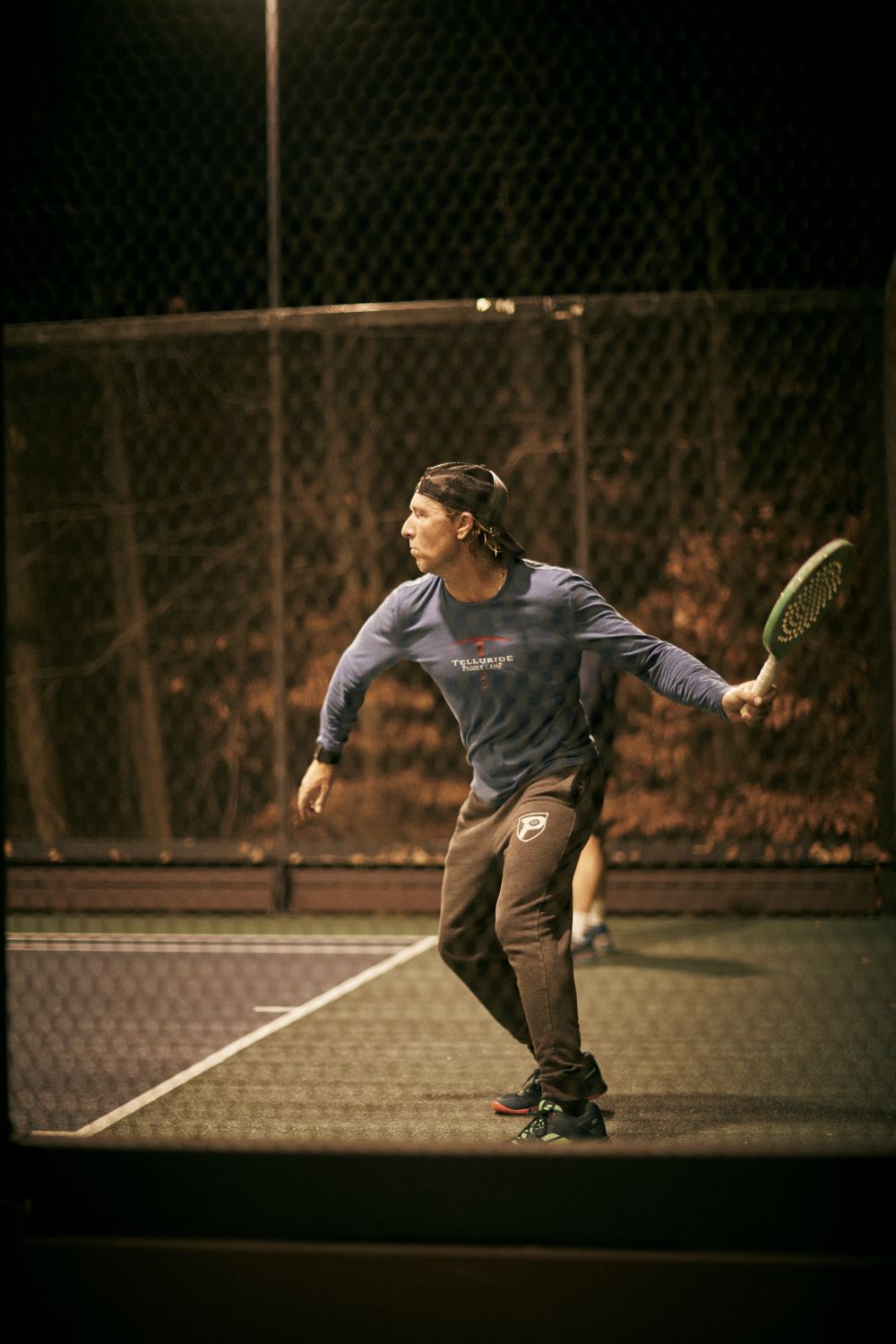
Drew is an innovator on the court with his approach to what it took to win. He was the first lefty to play on the ad side of the court, thanks to Ron Cummins. This allowed Drew to build his game around his two-handed backhand, his speed, his anticipation, his outrageous volleying ability, his love of lobbing, and lastly, that lefty spin overhead that broke down many a player both physically and mentally. He studied every opponent and started out every match with a well thought-out game plan. Then he had the ability to execute it with surgical precision. He spent thousands of hours working out in the gym to ensure he was at a top fitness level and had all the agility of when he was back in those UConn Huskies days. Drew was a sharpshooter on the court. He could hit a dime on a court with any shot. In addition to his on-court successes, Drew has been a visionary in our sport in other ways, dedicated to the pros who make the Tour what it is.
He used his platform as a top player, his insights, and his business acumen to create the Pro Flight Tour. The Pro Flight Tour gave pros an opportunity to earn prize money at one-day tournaments, which meant that pros could spend more time attending to their club teaching responsibility and their family commitments. The Pro Flight Tour expanded the talent pool and created high visibility for so many pros, and it helped to grow the game to a whole other level. This would eventually become the template for what evolved into the APTA Tour prize money. Some people love prize money, some people don’t. I love it because it’s an amazing game and the game captures so many great athletes. It’s a thrill to watch.
Drew also evolved into an exceptional Director of Racquets, living and breathing all things racquets here at Canoe Brook for the past 11 years. During his time, he’s presided over the growth in the men’s and women’s programs in addition to running more than probably a hundred tournaments. Every time the APTA needs a place to host a tournament they call Drew. Over the last 15 years, he’s done more for the sport and hosting events than any other player single-handedly. This included running the 2021 (the Covid year) Nationals with two months’ notice, with Greg Morgan and a few helpers, who pulled off an amazing event.
Couple more lobs. Drew’s generosity of spirit extends to mentoring the next generation of Tour players including his current partner and great friend Tomas Christian. He knows that many of these next gen pros will ultimately outpace him. And yet he generously shares his observations and wisdom without reservation. Drew loves the paddle camaraderie the same way that all of us here tonight, this weekend, and those watching on live stream do. Drew understands that players, everyone of all levels, are of equal importance. He is a tireless advocate for our sports growth.
In closing, kind of, I’m really in the third set, Drew’s record as a player and competitor are exceptional and now extend into a third decade. It is one thing to be an outstanding player, one whose career has been shaped and elevated by discipline, resiliency, strength, and perseverance. It is quite another to value those around you every step of the way, day in and day out. Drew’s competitive spirit as an athlete is more than matched by his compassion and generosity toward everyone in the sport, pros, amateurs, colleagues, and everybody who works for the APTA.
Tonight we’re celebrating both Jared Palmer and Drew Broderick. But because we’re at Canoe Brook and Drew’s career was so much longer, I’ve got to keep going here. I also want to celebrate and recognize the amazing Canoe Brook Country Club family, its spirited membership, and its employees and staff. I really feel they are the finest I’ve ever been around in any club, and they make great cocktails.
From Drew’s time looking to learn and play any sport he could on the dirt fields and asphalt in Bayonne to his induction into the APTA Hall of Fame tonight, his journey has been rich with commitment, relationship building, and family, his own family and the extended paddle family that we are all grateful to be a part of. It defines why we all have played the game at one point in time. Why we come out, root for it, and spend the whole weekend here.
It is with great privilege, humility, and respect that I welcome Drew Broderick into the Platform Tennis Hall of Fame. I’m not done. I’m heading to the tiebreaker. As Frank Sinatra said, “Drew did it his way.” Given that Drew’s favorite color is green, it is March, spring is on the horizon, he has more than a bit of Irish in him, it is prophetic that Drew is earning an APTA Hall of Fame green jacket in the sport that has anchored his adult life and the lives of so many people he has touched in his decades dedicated to the sport.
Ladies and gentlemen, induction into the Platform Tennis Hall of Fame is the highest honor. Tonight, we welcome Drew Broderick into the APTA Hall of Fame.
Drew Broderick Acceptance Speech
Thank you all for being here on this special occasion. To see all of my many worlds collide in one room is something that I would never imagine.
My family is here. Childhood friends, college roommates, Canoe Brook, Essex Fells, and Fells Brook members, assistants, and former assistants, partners, rivals, fellow employees, and last but certainly not least, my entire paddle community.
I have to give a shout out to my Chicago peeps who flew in just for tonight. I really appreciate it. And then I find out, when he gives me a big hug, throws a wrench right into my speech, that Robert Krauss came from Israel to be here.
It is important for me to start by mentioning a few people who made tonight truly unbelievable. Thank you to the Canoe Brook Board of Trustees, General Manager Albert Constantini, Kimberly Condit, and their entire team, and all the community members who dedicated their time to make this night special.
But there are there are two women who need to be recognized. Pam Randazzo and Lesley Stiska, can you stand up? These ladies have been working on tonight’s event since the day I got the call about being inducted. I appreciate you both so much and I’m grateful to be your friend. Thank you for making this the best Hall of Fame induction.
To the APTA Board and Hall of Fame Committee members, I am truly honored to be inducted into the Platform Tennis Hall of Fame and to have my name alongside our sport’s finest players and contributors. I thank you for not only growing the game for recreational players but also for professionals like myself. More events, consistent live stream exposure, and tournament prize money have evolved greatly since I began playing 23 years ago. In fact, things have gotten so good that I think I’m going to play for 23 more years.
In all seriousness, the sport of platform tennis is the reason why we are all here. It’s the reason why I get to work at this beautiful country club, live in the charming town of Essex Falls, and have so many lifelong friends throughout the country. It’s pretty awesome.
To my mom, Barbara, you look very nice, by the way. Despite never really learning how to keep score over the last 42 years, you did something for me that most parents can’t do for their children. You genuinely didn’t care. You didn’t care too much when I won, and you certainly didn’t care when I lost. You let me play for fun. And most of all, you let me play just for me.
Now, I can’t really say that was my brother’s attitude, but I’ll get to that shortly. There is a funny true story I have about my mom. I remember one car ride home when I was playing in Long Island at a tennis tournament and Mom went on and on about how well I played and how good I was getting and all the good shots she saw and then asked when my next match was. I didn’t interrupt because it actually sounded nice, what she was saying. However, I knew she was just being Barb, loving and supportive. And how did I know this? Three reasons. One, she can’t keep score, so she had no idea really what happened. Two, it was one of those indoor matches that you could see through the glass into the lobby. And she was talking to every parent the entire time. All I was concerned about was that she wasn’t watching me play tennis that day. And three, I actually lost the match. So, there was no other match. But it actually wasn’t that tough of a car ride for me. I’ve only learned to appreciate how you were back then once I had children of my own. Thank you for teaching me the best way to raise and support Vincent and James in the many competitive sports years I’m sure we have ahead. And then if that doesn’t work, we’ll go back to Uncle Dave’s tactics.
Speaking of Diamond Dave, it really is a true statement when they say the youngest sibling has an advantage. Whether it was riding BMX bikes, break dancing, learning to play baseball, or even how to string a tennis racquet, thanks to you, I always had a six-year head start on things. And, yes, that means Dave is six years older than I am, if you’re wondering. Because of this difference, growing up, he was more like a mean coach or a parent figure when it came to sports. His kind words continued to encourage me to work hard and be the best I can be. Words like, “You stink.” “How can you be that bad?” “Stop wasting everyone’s time and money.” “You should just quit.” Ask his kids. They will vouch for this.
All jokes aside, I did work harder because I wanted to prove to him that I could be good. I wanted to prove that the other people or players he thought were good weren’t as good as me. Fast forward through a fun and exciting college tennis career at UConn, that’s when Dave and I finally became more like friends. I was lucky enough to work for him at The Short Hills Club. It was yet another life lesson I learned to appreciate down the road. In the moment, not as much. Dave taught me how to be a director. He showed me firsthand how to work the extra hour if that’s what it takes to get the job done. Still to this day, when a situation comes up and I don’t know the answer, I say to my assistants, “Let’s just call my brother.”
To my sister Dana and father Eddie. Most of you don’t know them because they aren’t racquets players, nor have they ever been involved in my life as a tennis or paddle player. That’s in a good way. Yes, they would ask how things were going or congratulate me when they heard I won an event, but that was it. What’s nice is I get to talk to them about everything other than racquet sports. Even this morning, my dad called me to see if I was ready for tonight. But I knew that was a formality because before I finished answering the question, he was talking about the UConn Huskies last basketball game against Seton Hall. And how the women are just unbelievable. You would think he’s on the take with Geno Auriemma. And my sister. I guarantee she’ll be calling me on Monday saying, “Hey, now that that big event is over, what are you doing for the next few weeks? Why don’t we go away?” Thank you both for teaching me to be a glasses-half-full type of person, especially when it’s half full with tequila.
To my partners. Guy Moore, we’ve had some good battles, brother, both on and off the court. Hell, if we beat the number 1 or 10 team in the country, we were going out hard that night. If we had a tough loss, you bet we were going hard that day and night. Sixteen years of Telluride Paddle Camps together, every Friday nine holes of golf together, endless dinners, and even conversations about how I need to become a better negotiator like you. Wouldn’t trade it for anything. Love you.
Chris Gambino. Since he’s not here, I’m going to throw him under the bus. You all have him to blame for how long my matches take. He brainwashed me many years ago that if you don’t miss, then you can’t lose. I swear that was the most coaching he’s ever done for me, but it kind of worked. Chris taught me to be relentless. Find a simple strategy and do it over and over and over until the match ends. And then he would say, “And you probably won.” You know, Chris, he said it very even keeled.
J Palm, my partner. Aside from spending seven years on the same side of the court with the most talented racquets player our sport has ever seen, I had the benefit of getting to know Jared Palmer, the person, the scholar, the world traveler, and most importantly, the very light sleeper. So, I have a story for everybody. We’re playing down in Philly and it’s pretty cold out. Next morning, we woke up and found a diner we liked. I just happened to say, “So, how’d you sleep, Jared?” He’s got his head down in his oatmeal. And he says, “Honestly, not good.” And I said, “Why? What’s the matter?” He’s like, “Do you know you snore? You know, I’m a light sleeper. And you were snoring and I just couldn’t go back to bed. So, I left the room. I went to the front desk to see if I could get another room because I just couldn’t stay in there with you anymore. But when I went out of the room, I locked myself out and they didn’t have any more rooms, so I just slept in the car last night.”
So, next we are going to Chicago and I remember talking to Tamara Dempsey, who is our host every year. I said, “Listen, tomorrow we’re going to be staying at your house but Jared is a very light sleeper. Can you please find a room that has no noise?” And she says, “I’m on it.”
The next morning, Jared comes downstairs and I’m kind of proud I found a quiet house with nice quiet rooms. I said, “Jared, how’d you sleep?” And he goes, “You’re going to laugh. There was this fan that kept like tinging and I just couldn’t sleep all night.” These are the stories that we entertained ourselves with when we weren’t playing four-hour matches. Ultimately, Jared is a professional, and because of him, I learned how to become a better professional both on and off the court. So, thank you.
Tomas Christian, my oldest son. You know, I felt young right up until I started playing with you. I love competing and talking endless hours of paddle with you while we’re in the car. You keep me motivated to want to practice, grind, and play disciplined paddle. Let’s kick some ass this weekend. I know we got it.
And to my longest running partner, Vincent, my good luck charm. Raised in paddle huts since age three. For better or worse. You were always a good boy and a trooper. Now you’re 13 and a three-time Junior Nationals champion. It’s so great to see how much you love the sport of paddle and all the people in it. Please keep me in mind in a few years when Tomas dumps me as a partner.
Where’s Sheryl? Sheryl Barcic. Sheryl and I are 12 years strong here at Canoe Brook. Thank you for always being available. Not just available like when you text me at 11 PM reminding me not to forget to send the important email or available like, “Hey, can you stay an extra 3 hours? There’s 100 5-year-olds on the tennis courts,” but available when I need someone to talk to about life and get advice from someone that I know cares about me. Thank you,
Meryl. Thank you for your confidence in me and support to keep on playing. I know the inconsistent schedule of a racquets pro isn’t always ideal. And the schedule of a racquets pro that competes on their days off is even worse. But it’s all good because we only have 23 more years left. I love you very much.
How do I get to be in the Hall of Fame? About 22 years or so ago, Essex Fells Country Club took a shot. They hired a 26-year-old who had played paddle for one year. They went with what people said, that Drew can be a good paddle player. Normally when you get a job like that you need to already be a good paddle player. You don’t just go by what people suggest. I’m honored that he’s here tonight, because you were in this speech from the beginning. Judge William Connell. He was the President of Essex Fells Country Club at the time and after I accepted the offer, he grabbed me and said, “We’ve created a budget and I want you to play as much paddle as possible, every tournament, practice every day, because you need to prove me right.” So, seeing me here tonight, I hope I did that.
To all the members of Essex Fells, the members of Canoe Brook Country Club, all the managers here, you know, I can’t play as long as I did or do as well as I did without all of you having my back and support. It’s truly an honor just to play the sport of paddle, whether it’s pickup games or still competing in tournaments. Regardless of being 20 years older than everybody else on the court, it’s kind of fun. I think I’m in better shape than most of them anyway.
Honestly, I thank you all for being here. It’s not always easy to get four people together to get a paddle match. Having 250 people make it out here tonight is really special. Thank you all for coming tonight and I appreciate it.
 © 2026 Platform Tennis Museum and Hall of Fame Foundation, All Rights Reserved.