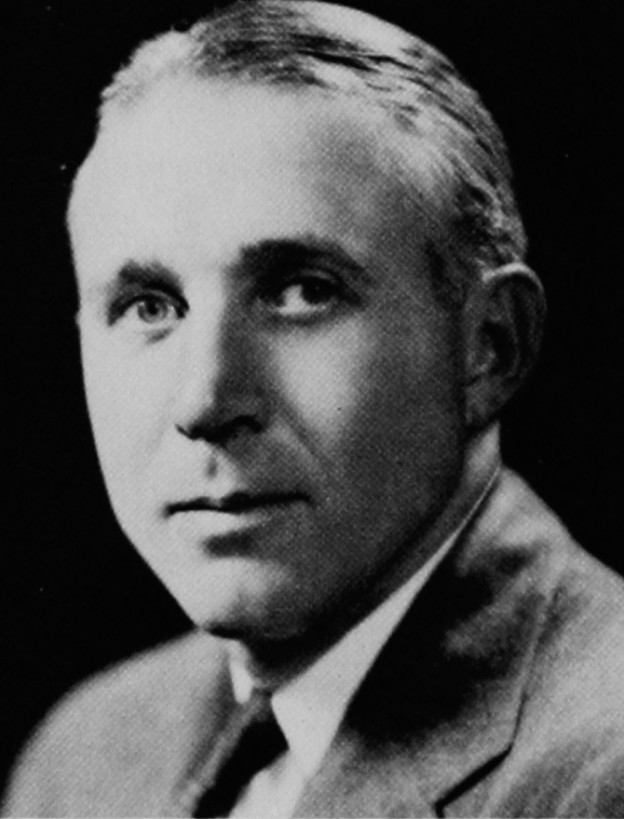
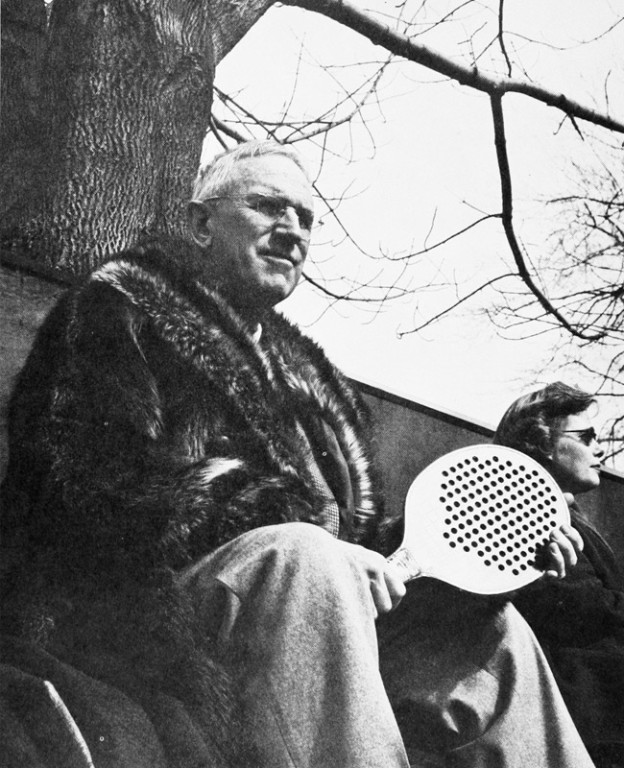
William F. Koegel, 1983. Photograph was taken at the celebration of Fox Meadow Tennis Club's centennial

William F. Koegel elected FMTC President (1973-1975)

Koegel came close to disaster and humiliation during his term as president when he realized on a Sunday afternoon a half hour before the traditional Governors’Tea, held each year in April, that neither he nor his wife, Ruth, had bought the ingredients.

One does not become an FMTC president without steady nerves and the ability to handle emergencies, however. A liquor store owner was persuaded to rush to his store, open it, and produce the urgently needed ingredients. The Koegels got to the Club and mixed the punch in time.

“No one suspected the near catastrophe,” Koegel recalled, “and I thus escaped impeachment from the presidency and possible expulsion from membership.”

Source: Diane Reische, Fox Meadow Tennis Club – The First Hundred Years, 1983

The spirit of Fox Meadow

“If it had not been for Fox Meadow Tennis Club and the friends we made there, I don’t think Evie and I would have stayed in Scarsdale. We had planned to move to Connecticut, but we met such great people at Fox Meadow that we changed our minds and bought a home [in Scarsdale]. Now we have lived here more than thirty-two years.”—Jim Carlisle, FMTC President, 1969-70.

 Source: Diane Reische, Fox Meadow Tennis Club – The First Hundred Years, 1983

T. Edmund Beck. Photograph taken at FMTC Centennial

T. Edmund Beck elected FMTC President (1951-1953)

T Edmund Beck (1903-1996) was class of 1926 at Princeton and joined Dillon Read & Co. upon graduation.

Four years later he founded the investment counseling firm of Beck, Mack & Oliver which he headed until his son John succeeded him in 1953.

He married into the Childress dynasty at FMTC and two of the three children that he and Madeline (APTA Hall of Fame inductee in 1965) had were very fine tennis and platform tennis players with Susan Beck Walsh being inducted into the APTA Hall of Fame in 1976

Beck partnered with his wife for five Mixed championships in platform tennis – 1943-1946, 1948 and 1950. They also won the APTA Mixed in 1939.

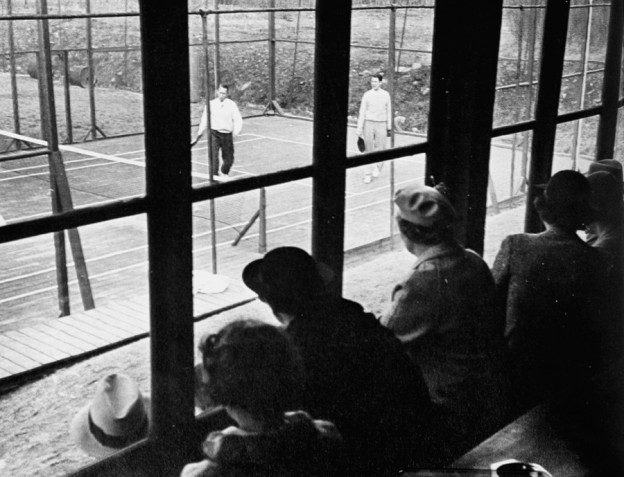
"Let the Gallery have comfortable benches from which they can look down on the court". In the mid 1930s the porch was glassed in to make watching more pleasant.

Platform Tennis saves Fox Meadow Tennis Club

By the fall of 1934, the Great Depression had begun to hit many clubs extremely hard. Membership in the Fox Meadow Tennis Club, which had been well over 100 families, dropped to 77. The club had begun to run a deficit. Strenuous measures had to be taken. There were two schools of thought. One school favored extreme economy, saving the cash reserve as long as possible. Another group, having total faith in what platform tennis might do for the club, favored putting up another platform.  They suggested raising part of the funds by members’ underwriting.  This would provide a stove for the clubhouse, and enable it to function fully as a winter club. To help put over this policy, they urged the establishment of a special winter membership for the six months from November 1, 1934, to May 1, 1935. Those willing to bet on the future of platform tennis won out, and the newly authorized court didn’t have to be called a practice tennis court. The new court helped the game take off at the club as the first court had been monopolized by a small group, discouraging others from trying the game.

The special winter memberships were at first limited to twenty families, each charged a rate of slightly less than half the annual dues. The plan was so successful that by May of 1935, most of the special members accepted an opportunity to switch to regular membership. In the fall of 1935, the directors voted to erect a third platform. By May 1936, the special winter memberships were abolished in favor of all or nothing. Family membership in the club had increased from 77 to 112.

A year or two later, the maximum (at that time) of 130 was reached, and there was a waiting list. The club increased its dues. It had become a year-round club for tennis and platform tennis. A club, which had been dead six months of the year and rather sick for the other six months, was now very much alive all year.

Source: Adapted from Fessenden S. Blanchard, Paddle Tennis, 1944, and Platform Paddle Tennis, 1958, and Diana Reische, Fox Meadow Tennis Club – The First Hundred Years, 1983


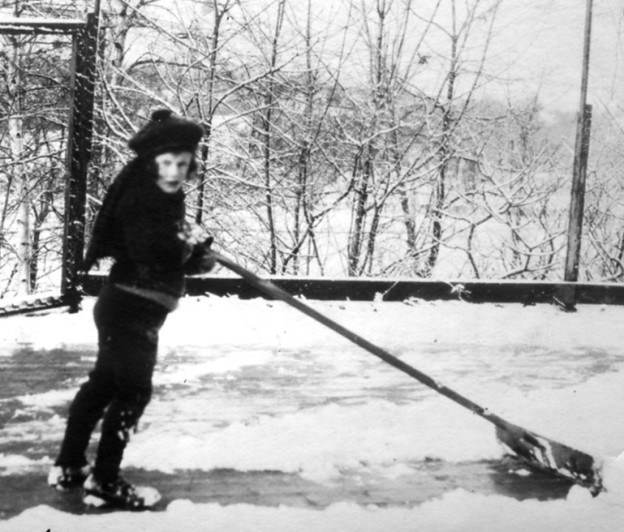
Snow shoveling is part of the fun!

Fox Meadow’s “do-it-yourself” tradition is born

FMTC’s do-it-yourself spirit was never more in evidence than during the heyday of ice-skating, which began at FMTC in the 1930s.

Mole Ware recalled: “In the thirties and forties, for many young people and for two transplanted Bostonians—Fess Blanchard and Jimmy Cogswell—an important part of the Club’s appeal in winter lay in action on the skating rink. In the thirties, the rink skirted the portable paddle courts. Later, in the forties, the skating area was expanded and the large Victrola brought down from the porch to stand on the ice by the tennis backstop. Strains of Viennese waltzes and German polkas wafted over the paddle courts while my father and Mr. Cogswell taught ice dancing to anyone brave enough to try.”

Before the prevalence of indoor rinks with their ice-making equipment, readying an outdoor rink for skating was a labor of love, seemingly always done in the frigid cold of the night. At Fox Meadow, numerous people undertook this chilling task. Marian Van Norden Frohlicher recalls that her late husband John Van Norden and Henry Eaton got up at 2:00 or 3:00 a.m. to freeze the courts. Do Cogswell Deland tells of the times her father stood at the courts, hose in hand, drenching not only the tennis court but himself as well. When he had finished, both the court and his face were covered with ice.

Source: Diana Reische, Fox Meadow Tennis Club – The First Hundred Years, 1983

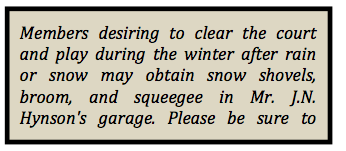
An early notice from the Paddle Committee. Hyson lived next door to the club at 15 Wayside Lane.
Screen shot 2013-01-23 at 10.41.08 PM

Source: Diana Reische, Fox Meadow Tennis Club – The First Hundred Years,1983


James H Hynson, FMTC President (1933-1936)

James N. Hynson elected FMTC President (1933-1935): open house and exhibition matches planned, new summer membership offered

James N. Hyson was a Princeton tennis star and squash ace and captain of his college’s 1920s championship basketball team.He was an excellent tennis player, winning two consecutive National Championships (1937-1938), and was instrumental in the construction of the first court at Fox Meadow in 1931.

Hynson won the club’s Men’s Singles six times – 1926-1929, 1933-1934, and 1936

During his tenure as President he helped oversee the addition of courts, and the building of a vibrant paddle community that lead to the club becoming known as “the home of platform tennis” and provided the momentum to expand the popularity of the game. For this later service he was among the first group of individuals inducted into the Platform Tennis Hall of Fame in 1965 (see Hynson)

SI March 31 1933
Scarsdale Inquirer March 31, 1933

Fox Meadows original sign-up system. Four paddles in a row and your foursome's ready to go.

Paddle at Fox Meadow grows slowly at first

The first court was slow in getting started.

A few neighboring enthusiasts occupied it a great deal of the time and, while players took turns, there were “owners of the house” on hand to give everybody a fabulous time and provide robes to keep the gallery warm.

The platform was raised above the somewhat uninviting bench provided for the spectators, and the clubhouse was as far away as the grounds permitted. Consequently, many club members were not encouraged to come down and wait their turn.

While this original platform was used considerably (see article below), the real success of the game at the club awaited the installation of the second and third platforms.

Source: Fessenden S. Blanchard, Platform Paddle Tennis, 1958
SI April 22 1932
Scarsdale Inquirer April 22, 1932

Fessenden S. Blanchard in His Favorite Spot - The Blanchard Box at Fox Meadow Tennis Club. Grace Pardoe beyond

Paddle ignites Fox Meadow spirit

Madeline (Madge) Childress Beck recalls that the Childresses had left Fox Meadow at one point for another club where the caliber of tennis play was higher, but “then came paddle, and our family rejoined. Paddle made the winters. It was absolutely wonderful. We spent happy, competitive winters and I looked forward to paddle in the winter more than to tennis.”

Former Club President Oscar (Oz) Moore, adds, “Fess Blanchard was the Dean, the Headmaster, the President Emeritus, and the Spirit of Fox Meadow. The debt we all owe to Fess for inventing, improving, and promoting (along with Jimmy Cogswell) our wonderful game of paddle tennis is enormous.”

“What we had as a club was fun together with the family,” recalls another club member Marian Frohlicher. “Everyone was strapped for money and wanted some exercise and fun, so we made it a simple place where we got together and did things ourselves.”

Source: Diana Reische, Fox Meadow Tennis Club – The First Hundred Years, 1983
SI Nov 25 1932
Scarsdale Inquirer November 25, 1932

SI Dec 9 1932
Scarsdale Inquirer December 9, 1932

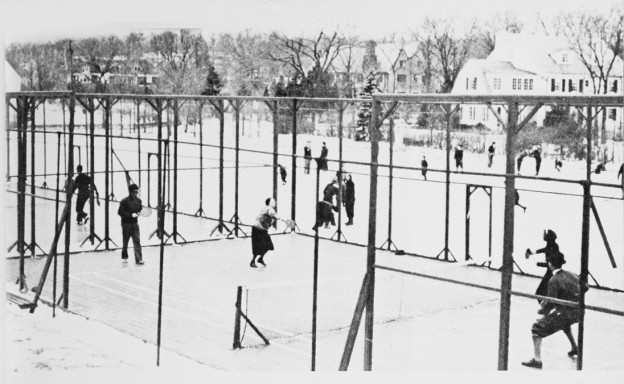
Winter activity at Fox Meadow in 1936 included paddle and ice-skating. Playing paddle are Fess Blanchard and his daughter Ruth (on the right) playing against Kitty Fuller and an unidentified partner.  

Old Army Athletes bring their spirit to Fox Meadow

With the completion of the first paddle court, the Old Army Athletes joined Fox Meadow almost en masse and transferred their camaraderie and sense of fun to the Club. They formed the core of the new Paddle Committee (Cogswell, Gatchell, Blanchard and W. C. Harrison) and posted a notice on the Club bulletin board explaining the game in simple terms.

Source: Adapted from Fessenden S. Blanchard, Platform Paddle Tennis, 1958, and Diana Reische, Fox Meadow Tennis Club – The First Hundred Years, 1983

The informal quality of the games stems from these beginnings and the influence of the Great Depression. As paddle drew more people on frigid days Blanchard, an enthusiastic skater, conceived the idea of flooding the unused tennis courts for ice-skating.

The unique ambience that still clings today to Fox Meadow evolved during winters of paddle and skating. It is captured in a frequently published photograph that first appeared in the Sunday New York Times in 1936. The picture shows a winter scene with ice skaters in the background and, in the foreground, a paddle match with Fess Blanchard and his daughter Ruth playing against Kitty Fuller and an unidentified partner.

Source: Adapted from Diana Reische, Fox Meadow Tennis Club – The First Hundred Years, 1983