Paul DeForest Hicks (1903-1977)

Paul DeForest Hicks (1903-1977)

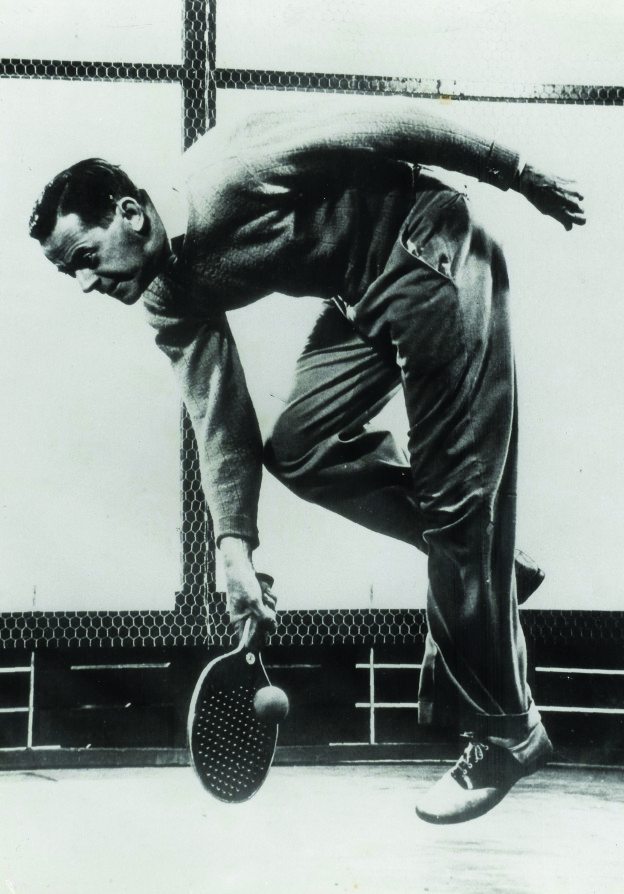
Hicks started playing platform tennis at the Manursing Island Club in Rye back in the 1930’s and in 1940 he captured the APTA National Men’s doubles title with Witherbee Black. He had been featured in a 1940 Life Magazine article of the game that had been arranged for by Ken Ward. The photographs for the article were by the noted Albanian-American photographer Gjon Mili who was a pioneer in the use of stroboscopic instruments to capture a sequence of actions in one image.

Hicks died suddenly at his home in Rye, NY, on September 24, 1977. The 74-year old insurance executive, a paddle pioneer, was a member of the Class of 1926 at Princeton and had enjoyed many tennis triumphs. He captained his college team in his senior year when his doubles partner was sophomore John Van Ryn (’28). Van Ryn gained later fame on the courts by winning both the Wimbledon and U.S. Open doubles championship with Wilmer Allison.

Source: Paddle Talk, Vol. 3 No. 3 (January 1978)

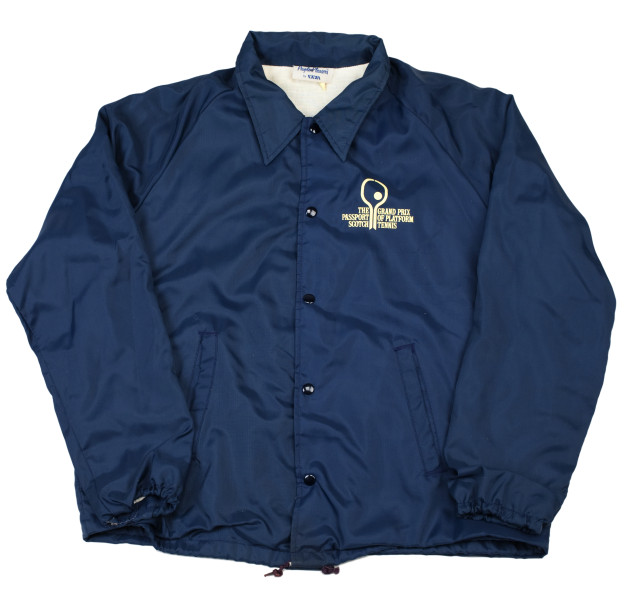
Passport jacket

Passport Platform Tennis Tour starts

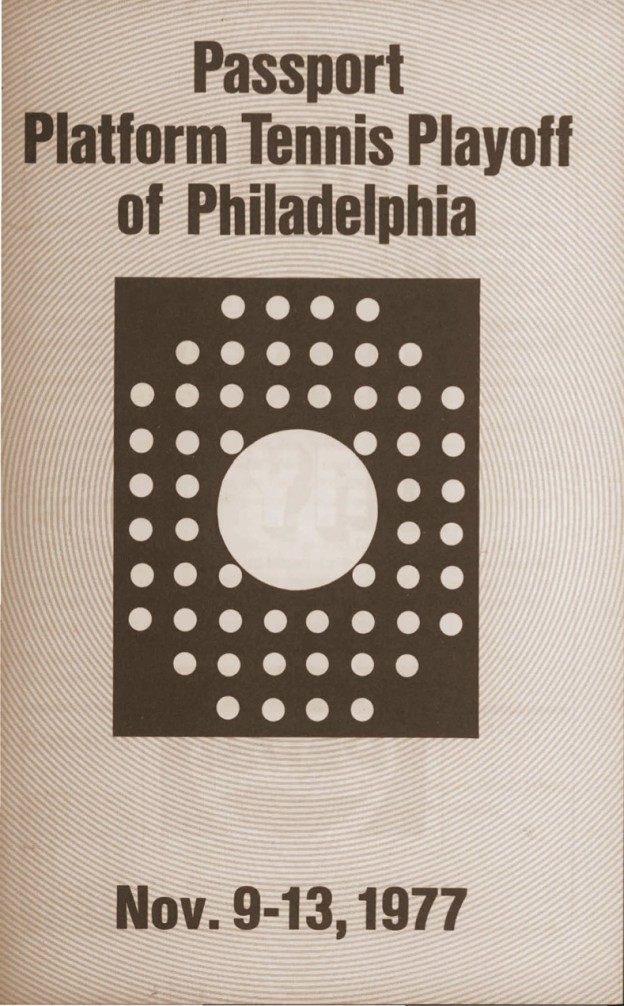
Calvert Distillers Company, the producer of Passport Scotch, agreed to sponsor the Passport Platform Tennis Playoffs, which consisted of six men’s events and five women’s events, all leading up to the $50,000 Passport Platform Tennis Classic in March 1978 at the Orange Lawn Tennis Club, South Orange, NJ.

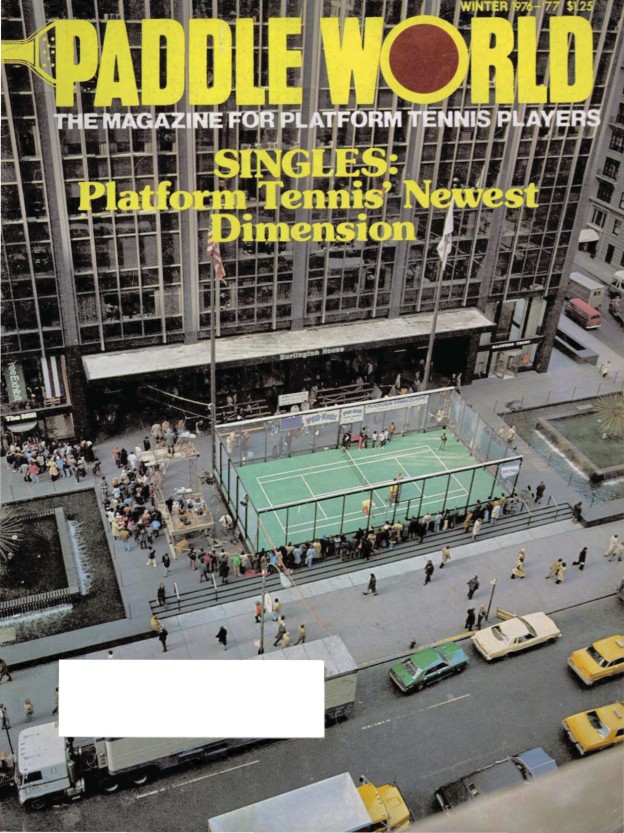
The Platform Tennis Playoffs were announced at a series of exhibitions at the Seagram Building on Park Avenue in New York City to start the 50th anniversary celebration of Platform Tennis.

Passport Scotch sponsorship

Philip E. Beekman, President of Joseph E. Seagram & Sons, Inc., announced that Calvert Distillers Co. & Passport Scotch would be the sponsors of a tour for men and women during the 1977-78 season, offering prize money of over $140,000.

In October, the Seagram Building on Park Avenue in New York City held two days of matches. Platform tennis enthusiasts in the New York metropolitan area were encouraged to stop by and watch the top teams in action.

Source: Paddle Talk, Vol. 3 No. 1 (September-October)

A good year for junior play

Eleven different cities hosted open tournaments in the 18 and 15 and under categories for boys and girls, including the Nationals. A sizeable increase in the number of teams over last year was evident in all age groups.
Source: Paddle Talk, Vol. 2 No. 5 (July-August)

Paddle World Vol. 2, No. 1 covered the re-emergence of singles

Singles back in town

On May 10 and 11, the Manhattan Platform Tennis Club hosted the Doug Russell Invitational Singles Championships. Doug Russell and Linda Wolf captured the titles.

APTA Singles would not restart until 1980, but this event put singles back on the map for the first time since 1937.

See also: Singles grows up

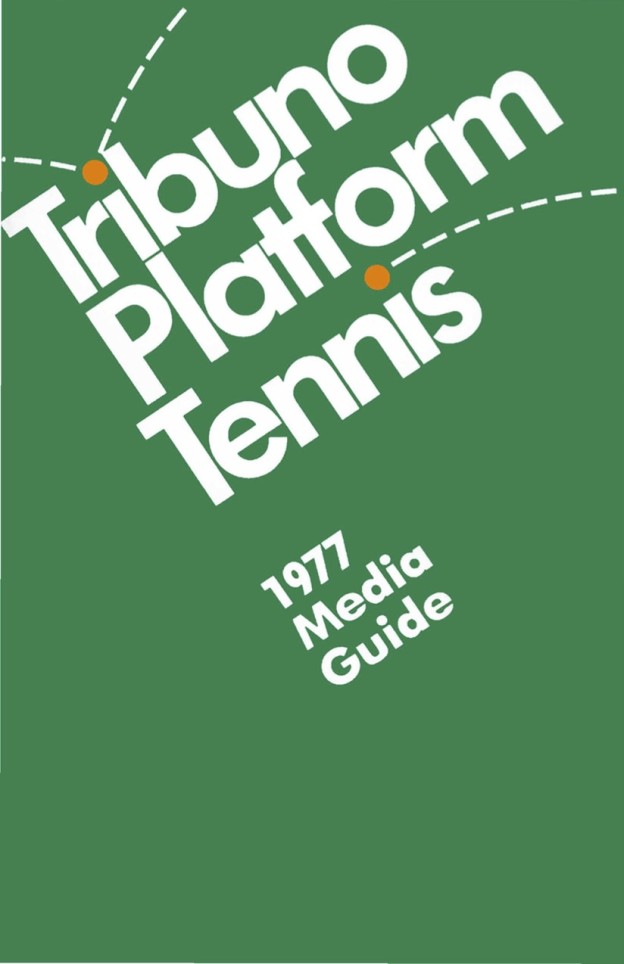
Fifty-six page Tribuno Platform Tennis $30,000 World Championship Media Guide featured men's and women's player profiles, information about viewing paddle, and a brief history of the sport

Tribuno Tribuno World Paddle Championships – It’s Irvine and Fitz Gibbon again in the Men’s; Hilton and Gengler again in the Women’s

Forest Hills held the event on April 1-2 in heavy rain. Maintenance men brushed puddles off the decks between games. The Women’s Final was a soaking wet scene on Saturday, April 2nd. The winning team was Hilary Hilton and Louise Gengler (6-2, 7-6, 7-6), title-holders for every Tribuno event of the year. The women contestants had made headlines by playing three out of five sets in the semis and finals: “Equal prize money, equal play,” stated the women.

The heavy rain necessitated postponement of the Men’s Final until Sunday. Herb Fitz Gibbon and Hank Irvine ran through Doug Russell and Gordon Gray, after a tight first set, with the loss of only four more games, ending their season with four straight Tribuno victories.

Media Guide and Program Booklet

Source: Paddle Talk, Vol. 2 No 5 (July-August)

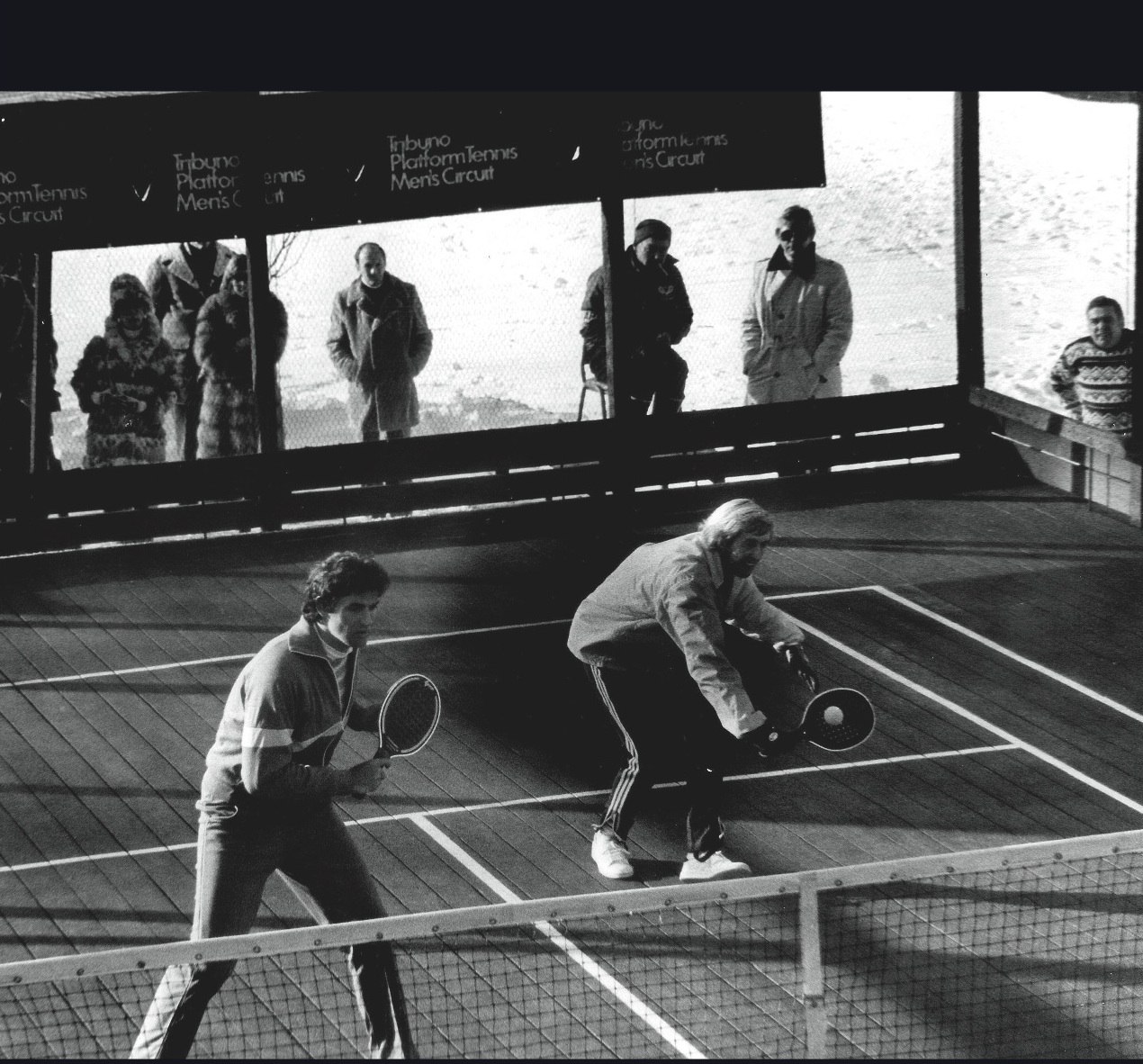
During one of the Tribuno Tour events, Hank Irvine hits a service volley while Herb Fitz Gibbon closes in on the center. This team dominated several of the Tribuno tournaments and won the Nationals in both 1977 and 1978
During one of the Tribuno Tour events, Hank Irvine hits a service volley while Herb Fitz Gibbon closes in on the center. This team dominated the Tribuno tournaments and won the Nationals in both 1977 and 1978

Inaugural Hudson River Invitational

The First Annual Hudson River Invitational, held in March, was an example of a new concept in club paddle competition, one that served as a model for other clubs interested in promoting tournament play.

The Sleepy Hollow Country Club hosted eight men’s teams from each of eight neighboring clubs. Utilizing over 20 courts in the Hudson River Valley, the 64-team draw played main draw, consolation, consolation reprieve and championship reprieve matches. This enabled each team to play a minimum of three matches. Each team got a single point for each match won in any of the four tournaments.

The dinner dance that followed the tournament featured the Dixie-land music of APTA Board member Bob Kingsbury and his band.

The day’s events were an enormous success and, according to Chairman Richard Lombard, helped a great deal to promote tournament play in the Hudson River Valley.

Source: Paddle Talk, Vol. 2 No. 5

Courts on the roof of the Tokyo American Club. The Tokyo Tower, the tallest free-standing steel structure in the world, is at the right. The photograph was taken in the 2000s

International activities (IPTA)

Art Houlihan reported in the February edition of the APTA newsletter Paddle Talk:

The pied pipers of paddle have wandered to at least twelve countries outside of the U.S. Canada is, of course, the mainspring of non-U.S. activities with hundreds of players and a full spectrum of tournaments and activities centered around Toronto. Hopefully this year we will be able to provide a better opportunity for Canadian players to participate in U.S. events including our championships.

Ambassador Walter Stoessel brought paddle to Poland and Russia with courts at both embassies. The ever-present Reilly’s sent courts to France, which are now in Switzerland. Without being able to give proper credit, there are also courts in Austria, Bahamas, Bermuda, Germany, Great Britain, Indonesia and Italy.

The courts in Japan atop the American Club deserve some special recognition for ingenuity. The club is located in downtown Tokyo and is a magnificent facility with a wide range of leisure and athletic facilities. On the roof of one wing of the club are three courts, standard except for the screen covering the courts. The screen was presumably erected to keep the balls from flying into the adjacent yard, which, I believe, is the Russian ambassador’s residence. Since many Japanese buildings have golf driving ranges and archery ranges on the roof, paddle fits right in. The ground rules for playing the top wire are still a mystery.

In Europe the principal source of activity is at Bellfires B.Y. in Hapert, Netherlands, which is manufacturing courts and promoting the game throughout Europe. The two courts in the Hapert vicinity were the site of the Dutch Open Championships held November 12, 13, and 14. The Championships included tournaments for Women, Men and Mixed Teams. Transportation for U.S. teams was sponsored by Devoe Systems of New Jersey, which has long been associated with lighting for sports events and is entering both court and paddle production. The U.S. fielded teams in all categories including several ranked players. As facilities and experience accumulate, it is hoped to have several competitions in Europe each year. Closer to home, White Heron in Bermuda will again sponsor a tournament for the eight top ranked teams this season.

As a result of vastly improved media coverage (particular thanks to Fortune’s article “On Your Own Time” (December 1976), inquiries have been received from over twenty countries pertaining to starting the sport or installing facilities. Australia alone produced inquiries from Sydney, Melbourne, Adelaide, Perth, Brisbane and Victoria (Tasmania). As ripples emanate from each pebble we will have more to report on international paddle.

Source: Paddle Talk, Vol. 2. No 3 (February)

New York University builds six courts

The courts overlooked New York University and Washington Square and was probably the best university platform tennis facility in the world, and certainly its most dynamic setting. Reilly erected the courts in two weeks in May and they sat 115 feet above ground, atop the Bobst Library. The total cost of the courts was $118,000.

The facility was open to students and faculty—173 students signed up for the first season—but not to the public. Mike Muzio, Chairman of Recreation and Intramural activities had plans for a series of clinics to teach the players and stimulate further interest. A keen supporter of the project was Professor Charles Bucher, Professor of Education. He had been an avid paddler for 25 years and had won the Senior Veterans Championship in 1976.

Source: Paddle Talk, Vol. 2 No. 3 (February)