Drowne, Bradley C.

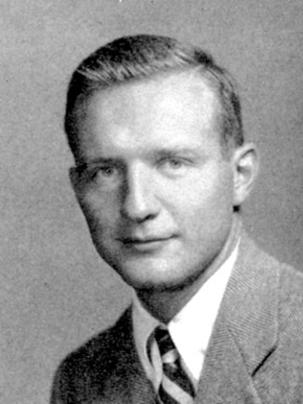
Drowne served with distinction as the National Tournament director for the APTA for many years during the mid and late 1970s. He was a pioneer in the initial development of a rankings system, involving points for performance and tournament weightings. All of this effort was done by hand during those years, before the routine use of computers. Whether he played in a particular event or not, Bradley was always in attendance at ranking or national events, paying close attention and tabulating tournament results. During those years of rapidly increasing popularity of the game, the complexity and the growing pains associated with this task required strong leadership and imagination, and the APTA was fortunate indeed to have had him at the tournament helm.

Aside from his diligent efforts as the Director of Tournament Activities for the APTA, he was many times a national champion. If the game had an award for “Mr. Steady,” Drowne would have been a contender. As a former partner said, “I remember playing in a tournament with him, and in the five-set final, he missed only three service returns. His steadiness and consistency were remarkable. He was the picture of patience and determination.”

Drowne won the Men’s Nationals once, in 1968 with Bill Scarlett, and they were finalists in 1969. He won the Mixed Nationals twice, in 1969 with Charlotte Lee, and in 1974 with B. J. Debree. Bradley and Lee were also finalists in 1970. Upon reaching the qualifying age for the first senior level, the Men’s Senior National 45+, he entered and won that event with Don Miller in 1973, over the formidable team of Chuck Baird and Roger Lankenau. There is no doubt that, but for the wear and tear on the body that resulted in “early retirement,” he would have continued to win in each of the subsequent five-year senior categories. From friends, partners, and opponents, he was described as conservative, mentally tough, steady, consistent, and above all, the perfect gentleman on and off the court, win or lose.

On the other hand if the game had an award for “Sartorial Elegance,” Drowne would have been the least likely recipient. Another former partner had this to say about Bradley’s style of dress: “Had there been an annual award for the least stylish player, he would have been the perennial winner, with his baggie khakis, high top basketball shoes, faded sweaters, and braces on knees, elbows, and back.”

Source: G Easterbrook Kindred – APTA Honor Award Induction comments

Robert A. Brown

Brown, Robert A.

Brown grew up and went to school in Scarsdale, NY, where he was an outstanding athlete and Eagle Scout. In basketball, he set a high school single game scoring record that stood for five years, and he still holds the long jump record of 22’ 1¼”, although back when he set the record the event was rather inelegantly called the broad jump. After graduating from the University of Virginia and obtaining an MBA from Harvard, his career took him to Indonesia for many years, where he honed his golf game and won the Indonesia National Championships four times from 1961-1964. After additional assignments in India and Pakistan, he returned to the U.S. and moved back to his home-town and club, Fox Meadow. Bob took up platform tennis at the age of 40. He had barely unpacked and started playing paddle when he was asked to run the National Championships at Fox Meadow in 1969. Four years later, he was President of the APTA and just at the start of a long career in tournament administration and APTA activities.

His direct involvement with the APTA began in 1969, when he was tapped to become Treasurer, the first step in the orderly progression to the Presidency. He lived up to expectations, turned a profit and brought controls to the APTA treasury that had not been exercised before. The next step was Secretary, and then the Presidency in 1974 and 1975. Here was where the mettle of the man was tested as, by then, paddle was rapidly growing into a national and international sport. The game had come of age and there was great pressure to turn a wonderfully casual and social game into what was envisioned as a big sport and a big business. There is no question that he had a more demanding job than those before him.

Fifteen hundred mail inquiries, triple what they had been, flooded the office. Courts were being built in seven foreign countries, and there was a tournament schedule of 50 sanctioned tournaments, a 75% increase over earlier years. There were 3,000 paid admissions to the 1975 Men’s Championships, 300 member clubs, the first commercially sponsored tournament, the first professional platform circuit, and plans being made for the first platform tennis world championships on center court, hard by the blue and yellow awning at Forest Hills. Clearly, the game of platform tennis wasn’t casual anymore and it was beset with all the problems pertaining to that growth.

During this time of change, Brown worked with his usual diligence to handle a difficult challenge—to see that the APTA handled the transition smoothly, while, at the same time, insuring that the traditions and the character of the game were maintained. Bob had a major influence on APTA policy and plans during his tenure and while the sport was to go through a period of commercial emphasis, moving away from the game’s two primary constituencies—clubs and weekend players—the perspectives today are much more as they were in the early years of the game. History has shown him to be prescient in his viewpoints about the game and about its governing body.

While Brown was president, a new set of bylaws for the association was developed, and the APTA was incorporated under the laws of New York State as a not-for-profit corporation. He organized the first APTA Umpire’s Committee and authored two brochures, including the Etiquette of Platform Tennis and How to Conduct a Tournament Draw. The logistics of no tournament were too much for him. He appointed and chaired a committee to develop a policy statement on the commercial sponsorship of tournaments, and he saw that national rankings were extended to include all the categories in which championships were played. He championed the yellow ball that is now the standard, and he headed a much-needed “Foot Fault” project while President, one more attempt to struggle with a problem that the APTA had been plagued with for decades. In 1998B, after a two year trial period, Brown succeeded in obtaining the approval of the APTA Board to adopt the no-let on serve rule.

Because the game had now grown beyond the reasonable limits of volunteerism, Brown moved the APTA to hire its first paid employee, an executive secretary, a post that shortly thereafter became Executive Director. In 1976, the APTA President’s Council was formed, with Bob as chairman, and he stayed on the APTA board until 1979. But, he wasn’t through.

Almost 10 years later, in 1988, he was re-elected to the board, the only past director or officer to be so honored. The APTA knew who to go to when a job needed to be done, and they needed a director with some historical perspective who could be productive right away. His responsibility was first as President of Region 1, and then to run the Rules and Equipment. Committee. At the time the ball was lousy, the racket was undergoing innovative changes, there was a need for standardization, and the ubiquitous foot-fault was lurking. Tackling all this required lot of attention to details and painstaking work, but the job was addressed with his usual conscientiousness and consummate skill. Most importantly, he got manufacturers to follow APTA equipment standards. This second “stint” closed after a total of 22 years of service on the APTA Board.

After Bob was inducted into the Hall of Fame in 1993 (Honor Award at that time) he again served as Chairman of the Hall of Fame Committee until his retirement from the Committee in mid 2013. All told, Bob served as Hall of Fame Committee Chairman for 26 years, and administered the induction of 46 honorees into the Platform Tennis Hall of Fame.

In addition to being a doer, Bob brought considerable logic, great common sense, vision and patience to his many years of service to the APTA. He embodied the basic philosophy behind the association–—service and devotion to the game. And amid all of this, he found time to play. The fascinating thing about this game is that exciting play doesn’t reside only within the traditional age groups in men’s and women’s championships. It is also strikingly evident in the older age groups, unlike tennis, where the game slows down. But, that is not as evident in paddle. Our candidate is still an exciting player. With great hands, great moves, and great concentration and tenacity Bob was an exciting player with a fine record on the “senior” circuit. He won the 50+ in 1978 and was a finalist twice in 1979 and 1980. He was a finalist in the 50+ mixed masters in 1991, and finalist in the men’s 55+ in 1990. He won the 60+in 1990-1991, and 1993-1994, and was a finalist in 1996-1997. He had a hat trick in the 65+ in 1993-1995, won four more times, and was a finalist twice from 1996-2002. He continued his winning ways in the 70+, winning three times and being a finalist five times from 1998-2007. And in the 145+ event over the 12 years since its inception in 2001 he has won six times and been a finalist three times. All together he amassed a total of 39 National Championship finals with 21 wins and 18 as finalist. The last win was at the age of 84 making him the oldest player in the history of the game to win a National Championship.

Brown has served as the Chairman of the Platform Tennis Museum and Hall of Fame Foundation from its inception in 2002.

Source: Platform Tennis News, Summer 1993

Lucie Bel McAvoy

McAvoy, Lucie Bel

No one did more for the development and growth of platform tennis in her region than “Mother Paddle1,” with the possible exception of her son Tim, who himself was a Hall of Fame Inductee in 2012.

While the phenomenal expansion of the sport from the late 60s into the 80s was accomplished with the enthusiasm and dedication of many paddle devotees, one of the long-time leaders of this group was Lucie.

In an 1991 interview with The Inquirer she recalled:”To get people to play, I went to two clubs, Waynesborough and Merion Cricket Club, for two years and taught people how to play for free.” And, in 1971, she and a friend started Paddle Ltd., which at one point was teaching more than 100 students a year at clubs in the Philadelphia, Wilmington and Baltimore areas.

She helped establish Region III, known as the Mid-Atlantic Platform Tennis Association, and that group has since spearheaded the development of many tournaments, such as the Richmond, Wilmington, Lehigh, Baltimore, Pennsylvania, and Metropolitan Area Platform Tennis Association (MAPTA) championships. In addition, at the time of Lucie’s induction, it was estimated that over 1,000 people played in league and inter-club competitions in the area.

McAvoy also distinguished herself in championship play. On the national scene, she competed successfully for over twenty years. She and her long-time partner, Bunny Vosters, won the National Women’s Seniors 50+ four years in a row2, from 1982 through 1985, becoming the first team to do so. She also won the regional MAPTA Women’s Championship many times, and the MAPTA Mixed Championship nine times between 1974 and 1991, the last four with her son,Tim.

While having accomplished a great deal both on and off the court, her character shone in all her endeavors. She believed that character is the most important individual trait. Lucie hated to lose, but she knew that losing was not fatal. She was a model of sportsmanlike conduct, willing to compliment the opponent with a firm “well done” and a pat on the back even when she was the victim. She lost because the opponents played better, not because “I had a bad day.”

Lucie Bel McAvoy was a person with a passion for life, for family, for others, and for paddle. Always outgoing, friendly, and considerate, she poured her energy into whatever she felt was worthwhile, and our game was the beneficiary.

McAvoy (nee Barnes) was born in St. Louis and moved with her family to Scarsdale, NY during her high school years. She was one of the top teenage tennis players at Fox Meadow Tennis Club along with her sister Sally (The Barnes Sisters). She attended Mount Holyoke and graduated in 1954. While at Holyoke Lucie Bel was invited to spend a weekend at a friend’s family farm in Phoenixville, PA. The friend had a brother, Thomas B. McAvoy III. The rest is history.

McAvoy died at home after a battle with cancer.

Note: (1) McAvoy was honored in 1977 by the Metropolitan Area Platform Tennis Association for her support of the game and given a sterling-silver picture frame engraved with “Mother Paddle”, which became her nickname.

Note: (2) The 1983 tournament was held as a 45+

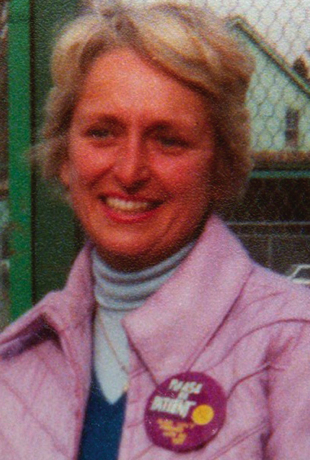
Mangan, Nancy

Mangan caught the paddle bug at the Short Hills Club in 1964 and rose from novice to club champion. She was a three-time New Jersey Mixed champion, a Princeton, NJ, Mixed champion, and a finalist in the National Mixed in 1976, all with Hank Irvine; Women’s Nationals 50+ champion with Cindy Adams in 1981; and, with Barbara Greer, held a number seven national ranking.

Her career of service to the game spanned decades, and included teaching paddle throughout New Jersey and acting as President of the New Jersey Women’s League, the largest in the country. She worked with Buffy Briggs, director of the Women’s Tour, as her assistant director for, in her own words, “too many years” to count, and was a major force in junior programs and tournaments.

Mangan’s service on the APTA board was legendary. Beginning in the 1970s and through the 1990s, she demonstrated a level of dedication and caring that few have equaled. She taught the youngsters, ran tournaments, directed APTA programs and played our game.

Charles F. Baird

Baird, Charles F.

Over the years, there have been many great paddle players and tournament winners. But no one has won more national tournaments, or played on more courts, than Chuck Baird. Baird’s career took him from Short Hills, NJ, to Chappaqua, NY, to Washington DC, and then to Toronto and Europe, where he planted the seeds of platform tennis that grew for others to enjoy. This was exemplified by his stint in Toronto, where he served on the Board of the Canadian Platform Tennis Association and was instrumental in getting it to join the APTA. He also served on the APTA Board as Seniors Chairman.

Chuck Baird’s active involvement in paddle did not begin until 1958. At that time, the Baird family had returned from a posting in London with Standard Oil of New Jersey and had moved to Chappaqua, NY. Next-door neighbor and future partner, Roger Lankenau, introduced Baird to the game when, according to Chuck, “Lankenau came walking across the property line one day holding a strange looking instrument which turned out to be a paddle.” It was love at first screen shot. Soon afterwards, former national champion and friend Bill Pardoe invited Baird to watch tournament play at the Fox Meadow Tennis Club in nearby Scarsdale, NY, to “see how the game is really played.” Fox Meadow, the birthplace of paddle, featured tournaments with the top players in the game, but also welcomed newcomers as participants. It was in this environment that Baird began his tournament paddle experience.

Baird and Lankenau became regulars on the tournament circuit the following year and made it to the Men’s Nationals quarterfinals at Fox Meadow in 1962. That same year, business again took Baird overseas, this time to Paris for three years. However, the paddle bug had bitten hard and Baird flew back to the United States to participate in the 1963 National Championships, undoubtedly setting a record for the longest distance traveled by a Nationals participant.

Returning from France in 1965, and at the age of forty-five, Baird decided to devote time to mastering the game of paddle. One year later, he and Lankenau won the highly regarded New Canaan Invitational Tournament and made it to the semi-finals of the Nationals at Fox Meadow as well. During the next seven years, Baird and his partner were annually ranked among the top eight teams in the country. One particular highlight that Baird recalled was playing in the first televised platform tennis tournament, held at Hilton Head Island, South Carolina. That his sons, Steve and Chip, were finalists in the same tournament made the event even more memorable.

As his children grew older, Chuck began entering tournaments with them as well. “This is when they learned to be tournament tough,” stated Chuck. The boys had to play well, as opponents worked on them, assuming that the youngsters were the weaker players. This experience paid almost immediate results, as Steve and Chip took the National Juniors title in 1968, and soon added the Men’s Nationals title to their list of credits.

In 1982, Baird performed the hat trick, winning Men’s Senior National titles in three age groups, the 50+, 55+ and 60+. At the time of his induction in 1992, he had participated in twenty-three championships, been a finalist nine times, and had just won the National 60+ and 65+. He subsequently was a finalist three more times and won his last tournament, the Men’s Senior 70+ in 1999. He was described by Brook Kindred as a tough, tough competitor who would gladly beat his mother love and love, only to be the most tender son imaginable once the game was over. Although the sons he nurtured in the game are presently better known, Chuck Baird’s achievements on the platform tennis courts are likely to stand for generations.

After four decades of paddle. Baird listed a number of reasons for his longstanding love of the game. At the top of the list was simply, ”the fun of competing with and meeting a nice bunch of guys.” He added that, “senior tournaments especially are like old home week for me.” After living in several of the country’s paddle centers, his paddle friends were countless. He especially liked playing in out-of-town events, in places like Cleveland, Detroit, and Pittsburgh where he could renew acquaintances with players he had met through the years. “Another reason I love the game is due to the smallness of the court. It brings you close to your opponent and while this can cause the competition to get very heated, it also contributes to the basic friendliness of the game,” Baird observed. The ability to get outdoors in the winter and play at night were other reasons cited as making the game so appealing to him. “What can be better than a combination of friendly competition, good exercise, and being outdoors?,” said Baird thoughtfully. It cannot be said any better.

Baird grew up in Wantagh, Long Island, NY. He was a good athlete, playing football and tennis at Freeport High School and continuing in these sports at Middlebury College. While at Middlebury, and with World War II underway, Baird enlisted in the Marine Corps in November of 1942. He reported to Hanover, NH, shortly thereafter and completed his last two semesters at Dartmouth College before entering active duty. He then served sixteen months in the Pacific and came home as a first lieutenant.

After returning to civilian life, Baird worked briefly for his father as a builder before accepting a job with Manufacturers Trust bank. Next came a day job in the treasury department of Standard Oil of New Jersey, while nights were spent at New York University where he earned his MBA. As he rose through the ranks at Standard Oil, he had postings in London and Paris.

His personal life was also on the move. Baird and his wife, Norma, who had met on a blind date, were married in 1947. As their family grew, little did anyone anticipate how great an impact this family would have on the game of platform tennis. Daughter Susan arrived first and then came the “Baird Boys,” Steve and Chip. Finally, Nancy was born while the family was living in London. While Steve and Chip’s paddle legacy is both well known and well documented, Nancy was also active in paddle and, in 1976, personally put together the first Princeton University platform tennis team.

When Baird was appointed as Assistant Secretary of the Navy (1966-1967) by President Johnson, the family moved to Washington, D.C. He soon rose to Undersecretary (1967-1969), the number two position in the Navy and, during his period in Washington, Chuck was an active member of the mid-Atlantic paddle community. Subsequently he joined The International Nickel Company of Canada (now known as INCO Ltd.), moved to Short Hills, NJ, and began working his way up to CEO and Chairman, with an executive posting in Toronto along the way.

Baird died in 2009 at his home in Skillman, NJ, after a struggle with Alzheimer’s disease.