Butterfield, Patricia Ann

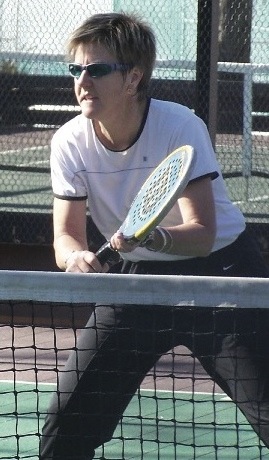
After losing in the Women’s Nationals finals in 1982 to the veteran team of Yvonne Hackenberg and Hilary Hilton Marold, she won her first Nationals in 1983, partnering with Robin Rich Fulton to defeat Nadine Netter and Diane Tucker. The following year, Butterfield teamed with Tucker and the new team was a finalist in the Women’s Nationals the first year, and then proceeded to win the title in 1986 and 1987, and reached the finals in 1988. Upon entering the “senior” circuit, Pat and Diane won the Women’s 40+ Nationals in 1991 and 1992. During her playing career, she was consistently ranked among the top women players.

Butterfield was relentless on the court. She had all the shots, including a punishing forehand drive and one of the· best backhand volleys in the game. And she was fast. She could run down shots others had no chance at and then she would come up with a truly creative shot that left her opponents in disbelief. If you beat Pat, you knew it was an accomplishment because she was so talented both physically and mentally.

A gracious champion and a wonderful ambassador for the sport, Pat had integrity and sportsmanship on the court, and was always very friendly off-court. This sentiment was echoed by both her partners and her opponents. Fulton commented that, “Pat was one of the first people whom I really enjoyed watching and learning (from) . . . I got an understanding from her of the true spirit of platform tennis with the great sportsmanship that seems inherent in the game!”

The Butterfield family was very active and successful in paddle. Pat’s husband, Keith, had a fine Senior tour record. Daughter Janna won the 12-and-under in 1987 and son, Keith, won the 15-and-under in 1981 and 1982, while he and his brother, Kenneth, won the 18-and-under in 1985.

Source: Patty Hogan

Gerri Viant

Viant, Gerri

Between 1990 and 2002, Viant and partner Sue Aery, won eight Women’s Nationals and were finalists in 1991 and 1999. They then retired for a year or so to let everyone else practice before returning to reach their last final together in 2004. They were winners of the Women’s 40+ nationals in 1999, and Viant also won this event in 1998, and was a finalist in 1996-1997, 2002 and 2006. Gerri also won two Mixed Nationals (1989 and 2000) and was a finalist in 1988 and 1990.

Born and raised in Adelaide, Australia, Viant’s introduction to paddle came on a whole other continent. She had been backpacking around the world when she stopped to see her childhood tennis coach, who at the time was teaching in New York City. She started helping him and, in turn, he introduced her to paddle. Gerri was immediately hooked. She loved everything about it, running the balls down off the screen, volleys, the strategy and the teamwork that it required. During the fall, just before she was due to go back to Australia, she interviewed for the head tennis professional position at The Nyack Field Club. While there for the interview, she noticed they had two paddle courts. When offered the tennis position, she asked about paddle and it turned out the club didn’t have a program or a professional. Since tennis season was some time away, Viant suggested she start right away with paddle and get to know the membership before the next tennis season began. The club agreed and, so, even though Gerri had never taught paddle, barely played the game herself, and had never seen it played at a high level, she went to work building up the programs at the club. She is still the paddle and tennis pro at the Nyack Field Club, running a highly successful year round program for members, and acting as the club’s manager.

Viant never returned to live in Australia, but was there on vacation when she learned that she would be inducted into the Hall of Fame. It was a rather ironic moment because, 24 years earlier, paddle had played such a huge part in her decision to stay in the USA.

Gerri has said that she was lucky enough to be learning the game at the same time as one of the greatest female athletes to have ever played paddle—Sue Aery. She remembers watching Aery play and being amazed at her footwork. Sometimes she would even throw up a short lob just to watch how her footwork would get her out of trouble.

What made this team so successful? Was it their motivational song, “When we were Kings?” Maybe it was because they ate the same meals during tournaments? Maybe it was the specific placement of their water bottles and tissue boxes on the court that brought good luck? Maybe it was their Wilson paddles? It was really a combination of their individual talents and great team chemistry, despite the fact that they had contrasting on- and off-court personalities. Aery wore her heart on her sleeve, and was at her best when in full flight, while Viant played her cards a little closer to the vest, and was more in her element with the strategy and concentration that the game required. They worked well because they were best friends, win or lose.

Proper positioning and consistency were the benchmarks of their success. They both had amazing racket skills and the uncanny ability to make unbelievable shots at unbelievable times. They played a game that looked effortless; Gerri sliced and diced the opposition until Sue got the opportunity to deliver the knock-out blow. They covered the court like no other team, with Gerri rarely missing any shot and Sue running around the court to make one of a kind gets. However, their real talent as a team, and what set them apart from the competition, was the disciplined approach they took to playing matches. Long before they ever got on the court, they would be studying tapes of matches, eating the right foods, working out in the gym and drilling and practicing. They prepared constantly throughout the course of a season for the Nationals, and when it rolled around in March, they were ready to excel.

Gerri was the de facto leader on the court, a role that came by her naturally On her fourth grade report card at the Cabra School in Adelaide, her teacher wrote: “Gerri is a natural born leader but is leading other children in the wrong direction.” Evidently, before she knew anything about physical fitness, Gerri smoked cigarettes. This resulted in many trips to the principal’s office in an effort to get her on the right track. It worked.

In 1997, Viant and Aery founded Performance Paddle Camps, which pioneered the idea of a traveling camp for platform tennis. The following year, they were joined by Mike Gillespie. The camps helped to grow the game by offering high-level instruction in areas of the country where there were no paddle pros, and by instructing tennis pros in these areas how to teach and promote the game of platform tennis. This collaboration, along with some fellow teaching professionals, led to the formulation of a body of instructional knowledge. Eventually, this core group became the founding Board members of the Professional Platform Tennis Association (PPTA).

Sipe, Howard A.

If the title “Mister Paddle” or “Father of Paddle” should be awarded to any one person in the Chicago area, it would go to Howard A. Sipe. As a player, he has won or been a finalist in every age group from age 50, gathering six national titles and coming in second in seven others. Sipe has also won numerous state and local tournaments over the years and, in the state of Illinois, has won the 45+ division title 13 straight years.

Off-the-court, Howard made major contributions to promoting and managing the growth of the sport in the Midwest. When the regions were realigned in the early 1990’s, he was the first President of the new Region V.

Along with long-time partner, Jack Watson, Sipe helped run the Chicago Platform Charities for more than 15 years, and oversaw the senior draws of that organization for some 25 years. He was instrumental in starting the Intermediate tournament of Chicago five years ago, which now hosts one of the largest “B” events in the country. In 1990, he co-chaired, with Alan Graham, the first Men’s and Women’s National’s held in Chicago. Howard has also been the official referee of the Charities finals for over 10 years.

A platform tennis pro at Valley Lo in Glenview and a league player for Exmoor Country Club in Highland Park, Sipe is a consummate teacher and is ready to help any beginner learn the game of platform tennis. When you talk to the people of Chicago, there is a single trait that everyone emphasizes. While a fierce competitor, he is always a true gentleman on and off the court. He always displays himself in a positive manner, whether congratulating the winner or consoling his partner if he lost. He is also not above playing with the new players, even at the cost of his own game. His play continues to display conditioning, preparation, anticipation and subtlety. As more than one person bas said, you can always Iearn something about platform tennis by watching him play.

Few have given more back to the sport, as epitomized by the recollection of one enthusiastic player who said, “He was promoting paddle tennis when I graduated from college in 1971 and he is still out there today with the same positive attitude, enthusiasm and energy.” Another said: “I have not seen any other person in the Chicago area give so freely of his time as he has done for the past 40+ years.”

Source: Walt Peckinpaugh, Induction remarks

G. Estabrook Kindred presenting Honor Award to Donald K. Evans

Kindred, G. Estabrook

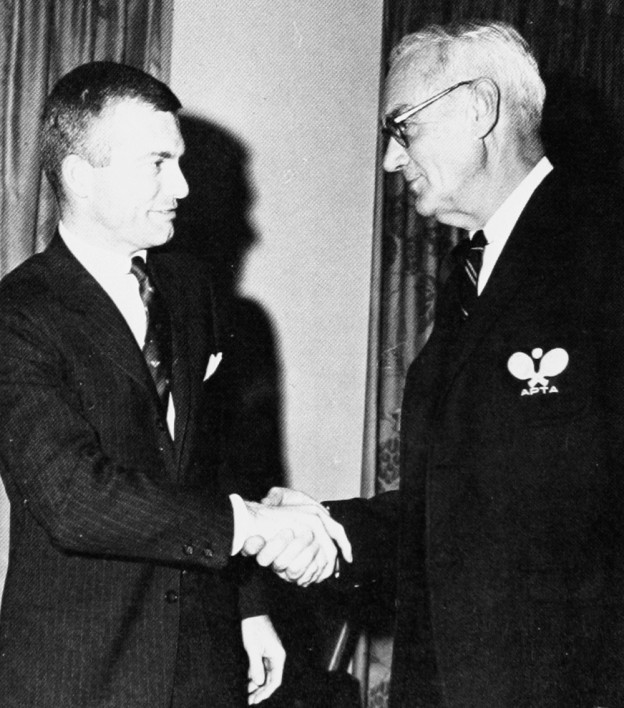
G. Estabrook (Brook) Kindred continuously served the cause of platform tennis for more years than practically any other individual. He was a “do-er,” tireless, unselfish, and dedicated to the support and promotion of the game. In addition to his many years of service to the APTA he served on numerous National Championship committees, and was the tournament chairman of the 1968 Men’s Nationals. In the 1970’s, Kindred was instrumental in the formation and administration of the APTA Umpires Committee, which, at its peak, totaled more than 30 members. Although that activity no longer formally exists, he continued to serve as a coordinator and chair umpire for APTA championships and other sanctioned tournaments, and went far and wide to officiate, no matter what the weather. Brook was also the driving force in inaugurating the Hall of Fame activity, originally known as the ”Honor Award.” He served on the Hall of Fame Committee from its inception in 1965, did the bulk of the research on each Hall of Fame inductee, designed the green jacket with the Hall of Fame logo for the men and the charm bracelet that was awarded to the women, and gave a majority of the induction speeches. By the time he was inducted, 63 individuals had preceded him into the Hall he helped make a reality.

Kindred was born and raised in Scarsdale, NY, and was a long-time member of Fox Meadow Tennis Club. He attended Hackley in Tarrytown, NY, and then went to Colorado College. Upon graduating, he began a career in advertising at McCall’s in New York City, and then moved to Scholastic Magazine where his creativity, innovation and interpersonal skills earned him several awards. After many years of service, Brook retired from the company as Executive Publisher.

Paddle was not only a part of his life, but of his family’s as well. Brook’s children remember a house where paddle tennis draws were laid out on the dining room table, warm clothes for officiating were neatly stacked, ready for use in the cabinets and closets, and, at the first sign of cold weather, a rousing game of paddle became the family activity.

Kindred was known within the platform tennis world for his skill and fairness as an umpire. A top player commented that he was always glad to see that Kindred was assigned to umpire his match, as he was in control, fair, knowledgeable, and willing to step up and make the tough call. It was not surprising that he could make the tough calls since he was a USTA umpire in the days before money was paid for these assignments. Brook called many matches at both Wimbledon and Forest Hills for the tennis greats of the 1970s to 1990s, including John McEnroe, Ilie Nastase, and Jimmy Connors.

His commitment to the history of the game is also well-known. In 2000, the APTA created the Platform Tennis Museum and Hall of Fame Foundation, with the goal of establishing a Museum to commemorate landmarks in the game and honor Hall of Fame inductees. As a student of the game, Brook was already considered a valuable source of knowledge to younger players anxious to learn about the founding fathers and the storied history of the game. Not surprisingly, he was elected as one of the trustees of the Foundation board because of his long-term knowledge and his Scarsdale roots. He was an invaluable contributor to the Foundation’s ‘efforts until his death in 2006.

Source: Robert A. Brown, Induction remarks

Sue Aery

Aery, Sue E.

Sue Aery is one half of the most successful team in the history of women’s platform tennis. Between 1990 and 2002, with partner Gerri Viant, Sue won eight Women’s Nationals and placed second two other years (1991 and 1999). Sue and Gerri also won the Women’s 40+ nationals in 1999, and were finalists in 2002. After a two-year retirement, while Sue started chiropractic school, they returned to reach their last final together in 2004. Sue was also a finalist in 1989 with Mary Ginnard, and won the Mixed Nationals in 1999 with Scott Mansager.

Her father, Ade Aery, introduced Sue to paddle when she was 13, and she first started playing at the Essex Fells Country Club in New Jersey. Already a successful tennis player, Aery resisted the paddle pull at first. But, after playing tennis at Colgate University, where, incidentally, she still holds the school record for the highest batting average for her four seasons of play on the softball team, she took her first job teaching tennis at a club that included platform tennis. Love finally ensued! Aery excelled at, and continued teaching, both sports for the next 20 years, and introduced platform tennis programs to several clubs throughout New Jersey during her teaching career. Growing the game has always been one of Sue’s passions and that passion has not been diminished over the years. Since moving to North Carolina in 2005, she has worked with several paddle groups in the Southeast, the newest Region (7) in the American Platform Tennis Association.

Meeting on the paddle court in 1981 as opponents, Sue and Gerri played against each other for eight years. Forging a friendship along the way, they finally joined forces to become a team in 1989. They won the National title in 1990 and never looked back. Sue’s racquet skills led to her to make unbelievable shots at unbelievable times, and as a team, they covered the court like no other pair could. Gerri rarely missed a shot and Sue made one-of-a-kind gets. Patty Hogan, a former Nationals champion and a colleague of Sue’s, once remarked that, “If you saw Sue dance you would never have expected the athleticism and grace she showed on the court.” Their real talent as a team, and what set them apart from the competition, was the disciplined approach they took to playing matches, which included studying match tapes, eating right, working out in the gym, drilling and practicing. The duo prepared constantly throughout the course of a season and were always ready to excel at the Nationals each March.

Aery was so successful in her teaming with Viant for a number of reasons, some which might be considered superstitious, but all related to their disciplined approach to the game: a motivational song called “When we were Kings;” eating the same meals during tournaments; designating specific places for their water bottles and tissue boxes on the court; and using Wilson paddles. Without denying those things, success really resulted from the combination of their individual talents and team chemistry.

In 1996, Aery founded Gold Medal Paddle Camps with Mary Ginnard in 1996, and later Performance Paddle Camps in 1997 with Gerri Viant, and later Mike Gillespie. In doing so, she pioneered the idea of a traveling camp for platform tennis. They offered high-level instruction in areas of the country where there were no paddle pros, and they taught tennis pros in those areas how to teach and promote the game of platform tennis. Always promoting the game, Sue’s daily involvement with these camps continued for five years, until her education and career beyond paddle pulled her in other directions.

Aery retired from her successful tennis and platform tennis teaching career in 2001 and, after graduating from New York Chiropractic College in 2005, became a successful chiropractor in Highlands, North Carolina. Her patients now enjoy that same level of passion that she held on the platform tennis court. Years after growing up in a paddle-immersed family—every member played paddle in New Jersey—Sue loves life with her new family in North Carolina, enjoying courtside support at every practice and match. Her partner, Deborah Berlin, and seven “kids” (three rescue dogs and four demanding cats) are her support system on and off the court. Most of her friends are fascinated by this “new” game called platform tennis—a sport only recently introduced to Southerners! There are currently no paddle courts in Highlands, so Sue drives to Atlanta semi-regularly for teaching, playing and promoting the game of paddle.

Chuck Vasoll

Vasoll, Charles E.

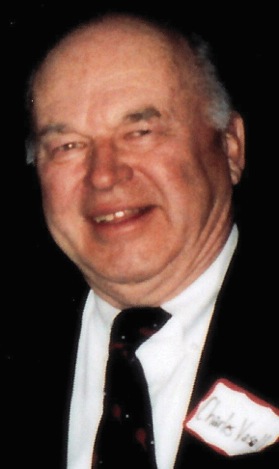
Vasoll served on the APTA Board for 13 years, starting in 1987, when he replaced the retiring Gerald Manhold. He was elected President in 1988 and ended up serving in this position until 1992. Among his many accomplishments was hiring Ginna Ohlmuller as Executive Director, and getting the association’s activities organized at a time when crucial things, like membership records, the newsletter mailing list, and the group’s finances were all in disarray. With help from Bob Brown, he also brought back the Honor Awards after an absence of 12 years. Locally, Chuck served for more than 20 years on the LIPTA Board, including as its President from 1996-1997, and as its Treasurer from 1998-2007. He was the Grand Chairman of the 2002 APTA National Championships, held on Long Island, a notably successful event. He has also served as Secretary/Trustee on the Platform Tennis Museum and Hall of Fame Foundation from its establishment in 2002 until 2012.

Vasoll started out playing paddle tennis at a public park on Long Island with his neighbor, George Anderson. While they enjoyed paddle tennis, Anderson told him that platform tennis was a far better game. The only problem was there were no public courts. Then, in 1975, George called with the news that there were two platform tennis courts available on a “pay to play” basis in Great Neck, about 15 minutes away. They quickly signed up and they and their wives started playing there. After awhile, they met some other men and set up a weekly match. The very next year, though, the property on which the courts were built had to be sold as part of an estate settlement and the facility disappeared. However, Chuck was now hooked. In pursuit of a “fix,” he visited Bob Callaway’s pay-to-play facility in Norwalk, CT, but this turned out to be a bit too far away. Next, he tried to join the Huntington Country Club on Long Island, which had courts, but was turned down as they only wanted local members. He finally caught a lucky break when a work assignment led him to an introduction to the Cherry Valley Club in Garden City. This time he was admitted to membership and as he said “the rest is history.”

A good player, who would play any time, any place, Chuck once confessed, “I love to play the game, even though the meager skills I once had, have left me. I just plain love the game.” His outward reflection of that sentiment is on his license plate, which reads “P T NUT.” The vehicles change but never the license plate. Quite a few people thought that the license plate meant he was a collector of models of World War II Patrol Torpedo navy landing craft, which led to invitations to join an organization for such aficionados being placed under his windshield wipers. This caused him to get a frame around the license, which reads, “I’m crazy about Platform Tennis.”

Vasoll took that passion and commitment to his responsibilities as a leader within both the local and national organizations serving the sport. As part of his efforts to return the APTA to a solid financial footing, he undertook two initiatives, the most important of which was initiating League memberships in the APTA, starting with his local organization, LIPTA. Gradually, other league memberships were formed and the success of the program largely contributed to the financial survival of the APTA. He also developed a marketing program for APTA products that produced some sorely needed revenue for the association and support for tournament directors. On his watch, the APTA also began awarding National Championship medals in all categories. Recognizing the value of such an honor, Vasoll offered medals to all past champions as well.

Chuck also saw that the Executive Director really did not have enough time to act as editor of the APTA flagship newsletter Platform Tennis News on top of all her other responsibilities. Luckily, he discovered that one of the new APTA Directors, Brian Zevnik, was a professional editor and, after suitable arm-twisting, he took on the assignment. Chuck commented: “There are no words to describe what a fantastic job he did in this position during the four years I served as President. I learned so much from him that when he succeeded me as President in 1992, I became his newsletter editor. We both spent a considerable amount of time on the publication but, while it was a challenge, it was also fun.” Vasoll devoted many hours as both an editor and a photographer to making Platform Tennis News excellent. Chuck was re-acquainted with Brian Zevnik in 2008 on a visit to The Landings in Savannah, GA. The community has a cadre of retired platform tennis players from the Northeast and Midwest who have now been able to renew their love of platform tennis with the two courts recently erected there. Ironically, George Anderson, the guy that introduced Chuck to the sport back in 1975, is Brian Zevnik’s neighbor.

When he first became involved with the APTA, Chuck was unemployed because the bank he worked for was purchased by another. With time on his hands and love of platform tennis in his heart, he concluded that nothing could be better than being part of the parent organization of the sport. This was a fortunate development for the APTA. Despite the fact that Chuck had to commute to Montclair from Long Island, he devoted long hours for many months working with the new Executive Director. Future APTA Presidents were very grateful for the solid foundation for the Association and gave him due credit.

Aside from all of these accomplishments, here is an individual who distinguishes himself as a tireless, devoted worker for the cause of platform tennis. Quoting from an ardent supporter: “The entire paddle community owes him a huge debt of gratitude for going, then as well as now, way beyond the call of duty.”

Source: Robert A. Brown, Induction remarks

Hogan, Patty

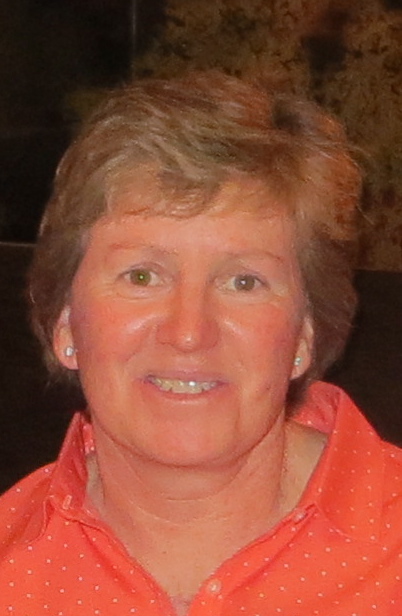
Hogan won a Women’s National Championship, three Mixed National Championships, and the Women’s National 40+ championship. She was Chair of the APTA Women’s Player Committee, and President of the USA Professional Platform Tennis Association (PPTA). She was a true ambassador for platform tennis.

Hogan grew up as one of 11 children, so competitive fire and toughness were qualities that she honed at an early age. On the court, she grabbed all the overheads she could get. As a player, she had superb mechanics. Her sharp volleys and crisp ground-strokes won the admiration of her peers. She was also a strategist and thinker, always planning the next moves for the team. An outstanding athlete, she was ambidextrous, and could throw a perfect football spiral twenty-five yards with either arm. No matter what the event, she and her partner were always in the hunt and could challenge anyone. One of her long time partners described her talents by saying, “her command of the game, her even temperament, and her steely determination make her a true champion.”

Off the court, Hogan was a tireless promoter of Junior programs and is credited with revitalizing the National Junior Championships and securing the Marsh corporate sponsorship. A kid at heart, Hogan has a special way of relating to each child with her enthusiasm. The growth of Junior paddle is inexorably linked to Hogan’s commitment and personality. Her administrative contributions to both APTA and PPTA required extensive phone networking and paper work, in addition to on the court supervision during certification of platform tennis professionals. Her leadership was never more evident than in the difficult post 9/11 days, when she galvanized a community to honor the tragic passing of dear friends. She literally set the standard when it comes to going the extra mile. Her dedication and drive set her apart. She was always happy to share knowledge, ideas and her experience with others. Her creativity and adaptability are two of her greatest assets as an instructor and as a competitor.

The Hall of Fame charter states that recipients must demonstrate ‘a high level of integrity, sportsmanship, and consideration for others” and “thus earn the respect and admiration for their endeavors in platform tennis.” Patty fits this description perfectly.

Source: Steve Baird, Induction remarks

Childs, William P.

In 1980, the year William Childs turned 45, he and his brother Dave started playing platform tennis in earnest. Five years later, he started racking up an impressive Senior record that included five-straight 55+ titles with his brother, and four consecutive 70+ with Rich Lombard. Along with six Senior Mixed titles, Bill amassed 23 championships over his playing career. He also served for five years on the APTA Board, focusing on Senior activities.

Bill started playing paddle on a regular basis after he moved to Vermont in 1972. Prior to that he had played sporadically, usually when he visited his older brother, David, over the Thanksgiving or Christmas holidays. They paired up against other local teams but only for social play, rather than in tournaments. Shortly after, in 1973, Bill joined the Dorset Field Club in Vermont and started playing more frequently. He asked Dave to join him in a fall tournament in the Manchester/Dorset area, thinking that if they did well they would move on to other tournaments and perhaps even the Nationals. Dave dutifully arrived on Friday evening for the next day’s events and, since they had not seen each other for awhile, there was lots of chatting and strategizing, all accompanied with suitable quantities of wine. The next day they lost their first round match and were relegated to the Consolation round. That derailed their ambitions for competitive paddle, and it was only when Bill turned 45 and could qualify for Senior events that he and brother Dave decided to try again. That was when the wins started.

Bill and Dave won the National 50+ championships in 1986 and 1987, and were also finalists in the 45+ category in 1986. The Childs’ brothers won one more at 50+ (1990), five 55+ (five in a row from 1990-1994), two 60+ (1995-1996), and one 65+ (2001), They were also finalists in the 55+ in 1998, in the 60+ in 1998 and 1999, in the 65+ in 2002, and in the 45+ in 2007. Both brothers appeared in the “Faces In The Crowd” column of Sports Illustrated in the April 18, 1994 issue.

Bill also won four consecutive 70+ (2005-2008) with Rich Lombard and the 145+ twice—in 2004, with Jack Westerfield, and in 2008 with Rich Lombard. He was also a finalist in the 65+ and the 145+. Bill had some successes in Senior Mixed Doubles as well, winning the National 50+s with Birgit Maio in 1994, and was a finalist in 1995. With Helen Garrett, Bill won the National Mixed 50+s in 2000, and the National Mixed 60+s in 2000-2001, and 2005-2006. In 2004 and 2007, the team made it to the finalists.

Off the court, both Childs brothers have been known in their widely different geographical areas as “Mr. Paddle,” and served long terms as Directors of the APTA each, in turn, specifically as administrators of senior activities from 1990-2002—a total of 13 years. Between them they have chaired six national championship events.

Born in Berlin, Germany, where his father was in the Foreign Service, Bill spent the first 12 years of his life traveling wherever his father was stationed, which meant a variety of schools in a variety of countries. At age 13, he, in his own words, “left the nest,” attending a series of boarding schools—Eaglebrook, Westminster and Williston. After “one too glorious a year at Washington & Lee,” he enlisted in the Navy, serving from 1955-1959, before entering Yale, from which he graduated in 1963.

Bill’s first job after college was with Reader’s Digest, where he helped to crank out 13+ million copies per month. Next came a stint as Director of Development, Alumni Secretary, and tennis coach at Eaglebrook, He recently noted that, “My first year, when I inherited the job from another faculty member, we had an undefeated season which I attribute in large part to the fact that the #2 player was the reigning 18 and under national champion from Venezuela!” He left Eaglebrook to own and operate a Country Inn in Vermont for seven years. Bill and his family later moved to Baltimore, MD, where he bought an old carriage house and spent the next two years turning it into a home. His last job was with a company in Baltimore that did outplacement, executive search, and career counseling.

He retired in 2000 and moved back to Vermont. He continues to conduct informal clinics for beginners to the sport and organizes an annual, non-sanctioned tournament in Dorset, VT.

Source: Brook Kindred, Induction remarks and personal communication

Childs, David L.

David Childs’ mark on paddle started in 1980 when he and his brother Bill teamed up for the Men’s 45+. Five years later, they were racking up an impressive Senior record, which included five-straight 55+ titles. All totaled, Childs won 13 titles, spread across all the Senior events, including 11 of them with his brother. He did it with innate ability, determination, steadiness and a finely honed sense of competitiveness, combined with unquestionable sportsmanship, and unwavering friendliness both on and off the court. Both brothers later appeared in the “Faces In The Crowd” column of Sports Illustrated in the April 18, 1994 issue. Childs also served on the APTA Board, from 1996-2001, where his focus was on Senior activities, and spent eight years, from 2004-2012, as a Trustee of the Platform Tennis Museum and Hall of Fame Foundation.

Childs began playing paddle on a regular basis when he moved to Farmington, CT, and joined the Field Club in the mid-1960s. His younger brother, Bill, would visit on some Thanksgiving and Christmas vacations, and they played as a team against local competition. They entered their first APTA sponsored tournament in 1973 in Manchester, VT, where Bill was then living. Their first “outing” was somewhat disastrous in that they lost their first match, but did end up winning the consolation. That curtailed their paddle ambitions for seven years until 1980, when Bill turned 45, and the two paired up again on the Senior paddle circuit. Starting with the 50+, where David and Bill were national champions in 1986 and 1987, and finalists in the National 45+s, the Childs’ brothers won one more at 50+ (1990), five 55+ (five in a row from 1990-1994), two 60+ (1995-1996), and one 65+ (2001). They were also finalists in the 55+ in 1998, in the 60+ in 1998 and 1999, in the 65+ in 2002, and in the 45+ in 2007. With new partner Bob Brown, Dave also won the 70+ and the 145+ in 2003 ( is this really supposed to be 145+?), and was a finalist in the 60+ in 1993, the 65+ in 1998, and the 145+ in 2004.

Off the court, Dave co-chaired three National Tournaments in the Greater Hartford area, including the 50+s, 60+s, the Senior Mixed and the Senior Husband/Wife. He also conducted clinics for more than 15 years, and traveled the paddle circuit. In the early 1980’s, Dave, his brother Bill, Bill Mimnaugh and Howie Sipe went off to Sun City West in Arizona to escape the cold and play in an annual event the retirement community had been holding for several years. They decided to find local players as partners and Dave was in the second set of the semi-finals against Howie and his partner when Dave’s partner quit to go to a ceramics class. David did come away with a “finalist” prize of a decorated pink felt pig that had been created by a lady in the local arts center.

Small>Source: Brook Kindred, Induction remarks

Diane Straus

Straus, Diane

Diane Straus devoted the better part of a lifetime to platform tennis and was a truly outstanding player over four decades, winning 29 National Championships with 12 different partners. She is an exceptional role model, both on and off the court,, and a highly respected leader within the paddle community.

A 1973 graduate of Yale, where Straus was part of the first class to include women, she established the first-ever women’s varsity tennis team at Yale, and was its captain all four years. Diane was introduced to paddle soon after graduation and immediately fell in love with the game, using it to get exercise with friends outdoors in the winter. As she began playing tournaments, she enjoyed the camaraderie, the travel, and bringing out the best in her partners, as well as herself.

Straus’s game was somewhat unorthodox, with a heavy western grip that she used to pummel the forehand return of a serve with laser-like efficiency, often setting up her ad-court partner for an easy put-away. She set the standard for forehand side players, with consistency, towering lobs, and relentless pressure. Diane’s weak link was her serve, with a toss so high that a partner said she probably could read a chapter of Gone with the Wind while waiting for it to come down. But, through force of will, she improved, and countered the weakness with her quick reflexes and superb volleying skills. Long time partner Robin Rich Fulton once said, “I could always depend on Diane getting a let cord winner when we desperately needed it and she did it so often I don’t think it was luck. She was the brains of the outfit and I always used to say to her, ‘you were the one that went to Yale, so get us out of this tight spot we’re in.’ She played smart and when the going got tough, she got going.”

The results of such an attitude? Six Women’s Nationals with two different partners, Pat Butterfield and Robin Rich Fulton (1986-1987, 1991, 1993, and 1996-1997), and five finalist titles (1983-1984, 1988, 1992 and 1995). With Tim McAvoy, she also captured two Mixed Nationals in 1993 and 1994, and 12 women’s senior titles. In the 40+, she won titles in 1991-1992, 1994-1995, and 1996-1997, and was a finalist in 1998, while in the 50+ she had four wins (2002, 2009-2011), and was a finalist twice (2003 and 2012). Her other titles include the 60+ women’s in 2011 and 2012, the mixed in 2011 and 2013, and finishing as a finalist in 2012.

Even with such an outstanding record, perhaps Straus’s most compelling legacy was how she played the game, her demeanor, her smile when either winning or losing, and her fairness, sportsmanship, and partnership skills. One of her long-time paddle friends said, “it was always the greatest pleasure to play with or against her. One knew that the competition and sportsmanship would be at the highest level possible.”

Diane’s paddle genes were handed down to her children. Her son Peter won the 12-and-unders in 1991 and 1992, and Diane and Peter were featured in Sports Illustrated’s Faces in the Crowd in 1991. Her daughter Becca won the 18-and-under in 1998, and her son David won the 12-and-under in 1996-1997, and the 15-and-under in 2000.

Straus grew up in New York City and Washington, DC, in a family active in media and liberal politics. Her first jobs after college were editing at New York Magazine and the Village Voice, but she soon migrated to the business side of publishing. She is currently publisher of the Washington Monthly, and had been president and publisher of the American Prospect; group publisher of Manhattan Media; and publisher of the Westchester and Fairfield County Times, the Westchester Wag, Trader Publications, and the Cranford Citizen and Chronicle. Founded in 1969, The Washington Monthly introduces important new policy ideas into the mainstream media and, as a nonprofit, the publication allows Diane to approach foundations and donors about subjects of importance to them, thus, supplementing advertising and circulation revenue—a promising new model.

Diane has served on the Board of the NAACP’s Crisis Magazine, the Yale Alumni Magazine, the Environmental Film Festival in the Nation’s Capital, Woodley House, and the Urban League, and on the Board of Advisors of GreenWood and Solar Household Energy (SHE).

Source: Induction remarks and personal communication