Doten, Mary

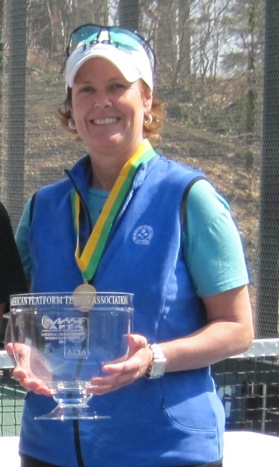
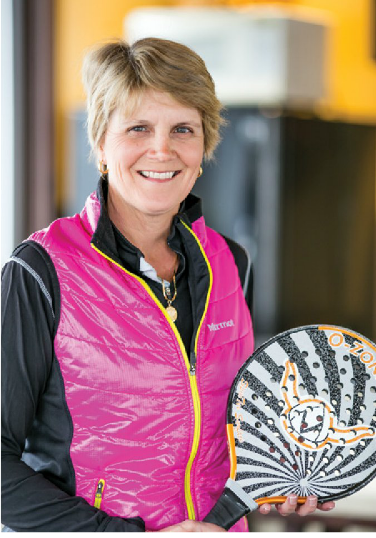
On Friday evening, March 7, Mary Doten and Susie Keane were presented with our sport’s highest honor: induction into the Platform Tennis Hall of Fame. The presentation took place at the Fox Chapel Golf Club during the PNC 2014 APTA National Championships.

The induction speech was given by Hilary Hilton Marold, a Hall of Fame member, who first introduced Doten to the sport. In front of a crowded room filled with Nationals players, previous Hall of Fame inductees, Keane, her friends, Doten and a large contingent of Doten’s family and friends, Marold described the platform tennis journeys and accomplishments of Doten and Keane. Most notably, Doten and Keane are one of the most successful teams in the sport, winning 6 women’s open national titles in a span of 8 years.

Hilary Hilton Marold’s remarks follow:

Screen Shot 2014-08-04 at 11.36.20 AM

The first inductee I recognize tonight was born in Evergreen Park, Illinois in 1961, but grew up in Western Springs, Illinois, the youngest of the four “Huizenga” girls. Her parents were of hard working stock and also of 100% Dutch heritage, who instilled religious values, set high moral standards, and encouraged “volunteerism” and “giving back”.

Early on, it was evident that Mary Huinzenga Doten was a gifted young athlete. She played softball and started tennis at eight years of age. From the Lyons Township High School tennis team, Mary went on to receive a tennis scholarship to play college tennis for Wake Forest University in Winston-Salem, North Carolina. It is there where Mary met Gary Doten, her future husband. After graduation in 1981, Mary and Gary married and moved to Western Springs, Illinois, where Mary had grown up. They went on to have three children, Andrew, now 24, and twins age 20, Anna and Scott.

It wasn’t until 1993 when some tennis friends of Mary’s convinced her to come out and try platform tennis that she became hooked on the sport. They had ulterior motives in that they were trying to get Mary to join the Hinsdale Women’s Platform Tennis League team, so Hinsdale had a chance to dethrone the paddle queens of Chicago’s North Shore League, the mecca of platform tennis play at the time. Mary joined the team and Hinsdale won the North Shore Women’s PT League for the first time ever. Platform tennis was growing well beyond the North Shore now. Hinsdale was a little jewel of a city in the western suburbs of Chicago with many talented players, thanks to the likes of Mary Doten. She didn’t start serious national competition, however, until her children got a bit older, but continued during this time to hone in on her game through playing various local tournaments, including the Illinois State.

Mary’s weapon of choice on the court from the beginning has been her two handed backhand drive return of serve. She squares around, waiting, middle of the court, on the T line of her favorite side, the ad side. She is right handed, so to get her favorite backhand return, she places herself almost on her partner’s side of the center strap service line. If the server tried to body jam her down the T, often times the serve would go wide. To move Mary out of her comfort zone was the goal of the server, but watch out if the serve missed it’s mark up the T or didn’t land out wide enough to hit the side screen, Mary would punish the ball on her return of serve. This threat put a lot of pressure on the serving team to hold. Mary takes great pride in breaking serve. She has a glint in her eye, usually a baseball cap on head, and a passive aggressive demeanor laying in wait that means, she’s “in it to win it”. Both her forehand and backhand drives come at her opponents with heaviness, speed, and accuracy. Her backhand is a bit more deceptively hit, slightly harder to read. Pair these shots with the intimidation of her following it to the net and in a quick blitz, Mary has turned defense into offense and now has control of the point.

With this new tactic of freely blitzing added to her already successful arsenal of drives, it was only a matter of getting paired with the right partner before a National APTA Championship would be hers. That all came together when Mary paired in 2003 with Susan Keane from Grosse Pointe Shores, Michigan who had just moved to Lake Forest, Illinois. They won the first of their many APTA National Women’s Platform Tennis Championships together as a team that year. They followed it up by winning again the next year, in 2004 where they defeated the 8 time national champs, Aery and Viant in the final. Doten and Keane dominated the women’s doubles from 2003-2010. In those eight years, they won the APTA Nationals six times together: 2003, 2004, 2006, 2007, 2009, 2010.

When Susie Keane retired from platform tennis competition, Mary joined forces with Chelsea Nusslock from Lake Forest, Illinois. They were semi finalists at Nationals in 2012 and finalists in the 2013 APTA Nationals.

Mary Doten’s accomplishment in platform tennis is amazing on it’s own merit, yet, it is her love of the sport which has allowed Mary an even greater satisfaction, that of giving back for the greater good. She, her husband Gary, and the rest of the family travel frequently to Guatemala where they work directly with their two non profit organizations, “Common Hope” and “As Green As It Gets”. 100% of the profits from outsourcing the sale of paddle mitts and overnight bags made by local Guatemalan artisans paired with the sale of eco friendly Guatemalan coffee beans bought here in the states by APTA members and others is funneled straight back into the educational and entrepreneurial resources benefiting the individual Guatemalan artisans and farmers, as well as to others there in need. Mary has a website where her non profits can be viewed: hpdpaddle.com.

Besides the fact that Mary is still an active, competitive force to be reckoned with on a platform tennis court, she has a very busy teaching and coaching schedule, probably 20-25 hours a week. She gives clinics, most recently in Ross, California. The Hinsdale area in Illinois is her home base for teaching and running tournaments at both Kathryn Legge Memorial Park and at Burns Field.

Mary Doten is a champion platform tennis player, a person taught early that giving back is all important. Our sport of platform tennis is winning, because of Mary’s involvement. And now, she is the recipient of the APTA’s highest honor, the PLATFORM TENNIS HALL OF FAME award to Mary Doten.
Callaway, Bob

“…a trail blazer who dedicated almost his entire career to platform tennis.”

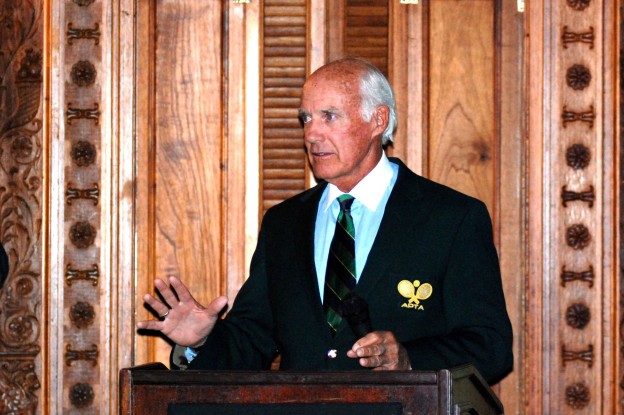
Scores of family and friends gathered at the Sleepy Hollow Country Club to celebrate Bob Calloway’s induction into the Platform Tennis Hall of Fame. Among the attendees were many of Bob’s former students and Wee Burn club members who had chartered a bus to come in from Connecticut. Hall of Fame Nominating Committee Chair, Steve Baird presented the green jacket to Bob , one of the first platform tennis professionals.

In his induction speech, Steve Baird, Chair of the Hall of Fame Nominating Committee, recounted the many significant contributions Callaway has made to platform tennis.His remarks follow:
Screen Shot 2014-08-04 at 11.21.12 AM
We are here tonight to honor a very special person, a trail blazer who dedicated almost his entire career to platform tennis. No one has ever done as much, on such a full time scale, with such longevity as Bob Callaway.

At his core, first and foremost, Bob was a teacher. It was not about him, it was about his students. He cared deeply about them and their progress.

Could they learn the game?
Were they having fun ?
Could he organize a game for them?
Could they make one of the teams?
How could he keep them coming back?
What could he do to grow the game?

He was an unselfish man. He studied the game. If you read his paddle book and see the 6 frames of photo of John Mangan’s forehand, you understand how meticulous he was. He observed, he learned, he participated, he taught. This was his craft.

Bob was arguably “the first paddle pro”. He began in the late 1960’s and retired in 2012 at age 78. Today, there are well over 200 paddle pros nationwide. You paved the way Bob…..these pros today are flourishing and providing vital leadership, energy, and growth.

He was a top 16 player on the 1970’s tour and later became a National Senior Champion. His was known for his “signature lefty kick-spin serve” (a truly nasty shot). But tournament play was not where Bob was destined for greatness. It would be in a far broader realm.

Bob was also an entrepreneur and risk taker who opened the first commercial Paddle Center in Norwalk, CT in 1972. For ten years this was a gathering place for men, women and children from all over Fairfield and Westchester1. Bob literally introduced the game to thousands of people at this first public paddle center.

As Bob’s career progressed in the 80’s, 90’s and 2000’s, he served with great distinction as the Head Paddle Pro at the New Canaan Field Club, Wee Burn Country Club and taught a number of other local clubs including the Greenwich Field Club. He also began to consult in the executive presentation skills field and made regular trips to teach his corporate clients in NYC and Connecticut. This made for very long days……as in when you wrapped up a seminar with business executives, you then had to dash off to a 7pm clinic or playing lesson, probably changing your clothes in the car or the bathroom on the train.

Bob was also an author, writing a book titled “Platform Tennis”. It was an overview of the game, it’s history, with insights into each stroke. It served as a very sophisticated teaching guide and 225 pages no less. – He was a founding member of the PPTA and an APTA Board member. He played a vital role in stewarding APTA Rules and recruiting and training Umpires. He conducted certifications programs over many years. He was always generous with his time whether it be traveling to the R.J. Reilly Paddle camps at Jackson Hole or helping lead the Viking Junior Kick-Off Academy.

Bob’s enthusiasm for the game was contagious and this positive attitude made learning fun. In many ways he became an ambassador for the sport.

He coached many National Champions at various stages of their careers (collectively these individuals won over 60 National Championships). Many of these players are in the audience tonight. They’re here to honor Bob, for all his support, his guidance and his friendship.

As one of his protege’s said, “Bob worked a lifetime to grow platform tennis – he did this by connecting and inspiring others. Bob’s legacy will always be about the people who he helped to get involved in the game”.

And now, he is the recipient of the APTA’s highest honor, the Platform Tennis Hall of Fame award to BOB CALLAWAY.

Callaway grew up in Westfield, New Jersey and did not play tennis until he was 12 years old as tennis was considered a sissy sport and in Westfield you played football, basketball and baseball or you were an outcast. A number of his friends got interested in tennis because they were bored during the summers and could get a real good deal for juniors at the Westfield Tennis Club. However, he returned to the three main sports through high school and college (Washington & Lee), but regained his interest in tennis after college while in the Navy.

When he started his career in the advertising business in New York City he began playing tennis frequently with some good players which led to an invitation to play paddle by Bill Pardoe (Hall of Fame 1969), whom he had met at a tennis tournament in Bermuda. Bill subsequently had to cancel their date to play at Fox Meadow, but Herman Schaefer, who lived in New Canaan, had just had a court built on his property and so Callaway finally got my opportunity to play.

Most of his early introduction and instruction in the game came from Mason Delafield’s father who took Mason, Duke Felt and him out on a private court in Darien on the weekends. He played his first tournament, the Rye Invitation, in 1963 with Duke Felt.

Callaway started giving a few lessons in both tennis and paddle around 1968.

Callaway was selected as the first PPTA representative on the APTA Board and served on the APTA Board from 2005-2007 where he chaired the Rules and Equipment and Umpires Committees2. After his time on the Board he continued to head up the Equipment & Rules Committee for a few years before turning over the reins to Martin Sturgess several years before he retired.

NOTE 1: Callaway was exploring either the purchase or development of a tennis club when Myles Reilly came to him with the idea of a commercial platform tennis facility. That idea turned into what eventually became a seven court facility in Norwalk, CT (The Paddle Tennis Center) in 1972. The Paddle Tennis Center remained in operation for ten years and closed when we lost the lease on the land. (Source: personal communication from Callaway August 2014)

NOTE 2:The Umpires Committee was not very successful, even though they ended up certifying about 20 people with pretty good geographical distribution. It never gained any real traction because few tournament directors wanted to pay for APTA certified chair umpires.(Source: personal communication from Callaway August 2014)

Ohlmuller, David

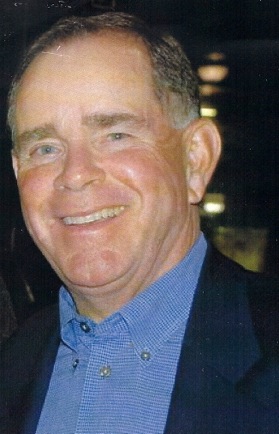
Born in 1969, our inductee was introduced to the game by his mother, Ginna, who in addition to playing platform tennis was the Executive Director for the American Platform Tennis Association. In fact, in his early teenage days our inductee was bribed by his mother to play—hot chocolate in the warming hut after playing usually did the trick.

Ginna also included some more experienced players to help teach her son the basics of the game—and one of the early mentors was none other than Mike Gillespie, who is chairing the APTA Nationals this weekend. Ginna first competed in competitive mixed doubles events with her son in Philadelphia, in the mixed MAPTA, when her son was just 17 years old.

Her son showed early flashes of brilliance — as a finalist in the 18 and Under APTA Junior National Championships in 1987 and then in 1988, winning the 18 and Under APTA Junior Nationals with Danny Galves.

Ginna remembers 1988 from a slightly different perspective as she and her son won the New Jersey State Mixed Championships that year, beating Bobo Delaney and Bruce Kelsey in the final, in a 3rd set tiebreaker. In fact, she was quoted as saying, “You can only imagine how well my son had to play to carry that anvil (me!) to victory!”

Our inductee then graduated high school and set his sights on Loyola College in Baltimore. While at Loyola, however, he maintained his interest and aptitude for platform tennis. In 1990, in his sophomore year at age 20, his mother intervened again, to see if Patty Hogan would like to play with her son because he was too shy to ask. So Ginna brokered the partnership and what a team they made — Ginna’s son teamed with Patty Hogan to not only compete in the 1990 APTA National Mixed Championships … but win!

Over the next five years, David and Patty won the APTA National Mixed title twice (in 1991 and 1995) and were finalists twice (1992 and 1993). Three Mixed National Championships in six years—twice while in college! And did I mention he also held down the #1 singles and #1 doubles position on Loyola’s varsity tennis team… Wow!

And 1995 was an even more special year, as he added to his Mixed National Championship that year by winning the Men’s National Championship with Bruce Kelsey in Montclair, New Jersey.

As many of you know, Patty Hogan is an APTA Hall of Fame member. As a teammate with our inductee, Patty was not only impressed with his shot making but even more so with his maturity and understanding of the nuances of the game at such a young age. “He understood, at 20 years of age, that the sport was about minimizing your unforced errors and forcing your opponents to play their best in order to win”.

Personally, I competed against our inductee in the early 1990’s and the offense he brought to the court was unparalleled, both from his lethal forehand and his devastating two handed backhand. There literally wasn’t a safe shot to hit, especially in mixed. I was also fascinated to hear the top men and women talk about his shot making and when he went on the court to compete, most wanted to watch his next ‘amazing shot’!

He was one of the most dominating players in the Men’s game over that five-year period and during that time, he was the most dominating player in mixed-doubles.

Everything changed in 1996. The man we honor tonight was struck by a speeding car while crossing a street in Manhattan. The hit and run accident left him in the hospital for special surgery for 28 days. His tibia and fibula were each broken in seven different places and there was discussion of possible amputation in order to save his life.

Thanks to a great medical team, the doctors were able to save his life… and his leg. He then brought tremendous determination and a positive attitude to a grueling rehabilitation process. Within two years, he was back on the platform tennis court, working to see if he could again compete at the highest level.

In 1998, teaming up, again, with Patty Hogan, our inductee was a finalist in the National Mixed Doubles Championships and they repeated as finalists in 1999. On the men’s side, he teamed up with Chris Gambino and together they did indeed reach the top of the mountain, winning the Men’s National Championship in 2000 and 2004.

And the icing on the performance cake was his winning two Husband/Wife National Championships, with his bride Marina, in 2003 and 2005.

Add that all up and our inductee has won eight National Championship gold medals and six National Championship silver medals and while doing so, earned the respect of his peers for his on-court competitiveness and sportsmanship.

Source: Tim McAvoy induction remarks

Tim McAvoy

McAvoy, Tim

McAvoy won two Mixed Nationals with Diane Straus Tucker in 1993 and 1994 and five Senior Nationals – with John Adams (45+ in 2004), with his cousin Scott Bondurant1(50+ in 2009 and 2010), with Diane Straus Tucker (Mixed 50+ in 2009) and with Laurie McAvoy Hissey (Mixed 50+ in 2013). He was a finalist in the 2006 Mixed Nationals, the 2005 and 2007 Men’s 45+, the 2008 and 2012 Men’s 50+, and the 2012 Mixed 50+. The finals appearances in 2012 were all the more remarkable as Tim had beaten non-Hodgkins Lymphoma. He also won more than 20 President Cup Qualifier Tournaments including a stunning 14 Pennsylvania State Championships, and led Region III to eight President’s Cup titles (along side Reb Speare, John Adams and John Stefanik).

While Tim’s playing record was impressive he was also made enormous contributions to the game as Region III President where he had a major role in the growth of the game, and to the APTA where he served as a Board member for nine years and as the 34th APTA President for three years (2009-2012). Tim was also active in National Championships, starting with the 1992 Nationals in Long Island and another three in Philadelphia. However, the tournament that most embodied his commitment to family and the game was the Mixed MAPTA championships that he won nine times out of a total of 19 final appearances with his mother or his sister, Laurie McAvoy Hissey, as his partner.Tim’s commitment to family was first and foremost, but paddle was close behind.

During his tenure as APTA President, McAvoy focused on growing the game, and he created a task-focused Board Committee structure, so every key APTA initiative was led by a Committee Chair who championed that initiative. This structure allowed every Board member to be actively engaged in, and focused on, an area of their interest. These committees addressed issues ranging from growing the game, to rules, to seniors, branding, Platform Tennis Magazine, and more.

Under Tim’s leadership, the APTA Board provided more than $150,000 to the Grow the Game Committee to provide grants so facilities could get new courts or improve existing ones, while the Clinic and Exhibition Committee provided more than 10 free clinics and exhibitions a year in areas where the APTA felt they would have the biggest impact in growing local programs. Communities and cities such as Arapahoe, Kansas City, Toronto, and the University of North Carolina at Chapel Hill benefitted from these clinics. Thousands of local players were treated to Professional Platform Tennis Association pros giving free instruction and displaying amazing talent in exhibitions, with the sole purpose of trying to help local facilities grow the game in their area. In all these roles Tim’s leadership style was characterized by the strong relationships he developed with people, whether they were tournament or league organizers, teaching pros, fellow Board members, or players of all abilities, sexes and ages.

In 2009, McAvoy transitioned the Viking Junior Tour into the APTA Junior Tour, a program that offered young players more than 14 different junior tournaments, culminating in the Junior National Championships held each January. Hundreds of children and teens participated in these events each year, with the Junior Nationals drawing more than 200 participants. Tim believed that exposing children to a fun platform tennis experience increased the odds that they would come back to the game after college, and that this approach was a strategic way to grow the game for generations to come.

Another important commitment made by the APTA Board under Tim’s leadership was the development, in early 2012, of a computer-based interclub league system that would allow APTA member leagues to schedule, track results, and share information free of charge.

Modest, energetic, determined, and positive are all adjectives commonly used to describe him. On the court he brought a positive attitude and great sportsmanship and was considered a wonderfully supportive partner who could raise the team’s level of play by blending his style of play to that of his partner’s. He knew that the game was about camaraderie, community & competition.

His dual commitment to family and platform tennis even came through in his choice of life partner. He met his future wife and mother of their four children, Nancy, on St Patrick’s day in a Toronto bar where Tim had gone for drinks after a paddle game and Nancy had gone to celebrate with some friends. Nancy turned out to be a huge fan of the game and that was that. Before devoting time to care for Tim during his battle with cancer Nancy had attended 20 straight Nationals. It is no wonder, then that their son Tom was a finalist in the 14-and-under in 2003 with, of course, his cousin Peter Hissey. It’s all in the genes.

McAvoy was born in Phoenixville, PA, home of the family enterprise that began in 1896 when his grandfather,Thomas Bell McAvoy Jr., established the McAvoy Brick Company on the banks of the Schuylkill River. He attended The Pennsylvania State University on a tennis scholarship and played #1 singles in his junior and senior years and #1 doubles in his sophomore, junior and senior years; he was team Captain in his senior year and graduated in 1980. He worked for SmithKline Beecham for many years in sales and marketing roles and then switched to the financial investment field, initially with Marvin and Palmer Associates and then with DePrince, Race & Zollo, Inc., in institutional sales capacities.

Source: Stephen W. Baird, Induction remarks

Note: (1) Tim’s mother, Lucie Bel Barnes McAvoy, and Scott’s mother, Sally Barnes Bondurant, were sisters and exception tennis players at Fox Meadow Tennis Club as teenagers. In 1982 they teamed up to win the Women’s 50+ National Grass Court Tournament at Forest Hills.

Cindy Prendergast

Prendergast, Cindy

Few players in the game had the ability to play with so many different partners and have the success that Cynthia Ann “Cindy” Prendergast had, and that is what made her so special as a partner and player. Her first National championship came in the Mixed Nationals with George Zink in 1996, and they won again in 1998 and 2001. Her six-year partnership with Patty Hogan, from 1996 to 2002, resulted in six straight appearances in the Women’s Nationals final and was highlighted by their undefeated season and Women’s National’s win in 1999. Prendergast again won the Women’s Nationals, with Lauren Zink, in 2008, 2011 and 2012, giving her four wins in 14 finals appearances during the period from 1994 to 2012. Cindy was a finalist in the Mixed Nationals in 2004 and 2008. On entering the “Senior” ranks, she won the Women’s 40+ Nationals with Robin Fulton in 2002. Prendergast served on dozens of tournament committees over her long playing career, including being a major force behind the only Mixed Nationals played in her home state of Delaware. She even undertook a trip to Germany to introduce platform tennis to a very enthusiastic tennis playing community.

Prendergast grew up in Wilmington, DE, and was one of five children. Her biography, posted on the web site of the Delaware Tennis Hall of Fame, into which she was inducted in 2005, notes that she was a tennis player born into a family of golfers, and also the only girl.

In 1971 she picked up a racquet, walked across her street and for no apparent reason took a tennis clinic. As she recalls: “I don’t know exactly why I took the clinic. I guess it was just something for a ten-year-old to do.” As a student at Brandywine High School, Cindy helped lead the tennis team to three state titles. Some years later she went on to Gettysburg College where she majored in business administration and teamed up with Cindy Cross to amass a 30-3 record and lead the Lady Bullets to an undefeated season and the Middle Atlantic Conference title in 1983, which earned the team an invitation to the national championships. That year Cindy, who had been the number one singles player since her freshman year, had an undefeated season, and she and Cross went 10-1 at number one doubles.

Always feeling compelled to give back to the sport that had given so much to her, Cindy was a tournament director’s dream, available on call to fill a spot in an event, even if it meant she might be done by lunchtime. Prendergast understood that playing with a tournament sponsor’s friend was just as important as finding a ringer to try to win a National event. She loved to play and was always willing to do whatever it took to make an event a success.

Prendergast started her own business, Stamford Screen Printing, in 1994. It is no surprise that she runs her highly successful and competitive business with the same skill and determination she has put into her sports. Cindy is also active in the community and was instrumental in starting the very successful Bunny Vosters Open, in memory of her doubles partner and great friend. She continues to live and play sports in Wilmington, Delaware. In true competitive spirit, never to be outdone by her father’s legacy or her brothers’ golf acumen, she plays to a 9 handicap and gives them a run for their money every chance she gets!

Cindy earned the distinction of being one of the most successful players and also one of the most giving in platform tennis She epitomizes the best that our sport has to offer with her effortless style of play, easy-going manner and outstanding sportsmanship. Prendergast is a fiercely competitive individual, yet always puts the game first and her place in it, second. As she has said “Some of the worst-behaved tennis players actually end up being nice on the paddle court. It’s still competitive, but there’s something about our group that just won’t allow that kind of bad behavior, so we all just really try hard and we compete hard, but at the end of the day we have a beer with each other and get ready for the next tournament.”

Source: Patty Hogan and Bob Brown. Only a Game with Bill Littlefield, March 17, 2012. The Gettysburg Times, May 7,1983; USTA Delaware District Tennis Hall of Fame web site at http://www.delaware.usta.com/Del_Tennis_Hall_Of_Fame/Delaware_Tennis_Hall_Of_Fame/

Alan Graham

Graham, Alan M.

Alan Graham earned distinction as a three-time Senior Men’s National Champion, twice in the 60+ (2002, 2003) and once in the 55+ (1999), and by finishing as a finalist three times, in the National 50+ (1997), 60+ (2004), and 65+ (2008). His ideas, leadership, and relentless energy also lead to the growth of platform tennis in Chicago. Graham taught the game, both as a volunteer and as a professional, for more than 40 years, and he was a mentor to countless up-and-coming players. Alan was also the driver behind the growth of junior clinics and tournaments in the Chicago area. He co-chaired the 2006 Nationals in Chicago, and had prominent roles in many other National Championships held in the city, as well as with the Chicago Charities. Largely through his efforts, approximately one-third of all APTA members now come from Chicago.

When Alan became head of the Chicago Men’s League in the mid 1990s, the league had 70 men’s teams from 20 clubs with approximately 850 players. There was just one park district program in the league, and very few health clubs. Believing that the growth of the game would depend on expanding public facilities, and not just those in private clubs, he set about making it easier for these entities to join the league. In many cases, he went well beyond this, helping individual park districts and health clubs justify why they should add platform tennis to their program, and then helping to nurture these young programs until they were able to stand on their own. These efforts and others bore fruit. At the time of his induction, the league had a remarkable 2,800 men playing on 198 teams from 31 clubs and park districts. His leadership and the “buzz” he created was a significant factor in growing the women’s league at a similar rate, with 1,400 women soon participating in league play.

Always looking for ways to create more of a sense of “community” within the large, and ever expanding Men’s League, Graham created an annual end-of-season event in which 500+ men mingle in a parking lot to watch nationally-ranked players compete in League finals matches. Alan also served as Chairman of the Chicago Platform Tennis Charities, Inc., which runs a number of tournaments annually, involving thousands of players, and raising money for some 20 local charities. One of these events, the Series Tournament, may be the largest in the country and involves over 140 teams playing over one and a half days.

On the National level, Graham served as a member of the APTA Board from 2000 to 2005 and enthusiastically supported its efforts to expand League Memberships. He brought both the Chicago Men’s and Women’s Leagues on board, mandating that all league players become APTA members. This resulted in annual contributions to the APTA of approximately $70,000, compared with $3,000 beforehand. Today, Chicago is the largest of the APTA member leagues.