


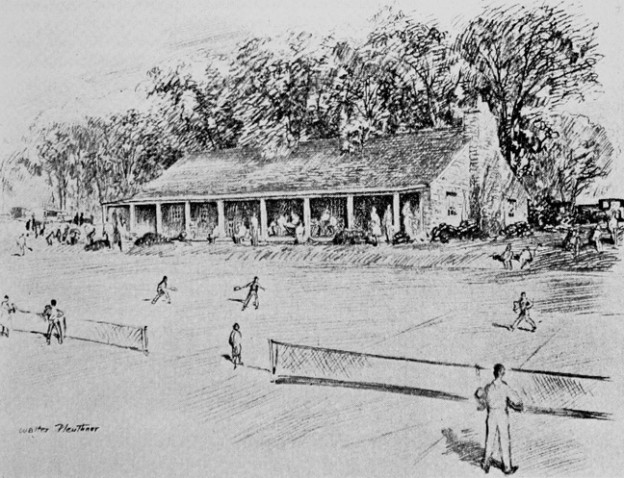
Opening day of the new Fox Meadow clubhouse in 1927. The clubhouse was designed by noted architect Walter Pleuthner and built by Scarsdale contractor Walter Collet for $9,000.  

The dream realized – new courts and a clubhouse open in 1927

To celebrate, a full day of exhibition matches was planned for June 26, 1927. A number of notable players from around the country agreed to appear. Alas, rain fell the preceding night, turning the courts into quagmires. The skies cleared briefly about 9 a.m., renewing hope that the matches could be held. The courts were rolled once again, and the lines were redrawn. Another cloudburst erased the lines. Some of the visiting players suggested that, before rolling the courts again, Club officials burn off the dampness by pouring gasoline on the courts and lighting a fire. This was done, and finally, at 4 p.m., nearly 250 patient spectators were able to watch a match between Beryl Robinson, the Bermuda champion, and Mrs. Russell Downe of Greenwich. They played only one set on the still-slippery court, and Downe won 7-5.

After a men’s doubles match, the crowd watched the day’s highlight, a set pitting George King of New York, ranked tenth nationally, against Elmer Griffin of California. King had grown up in Scarsdale and had often played at Fox Meadow. Of the exhibition match, the Inquirer reported: “King’s fast serving and hard driving proved more effective than Griffin’s fast chop stroke and the set went to King 6-4.”

King returned to Fox Meadow three months later for an exhibition match against the nation’s top-ranked woman, Helen Wills. Arthur Driscoll umpired before a capacity crowd, and the match went to eight-all before King won a tie-breaker game.

Next came exhibition doubles with Wills and King paired against Alfred Hayden and Jim Hynson; then Wills and Hayden against King and Hynson. In both matches the Wills duo overwhelmed its opponents.

Source: Diana Reische, Fox Meadow Tennis Club – The First Hundred Years, 1983
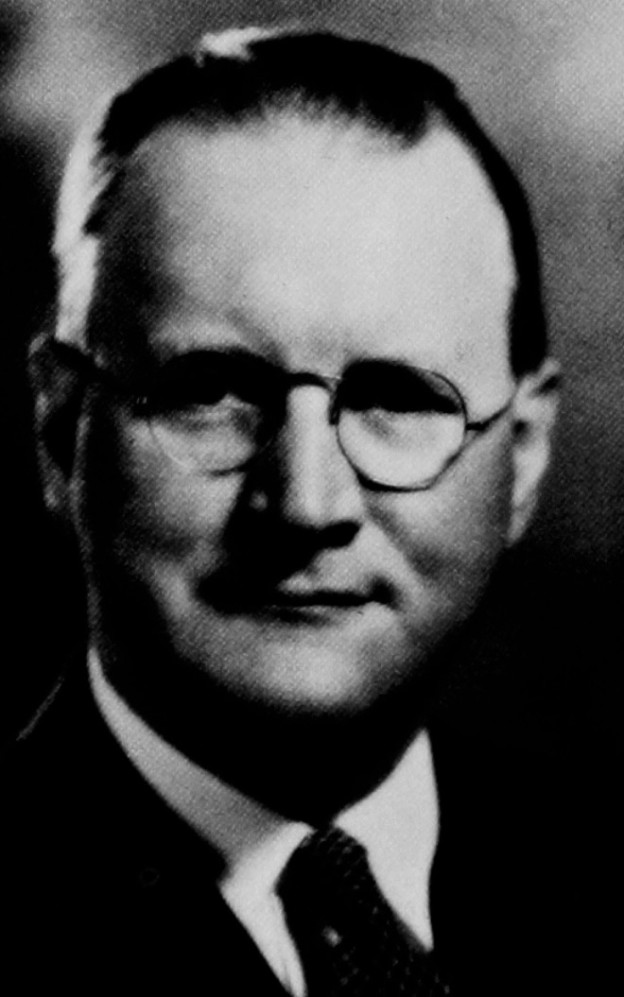
Arthur F. Driscoll. President, 1923-1924

Arthur F. Driscoll elected FMTC President (1923-1924). A period of fun and tennis in the roaring ’20s

While there were behind-the-scenes difficulties in raising enough cash to build a clubhouse and new courts, for most members the 1920s were a time of good fun and good tennis. Pressure for court time in 1923 produced a rule that members could not bring as playing guests any nonmembers who lived in Scarsdale.

Though life-styles were changing, reminders of times past were very much in evidence on the Club grounds. Near the tennis courts there still were sheds for carriages, and when members played tennis, they still wore the costumes of a more genteel era: long sleeves, long skirts, long trousers.

“I always wore at least two of my prettiest lace-trimmed petticoats,” says Blanche Mason Starkweather of the costume a fashion-wise young lady wore for tennis at the Club circa 1921. “They came to the ankles, and of course when I ran for the ball, the lace showed.”

Two notices about women players appeared in 1923. The Scarsdale Inquirer ran a piece refuting a rumor that women could not use the courts on weekends. The paper said Fox Meadow was perhaps the only tennis club in the metropolitan district that did not limit use of the courts by women on holidays and weekends. Another item noted that an increased number of women playing tennis that year” has caused the appointment of a committee consisting of Mrs. Alfred Haywood, Mrs. Leland Stowell, and Miss Muriel Bray to arrange for Women’s Singles tournaments.”

In a burst of early environmental awareness, when a proposal was made in 1924 to cut down trees, Alfred Haywood rose to defend one particular elm. Such was his standing in the Club that the elm was left untouched, and it was duly noted that “this tree hereafter be known as the Haywood Preservation.”

Active recruiting added many new members, some of whom were still part of the Club at the time of the Centennial celebration in 1983.

Among them were James and Leila Hynson, who joined in 1924. A former Princeton tennis star, Jim quickly established himself as the Club’s strongest player, but Leila remembers the laughter at the Club as well as the tennis. She tells of a time when she was asked at the last minute to pinch-hit as her husband’s partner in a tournament: “At one point I was moved to say to him when a few successful returns of the ball had evidently turned my head, ‘I can’t carry you any longer.’ With the other players weakened with laughter, we won.”

Source: Diana Reische, Fox Meadow Tennis Club – The First Hundred Years, 1983
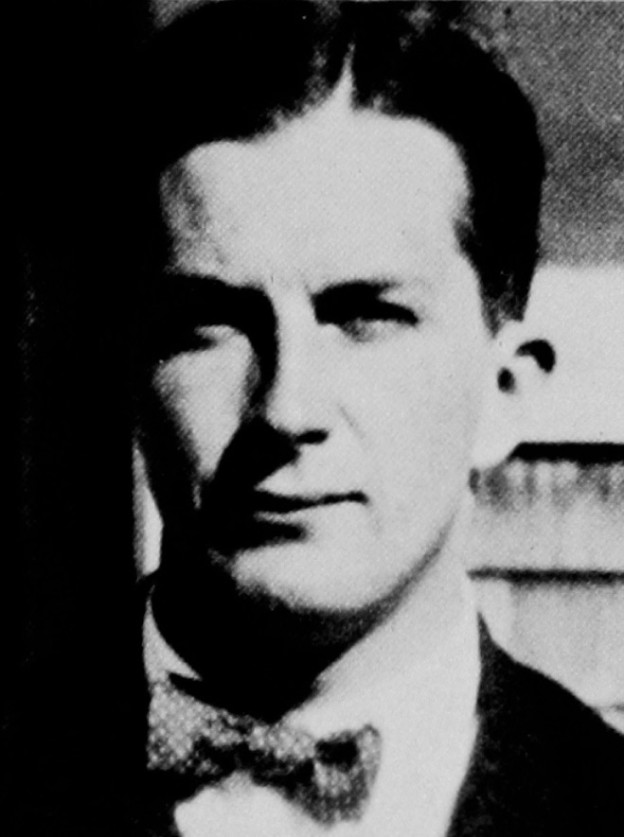
Theodore C. Jessup. President, 1921

Club informed that Butler land to be sold (1922) but offered first right of refusal on their leased land and two additional acres. Tennis Realty Corp. formed to acquire the land and title taken in 1923

Two years passed, and land prices rose sharply. In 1922 the Butlers informed the Club that the property it occupied would be put up for sale forthwith. The Club received first refusal for a three-acre site—encompassing the existing courts and two additional acres selling for $20,000, $5,000 more than in 1920.

Faced with this friendly but firm notice to buy or move out, the Club acted decisively. John Jackson (head of a special committee evaluating possible locations for a permanent home) was instrumental in reorganizing the Club so it could finance the purchase. The Club became two legal entities, a corporation that bought and held the property and a tennis club that leased it

The new Tennis Realty Corporation planned to issue capital stock of $20,000, divided into 400 shares, to be sold to old and new members at $50 a share. Each member could buy up to ten shares. As membership in the Club was to be limited to 200 families, it was hoped that many individuals would buy two or more shares. To remain in the Club, existing members had to buy a share in the corporation, and the initiation fee for incoming members was the purchase price of one share.

The organizers did not limit the plan to tennis players. The Scarsdale Inquirer reported in 1923: “It is the desire of the officers and Board of Governors to enroll upon the books of the Club all of the leading citizens of the town, whether tennis players or not. The Club is in reality strictly a community project and deserves the assistance and support of all.”

Dues were increased to $25 a year. There were four membership categories: voting, junior, season, and honorary. Any individual over the age of sixteen was eligible for voting membership if he or she held stock in the Realty Corporation.

The seven-member Board of Directors of the new Tennis Realty Corporation held its first meeting in August 1922 at the Yale Club in Manhattan. Founding directors were J. Lawrence Gilson, Alfred W. Haywood, John Jackson, Weyland Pfeiffer, Leland E. Stowell, Lester R. Stewart, and Warner W. Kent, all of Scarsdale.

The 1922 purchase deed forbade the buyer from building hotels, saloons, barrooms, or any places selling intoxicating liquor. Terms were $4,000 in cash, and a mortgage at six percent.

Despite initial optimism, stock sales lagged badly, and by the end of March 1923 only 38 of 400 shares had been sold. However, Emily Butler held the purchase agreement in abeyance while a new campaign was devised to attract members.

The Club finally took title to its own property in 1923, after forty years on bits of borrowed land.

Source: Diana Reische, Fox Meadow Tennis Club – The First Hundred Years, 1983
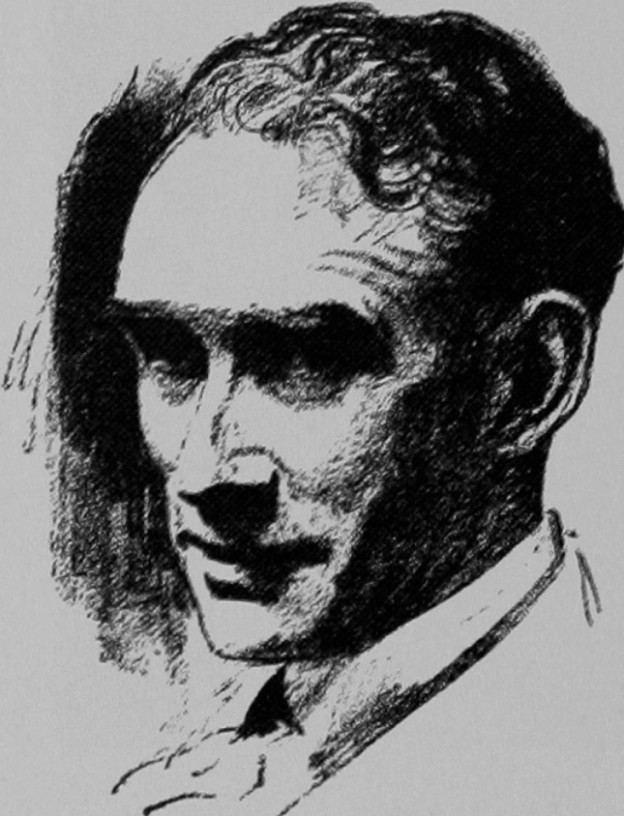
Rollin Kirby. President, 1920

Rollin Kirby elected FMTC President (1920); Pulitzer Prize winner for political cartoons

Rollin Kirby (9/4/1875–5/8/1952) served as president of Fox Meadow in 1920. He was an American political cartoonist who gave modern cartooning decisive impetus in the direction of graphic simplicity and high symbolic value.

He was born in Galva, IL and studied painting in New York City and Paris as a young man but switched to magazine illustrating and then cartooning. Kirby made his reputation during the 18 years (1913 to 1931) he spent on the New York World, where he won three Pulitzer Prizes for cartooning (1922, 1925, 1929).

He stayed with the paper when it merged with The World Telegram in 1931 and in 1939 he went to the New York Post, where he remained until 1942.

His cartoons later appeared in Look magazine and The New York Times Sunday Magazine.

He criticized Wall Street, New York’s political bossism, imperialism, fascism, and the Ku Klux Klan and crusaded for civil liberties, woman suffrage, and the New Deal.

He invented the long-nosed, sour Mr. Dry, who became widely known as the symbol of Prohibition. Although his drawing was outstanding, he considered the idea behind a cartoon far more important than the way it was drawn. In addition to his cartoon work, Kirby wrote verse, short plays, articles, editorials, and book reviews for various newspapers and magazines.

Source: Encyclopædia Britannica Online

Rollin Kirby – Distinguished political cartoonist and Pulitzer Prize Winner

Rollin Kirby – Distinguished political cartoonist and Pulitzer Prize Winner

Club informed that the land they had leased from 1911 could be sold (1920). Emily Butler was divesting her Fox Meadow holdings; options for alternative sites become a priority

For more than forty years the Tennis Club had borrowed or leased Fox Meadow land for a token sum. In 1920, however, a Butler representative alerted the Club that it might be asked to vacate immediately if and when the land it occupied on Church Lane was sold.

On July 24, 1920, FMTC members met at Town Hall to hear various proposals for buying or leasing a permanent site. The first of two possibilities was outlined by a representative of the Village Planning Board who suggested that the Club might lease a Fox Meadow tract from the Village and operate tennis courts there as a community service. A second option was to purchase four to five acres in an area of Scarsdale where prices were lower and more land could be bought. Members favored the second plan, and Club President Rollin Kirby named John Jackson, Pliny Williamson, William White, Oscar Williams, and Alan Chalmers to investigate and, if need be, to negotiate the purchase.

Less than a week later the special committee reported that Willard Parker Butler, Emily Butler’s representative (and cousin) would be willing to sell two and a half acres just west of the Club’s existing courts on Church Lane for $15,000. This was the site the Club ultimately bought, but in 1920 the board asked for more information on alternatives.

In December a special committee chaired by John Jackson told the board that Miss Butler would sell a three-acre site south of Wayside Lane for $15,000. The committee, however, recommended purchase of an alternate site, 4.72 acres south of Richbell Road on the Burgess property. The board took no action on either property, although at the 1921 annual meeting a “sense of the meeting” vote favored buying the Burgess land.

Source: Diana Reische, Fox Meadow Tennis Club – The First Hundred Years, 1983