The game grows in the Wild West and reaches the West Coast

In 1972 Web and Dottie Otis returned to Ross, California, from a government assignment in Washington, D.C., where they had been introduced to platform tennis. Armed with plans for a court, they employed a local contractor, Bim Lansill, to erect an all-wooden court over a small swimming pool on a hillside above their home.

Two more private courts were soon erected in Ross, and in 1975 an amorphous group calling themselves the Ross Valley Hunt Club conducted the first tournament in Northern California.

By 1978 Ross, with a population of 2,700, had a public court in the town park.

In addition to Ross, the 1970s were a time of growth throughout the region. San Jose Steel constructed grade-level courts on a tennis court surface in various locations from San Diego to Salishan, Oregon. The facility that drew the most attention was the Cabrillo Athletic Club in San Diego. The manager advocated radical rule changes, such as moving the service line back six inches, rounding the corners, and cutting a hole in the back screen to allow for winners.

Ultimately these facilities were abandoned, leaving Ross as one of the main centers for the game in California, along with the Lagunitas Country Club, which built two courts in 1977 and became the headquarters for the Lagunitas Invitational run by Al Seidel for many years. This tournament continues to draw Eastern players who combine competition with visits to San Francisco or the nearby wine country.

In the early 1970s, courts were also built in Durango, Colorado, and managed by Gary Horvath. In subsequent years Horvath conducted numerous clinics at sites in New Mexico and Arizona.

Source: Article by Beach Kuhl in Passing Shots – A Pictorial History of Platform Tennis, 2010

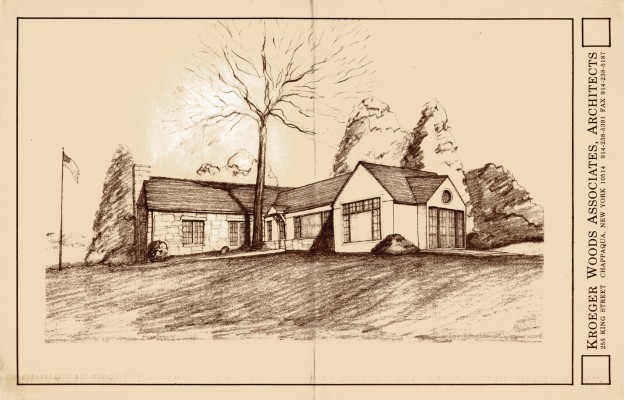
Proposal for a physical home for APTA memorabilia made to Fox Meadow Tennis Club

In the summer of 1972 Robert A. Brown, Secretary of the APTA, approached Fox Meadow Tennis Club with the idea of constructing a space to house APTA files and memorabilia.

Although the concept was initially well received and discussions went as far as developing a conceptual drawing, the project ultimately did not proceed.

This was the first attempt at developing a Museum and Hall of Fame.

Letter Aug 4, 1972 from APTA to FMTC re space

Source: Personal communication from Robert A. Brown, 2013

APTA Honor Award: Osborne

Philip W. Osborne had been an active player in the New York metropolitan area at Englewood Field Club, NJ until he was relocated to Pittsburgh, which at the time was a platform tennis desert. He set about changing this and he did. Initially he tried to convince clubs to build courts but was turned down. So, he built his out facility, Fox Chapel Racquet Club, and that was the start of what has become one of the most active regions for the game in the country. Osborne, who worked for Alcoa, was a keen supporter of the aluminum deck that became the standard in the early 1970s. (Fox Chapel Racquet Club)

Source: “Minutes of Annual Meeting” The APTA Paddle Newsletter Vol. 4 No. 1

Minutes from the APTA’s 1972 Annual Meeting noted recent articles in American Home, Town & Country, The Wall Street Journal, and The New York Times.

APTA Annual Meeting highlights significant progress

The Princeton Club in New York City played host to the 1972 Annual Meeting, with 132 people in attendance.

President Peter Thistle reported on the escalating growth of the sport; the increasing tournament activity; the establishment of the Equipment Committee to ensure uniform playing conditions for the game, and the success of the new initiative to include individual membership in the APTA.

Dues and selling plans and specifications for courts provided most of the total income of $14,274.74 and contributed to a healthy profit of $7,722.37. The net worth of the APTA now stood at $19,267.27

Secretary Robert A. Brown provided a detailed account of the activities of the Secretary’s Office – answering requests for literature and information on the game, providing plans and specifications for courts (at a price of $30), and a summary of how these requests had grown over the past three years from 60 to 191.

He commented on the “unprecedented number of articles on the game” and how the number of tournaments kept growing (29 in 1971).

Brown also reported: “in a discussion with Barr Rubber Company, the only manufacturer of balls, we were advised that this year’s production and sales of balls will be 35% over last year.” This was following a 100% increase over the previous year.

Source: “Minutes of the Annual Meeting,” The APTA Paddle Newsletter, Vol. 4 No. 1

APTA develops policy on platform tennis court builders

The September 15th Newsletter carried the following basic policy:

• It is the intent of the APTA that the game of Platform Tennis be played under uniform court conditions wherever it is played.

• The APTA considers it appropriate to provide advice and guidance, where needed, to ensure quality and uniformity in court construction while recognizing the desirability of encouraging innovations in the use of materials and methods of construction so long as the basic nature of the play of the game is not affected.

• The APTA will offer guidance to those seeking information on plans, specifications, and builders of platform tennis courts. Such guidance is offered within the framework of this policy, the implementation of which is outlined below; while it is based upon the best information available, the APTA cannot accept responsibility for quality of construction, delays, or failure of any sort in contractual arrangements between builder and customer.

The APTA implementation Plan had the following elements:

(1) A list of builders will be maintained, divided into two sections; Section I, “Builders of Wooden Courts to APTA Specifications” and Section II, “Builders of
Courts to APTA Dimensions but Using Materials other than Wood or other Construction Design.”
(2) Any builder who wishes to be included on the list may apply in writing. If he is a new builder constructing courts to APTA specifications, a completed court (or courts) will be inspected by the APTA and, if considered satisfactory, the builder will be included on the list with a footnote indicating:

“New builder constructing courts to APTA specifications which have been inspected and are considered satisfactory by the APTA but which have not been in use for two full playing seasons.”

If he is either a new builder or an established builder constructing courts with different construction materials or construction design, he should outline in his written application specific deviations from APTA plans and specifications. A completed court (or courts) will be inspected by the APTA and, if considered satisfactory, the builder will be included on the list with a footnote indicating:

“Builder constructing courts with different construction materials or construction design which have been inspected and are considered satisfactory by the APTA but which have not been in use for two full playing seasons.”

In each of the above cases, after two playing seasons of use and a satisfactory
second inspection, the applicable footnote will be removed from the builder’s listing.

In the event that a builder who has been in the business for more than two seasons applies for listing, both a recently constructed court (or courts) as well as a court (or courts) which have been in use for two or more seasons of play will be inspected and, if considered satisfactory by the APTA, the builder will be included on the list as applicable without footnote.

(3) Inspections will be made by APTA officials, including regional Vice Presidents, or others specifically designated. No expense may be incurred by the Association for
such inspections. If in the judgment of the inspecting officials, including actual play on the court, the bounce of the ball on the deck and off the screens and the feel of the deck are similar, and provided court dimensions are according to APTA regulations, then recognition as applicable will be granted.

(4) The APTA reserves the right to remove any builder from the list at any time if, in the judgment of the APTA, the quality of courts being constructed by that builder and/or the construction performance of that builder are considered to be below normally acceptable standards.

Source: The APTA Newsletter, Vol. 3 No. 4

The Etiquette of Platform Tennis

“The Etiquette of Platform Tennis” published

The Annual Meeting minutes included the following report by Secretary Robert A. Brown.

“The rapid growth of the game is attributable to the increasing number of ‘newcomers’ who are exposed to and are taken up by the game. With this in mind and in order to maintain the high level of sportsmanship and good conduct that is such an important part of ‘paddle,’ the APTA recently published a new booklet entitled “The Etiquette of Platform Paddle Tennis.”

The author of the booklet was Robert A. Brown. It has been reprinted a number of times and is still available.

The APTA mailed the booklet to all members, and it was well received. Subsequently, the APTA received requests for over 3,000 additional copies of the booklet. Although intended for the newcomer, a number of old-timers requested copies for their close friends who played.

Source: The APTA Paddle Newsletter, Vol. 3 No. 4

As game expands Fox Meadow players lose dominance at tournaments but the “spirit” of the game remains an essential part of the club

By the mid-1970’s, platform tennis was a national game, attracting an estimated 500,000 competitors. The game was no longer exclusively played by Eastern clubs. The tournaments were often commercially sponsored. As the game widened, Fox Meadow lost its dominance of the Nationals, but the Club’s impact in other areas remained strong.

Cecil J. (Mike) North, Jr.(APTA President 1975-1977) of Bedford Golf and Tennis Club wrote in the program for an earlier Nationals:

“As platform tennis attracts greater numbers of players, expands geographically, and becomes increasingly money-oriented, I think it is important to remember why people played it in the first place: because it is informal, because it is fun. Fox Meadow is a reminder of these qualities.”

Source: Diana Reische, Fox Meadow Tennis Club – The First Hundred Years, 1983